[NOTE: Any words in magenta or in blue underline are hyperlinks. Return to this post after using a hyperlink by clicking on your browser’s back arrow  located in the upper left corner. Jump back to the top of this post at any time by clicking on the dark blue ball with the white upward chevron
  located in the lower right corner of your page.]
Introduction with contributions from  Grok 4.3 & Claude Opus 4.7 & ChatGPT 5.5 Thinking
This post develops a stratified taxonomy of thirty-five materially false idea-types: some explicitly anchored in Descartes’s texts, some strongly licensed by Cartesian ontology, and some offered as reconstructive applications of Descartes’s criterion to cases he did not explicitly enumerate. The canonical anchors remain the sensation of cold in the Third Meditation (AT VII 43–44; CSM II 30), the false idolater’s idea, for example of Zeus, in the Fourth Replies (AT VII 233–234; CSM II 163), and dropsical thirst in the Fourth Replies (AT VII 233–234; CSM II 163) and Sixth Meditation (AT VII 84–85; CSM II 58–59). The investigation is conducted as a dialectical deep-research exchange with Claude Opus 4.7 and ChatGPT 5.5 Thinking, in which each proposed extension is pressure-tested against the strict Cartesian criterion of non rem tanquam rem repraesentans—presenting a non-thing under the referential guise of a thing.
The governing thesis is this: material falsity is not mere non-existence, not mere fiction, not mere false judgment, not mere sensory unreliability, and not mere obscurity. It is an idea-level defect in which the idea’s own presentational character supplies the will with matter for false judgment by presenting what cannot legitimately bear thinghood, qualityhood, causal power, substancehood, kindhood, need, or objective standing as if it could.
The first table at the top of the post supplies the full catalogue. The rationale for classifying each entry as materially false is developed immediately beneath the table through the back-and-forth that follows. The companion table at the very bottom is the deliberate negative image of the first: it identifies the cases most often mistaken for material falsity—perspectival sensory error, the square tower seen as round, innocent fiction, the golden mountain, live metaphor, clearly grasped privations, mathematical idealizations, and merely obscure ideas—and explains, row by row, why each falls outside the doctrine. The positive table and the negative companion table are meant to work together: the first identifies materially false idea-types, while the second prevents the criterion from overgenerating.
The Flawed Criterion
The argumentative arc of the post moves through several decisive corrections. First, the criterion “an idea is materially false iff (if and only if) it is an idea of a non-existent object” is shown to be both too broad and too narrow.
It is too broad because, if accepted, it would sweep into the category of materially false ideas every ordinary fiction (Pegasus, the golden mountain, Sherlock Holmes, a chimera entertained in imagination) and every failed scientific hypothesis (the planet Vulcan, N-rays, the four humors construed as real fluids). But Descartes is explicit that merely thinking of something that does not exist is not, by itself, material falsity. The chimera case is the classical Cartesian contrast: one can frame the idea of a non-existent composite without the idea thereby being materially false. So the “non-existent object” criterion over-generates.
It is too narrow in the opposite direction, and this is the more instructive failure, because it shows that the criterion has misidentified where the defect actually lies. The decisive counterexample is Descartes’s own canonical anchor: the sensation of cold. The cold sensation is materially false—this is the paradigm case from which the entire doctrine takes its bearings—yet the cold sensation is of a real object at the level of its gross referential target. It refers outward to the ice, to the cold body, to something that genuinely exists. Its gross referential target is not missing. A criterion that asks “does the idea refer to a non-existent object?” and looks for an answer at the level of the gross object will return “no” for the cold case, and will therefore fail to classify it as materially false. That is one way the criterion is too narrow: it misses the paradigm case by looking at the wrong layer of the idea’s presentational structure.
This is not to deny that there is a non-existent element in the cold sensation’s structure—there is, and it is precisely where the material falsity lives. The cold sensation presents felt coolness as a positive quality residing in the ice, and there is no such positive quality in the ice; what is in the ice is a corpuscular-mechanical configuration of the kind Descartes’s physics describes, not the resemblance-bearing positive coolness the sensation exhibits. So at the level of the quality presented as residing in the object, there is indeed a non rem (non-thing) that the sensation relates to as though it were a res (a thing). The cold case does have a non-existent referential element; it is just located at the quality-layer of the sensation’s presentational structure rather than at the object-layer.
This is exactly why the “non-existent object” criterion, in its usual formulation, fails as a general criterion of material falsity. The criterion as commonly glossed envisages a wholly non-existent gross object—a Zeus, a chimera, a unicorn—and asks whether the idea has that kind of referential failure. The cold case has no such failure at the gross-object level; the ice is real. But the cold case has a structurally distinct kind of non rem tanquam rem (non-thing as if a thing) at the quality-layer: a non-existent positive quality presented as residing in a real object. A criterion that captures only the gross-object form of referential failure will therefore miss the cold case, even though the cold case is a paradigm of material falsity. The criterion is too narrow not because the cold case is free of any non-existent referential element, but because the criterion looks for the wrong kind of non-existence at the wrong layer of the idea’s presentational structure.
The lesson is that non rem tanquam rem repraesentant (presenting a non-thing as if a thing) operates at multiple presentational layers and admits of structurally different realizations. In the cold case, it is a non-existent positive quality presented as residing in a real object. In the idolater’s Zeus-case, the child’s Santa-case, and the realist physicist’s aether-case, it is a non-existent being presented under the receptive mode of an idea-of-a-real-being. In the reified Nothing-case, it is the broad-sense thought of negation handled as though it bore objective reality. A criterion adequate to the doctrine must capture all of these realizations; the simple “non-existent object” criterion captures only one, and so cannot serve as a general criterion of material falsity even though it correctly identifies one of its forms.
The reason the criterion misses the cold case is that it has located the defect in the wrong place. It locates the defect in the object—the object is not there—whereas Descartes locates the defect in the presentational structure of the idea itself: the idea presents to a real object a phenomenal content that the object contains no resembling quality answering to. The cold sensation positively presents felt coolness as a quality residing in the ice; the ice contains no such resembling quality; the misascription is the material falsity. The object’s existence or non-existence is simply not what is doing the work. This is why the same diagnosis applies symmetrically to the sensation of warmth, regardless of which, if either, of warmth or cold turns out, on the physics, to be a privation of motion: both sensations misascribe phenomenal content to real bodies, and that is enough to make both materially false.
Once the cold sensation case is admitted as decisive, the structural lesson generalizes. Material falsity cannot be a function of the object’s non-existence, because the cold case has a real object. And material falsity cannot be a function of mere non-existence elsewhere either, because the chimera case has no object and is not materially false—and, crucially, the chimera case also lacks the misascriptive quality-layer structure that makes the cold case materially false, since the chimera, held in the explicit mode of fiction, does not ascribe any phenomenal or qualitative content to a real object under an illegitimate presentational mode but is merely entertained as a content of imagination. The chimera case thus has no non-existent referential element of the diagnostically relevant kind anywhere in its structure: no real object misascribed to, no presentational mode pretending to receptive contact with a real being, no broad-sense negation handled as though it bore objective reality. Both horns of the “non-existent object” criterion collapse together: it includes what it should exclude, innocent fictions that lack the diagnostically relevant structure at every layer, and excludes what it must include, the cold sensation whose diagnostically relevant non-existence lives at the quality-layer the criterion does not inspect. The criterion is simultaneously too broad and too narrow because it has misidentified the locus of the defect.
The Refined Diagnostic
The criterion is then refined into the stricter formula: an idea is materially false when its own presentational structure positively misascribes a content under a referential guise the content cannot bear, thereby furnishing the will with subject-matter for false judgment prior to and independently of any act of judgment. This formula relocates the defect from the object’s ontological status to the idea’s own presentational structure, which is where Descartes himself places it, and which is what allows the doctrine to apply across the cold case, the Zeus case, the dropsical-thirst case, the aether case, the tinnitus case, and the further extensions developed below.
This refined formula requires one crucial restriction. The idea must not merely be about a non-existent item, fictional item, failed posit, social status, privation, abstraction, appetite, or explanatory placeholder. It must present that item under an illegitimate objectifying, qualifying, causal, substantializing, kind-making, or need-disclosing guise. Without that restriction, the criterion would collapse back into the overbroad view it was designed to replace, treating ordinary fiction, failed hypotheses, metaphorical speech, and false judgments as if they were already material falsities.
The primary-quality contrast shows why the criterion is not promiscuous. A square tower seen from a distance as round is not, for that reason alone, a materially false idea. Roundness is a genuine possible mode of extension; the error concerns which real primary-quality mode is present in the object, not whether a non-thing, privation, pseudo-thing, or illegitimate quality is being presented as if it were a thing. The false judgment “the tower is round” is formally false, but the idea need not be materially false merely because the perceiver misidentifies one determinate extended configuration as another. This boundary case is important because it prevents every sensory error from being absorbed into material falsity.
Many of the thirty-five types catalogued in the table below are principled structural applications of this criterion rather than direct textual examples from Descartes. The strongest cases remain tightly anchored in his own discussions; others—particularly in the domains of pathological sensation, obsolete scientific ontology, social and normative reification, and pseudo-causal explanatory fictions—are reconstructive applications that preserve the same non rem tanquam rem structure while moving into territory Descartes did not explicitly map.
Second, the post repeatedly resists the deflationary collapse of material falsity into formal falsity, insisting that material falsity is a property the idea possesses in itself, not merely as deployed in a judgment.
Third, by working through cases the AI interlocutors initially missed—Santa Claus, the Easter Bunny, and the Tooth Fairy as believed by children; the luminiferous aether as believed by pre-Michelson-Morley physicists; tinnitus heard as crickets chirping outside; mirage water; Keyser Söze as a believed-in hidden causal controller—the post argues that the Cartesian category can be defensibly extended into pathological sensation, obsolete scientific ontology, social and normative reification, and pseudo-causal explanatory fictions.
Three Structural Forms of Material Falsity
Fourth, the discussion culminates in a unified architectural reading of Descartes’s entire theory of ideas, organized around the distinction between strict ideas and broad-sense ideas. This is a reconstructive synthesis grounded in Descartes’s texts, particularly the Third Meditation’s tanquam rerum imago language and the explanations to Arnauld in the Fourth Replies (AT VII 233–234; CSM II 163), rather than a claim of direct historical reporting.
Strict ideas are tanquam rerum imagines and bear objective reality insofar as they exhibit substances, modes, essences, or natures. Eternal truths and common notions may be involved in strict ideas and may structure intelligible content, but they require separate treatment and should not automatically be assimilated to objective-reality-bearing ideas of things. The ideas of God, of the self as thinking, of a triangle, and of a particular shape are strict ideas, with the objective-reality framework applying according to what the idea’s content exhibits.
Broad-sense ideas are any other modes of thought Descartes is willing to call ideas in the wider usage—volitions, emotions, judgments as acts, sensations considered as modes of thought, imaginings, and the like. A broad-sense idea may itself embed objective-reality content; the volition “I will suspend judgment about the existence of physical bodies” embeds the objective-reality content physical bodies, and the objective-reality framework applies to that embedded content. What makes the volition a broad-sense idea is not the absence of objective reality somewhere within it, but that the volition as a mode of thought—as a willing—is not itself a tanquam rerum imago. Many broad-sense ideas are entirely unproblematic. Ordinary volitions, emotions, and common notions are legitimate modes of thought; falling outside the strict class is not in itself a defect.
Material falsity is a further diagnostic that cuts across both classes and takes three distinct structural forms, all of which are defects intrinsic to the idea itself and operative prior to any judgment. Here is a brief preview of each form with a short illustrative example:
- Phenomenal positivity with ontological underdetermination, as in the cold sensation, where the idea exhibits felt coolness determinately as phenomenal content but does not, from itself, settle whether that phenomenal content answers to a positive quality in the body, a privation, or neither.
- Illegitimate receptive presentational mode, as in the idolater’s idea of Zeus or the child’s idea of Santa Claus believed as real, where determinate content arrives already dressed in the presentational guise of an idea of a real being.
- Category-level mishandling, as in the reified idea of Nothing treated as a positive object capable of bearing objective reality.
The first form is phenomenal positivity with ontological underdetermination: the idea exhibits a positive phenomenal content that is itself perfectly determinate as phenomenal content, yet from the idea itself the intellect cannot determine whether that phenomenal content answers, in the ontological-referential sense, to a real quality, a privation, or neither—the trichotomy Descartes himself articulates in discussing the cold sensation in the Third Meditation (AT VII 43–44; CSM II 30), which is the paradigm of this form. The cold sensation is determinately of felt coolness as phenomenal content; what it does not fix is whether that felt coolness answers to a real positive quality in the body, to a privation of motion in the body, or to neither. The defect lies in the idea’s failure to fix the ontological-referential standing of its own phenomenal content, and that failure furnishes the will with subject-matter for false judgment because the will is left free to affirm any of the unresolved ontological alternatives.
This first form should not be confused with the claim that sensory ideas contain strict objective-reality representational content. The cold sensation need not contain the objective reality of cold as a body-quality in order to be materially false. Its defect lies in its phenomenal positivity and apparent object-disclosing force: it presents felt coolness in a way that naturally invites the mind to take that phenomenal character as answering to a positive quality in body. That is a presentational defect, not a commitment to the thesis that sensations are strict ideas bearing objective-reality content.
Pain and phantom limb pain illustrate a further distinction within sensory material falsity. Pain is materially false, if it is, not merely because it is about the body, but because painfulness is confusedly presented as though it were in the bodily part in the way an intrinsic quality is in a substance. Pain may still lawfully signify bodily damage or bodily disorder. Phantom limb pain adds a distinct mislocation problem: the presented bodily site is absent or wrongly located. The first error concerns painfulness as bodily quality; the second concerns the apparent bodily location or site of the painful presentation.
The second form is illegitimate receptive presentational mode: the idea exhibits a determinate content in the same presentational mode in which an idea of a real being of a determinate kind is held—the mode of received-from-the-world, encountered, culturally-transmitted-as-of-a-real-being, theoretically-disclosed—when the operative content of the idea does not in fact answer to any real being. The defect here is not in the determinacy of the content, which may be highly specified, but in the mismatch between the receptive presentational mode the idea occupies and the absence of any real being that mode presupposes. The idolater’s idea of Zeus exhibits its determinate content in the receptive mode of an idea of a real god encountered through religious tradition, but no Olympian god exists for that mode to be of. The child’s Santa-idea exhibits a richly specified figure in the receptive mode of an idea of a real agent transmitted through cultural testimony, but the operative content, the magical North-Pole-dwelling gift-giver, has no real being answering to it, even though the name’s historical chain traces back to a real but descriptively unrelated bishop. The realist aether-idea exhibits a determinate explanatory medium in the receptive mode of an idea of a real physical substance or entity disclosed by physics; it is materially false when that explanatory medium is presented as a real thing in nature with genuine causal or explanatory power, and not merely entertained as a hypothesis, fiction, or model.
The relevant bearer is not the bare imaginative content considered in abstraction, but the idea as held under a specific presentational mode: fictional, hypothetical, metaphorical, practical-signitive, object-disclosing, or reality-purporting. Zeus as a fictional or mythological character is not materially false merely because Zeus does not exist; Zeus as genuinely divine being believed by the idolater is the materially false case. Santa as known fiction is not materially false; Santa as real agent believed by the child is the materially false case. Aether as hypothesis or model is not materially false merely because the hypothesis fails; aether as real explanatory substance or medium is the materially false case. “The Market wants this” as metaphor is not materially false; the Market as literal agent is the materially false case.
These cases are not merely formally false judgments because the relevant defect is present in the idea before any judgment is made. The idolater does not first entertain “Zeus” as a neutral content and then separately judge that Zeus exists; the idea of Zeus arrives already wearing the presentational guise of an idea of a real god encountered through tradition. The same holds for the child’s Santa-idea and the realist physicist’s aether-idea, when the latter is presented as a real explanatory medium rather than merely entertained as a hypothesis or model: each arrives already presented under the receptive mode appropriate to an idea-of-a-real-being, and the will, encountering such an idea, finds itself confronted with subject-matter pre-dressed in the mode of the real. The false existential judgment that follows is the natural downstream affirmation of what the idea has already set up, not an independent error committed against neutral material. The pre-judgmental dressing is the material falsity; the judgment is the formal falsity it makes likely. To treat these cases as merely formal would erase the very feature—the pre-judgmental defect intrinsic to the idea’s presentational mode—that motivates the material/formal distinction in the first place.
The third form is category-level mishandling of a broad-sense idea as though it were a strict idea, exemplified by the reified idea of Nothing. Strictly considered, the thought of nothing is a broad-sense idea bearing no objective reality at all, since there is no res for it to be the imago of; held under presentational conditions appropriate to a broad-sense negative thought, it is unproblematic. The materially false case arises when this broad-sense idea is taken up under presentational conditions appropriate only to strict ideas—when “nothing” is handled as though it stood for a positive object capable of bearing objective reality. A familiar instance is the person who, asked what was there before the universe began, answers that “there was nothing, and then nothing somehow gave rise to everything”—tacitly picturing a featureless pre-cosmic backdrop that was there, had duration, preceded other things, and could do something, and thereby converting the pure negation into a quasi-substantial item to which the predicates of positive beings are silently ascribed. The defect is not a mismatch internal to a strict idea, as with Zeus and Santa, but a category-level mishandling in which a broad-sense idea with no objective reality is treated as though it were a strict idea, and the will is thereby furnished with subject-matter for the false judgment that nothing is a something.
The three forms are best appreciated by contrast. In the phenomenal-positivity form, the content is determinate as phenomenal content but does not, from itself, resolve its own ontological-referential standing. In the illegitimate-receptive-mode form, the content does let the intellect resolve what it purports to be of, but the receptive presentational mode under which the strict idea is offered is illegitimate because no being of the relevant kind exists for the mode to be receptive to. In the category-mishandling form, the idea is not a strict idea at all but a broad-sense idea wrongly taken up as though it were strict. In all three forms the will is furnished with defective subject-matter prior to any act of judgment, and the resulting existential or qualitative judgments, when the will affirms them, are formal falsities that the prior material falsity makes likely but does not itself constitute. The distinction is important: ordinary false existential judgments about real kinds—your idea of a chair in the empty bedroom, your false belief that your keys are on the desk—do not involve material falsity, because the kinds in question are actually instantiated and the receptive presentational mode is legitimate. Only formal falsity is in play. Material falsity arises only when something is wrong with the idea itself before the will acts: phenomenal positivity with ontological underdetermination, illegitimate receptive presentational mode, or category-level mishandling.
The Broader Architecture of Descartes’s Theory of Ideas
Material falsity, on this analysis, applies across the strict/broad-sense divide. The Zeus-idea, the Santa-idea, and the realist aether-idea are strict ideas, or strict ideas embedded within broader cognitive states, that are materially false by illegitimate receptive presentational mode. The cold sensation is a broad-sense idea materially false by phenomenal positivity with ontological underdetermination. The reified Nothing-idea is a broad-sense idea materially false by category-level mishandling in which a non-objective-reality-bearing thought is taken up as though it were a strict idea. The thirty-five-entry table catalogues the domains in which each of the three forms arises.
The architecture is thus two intersecting distinctions, not a single ladder: strict versus broad-sense ideas on one axis, fixed by whether the idea is a tanquam rerum imago; and materially false, in any of its three forms, versus not materially false on the other, fixed by whether the idea suffers from phenomenal positivity with ontological underdetermination, illegitimate receptive presentational mode, or category-level mishandling. Objective reality is the structural measure applicable to objective-reality content wherever it occurs; material falsity is the diagnostic that isolates ideas whose own structure—presentational underdetermination, illegitimate receptive mode, or mishandled broad-sense status—leaves the will positioned to affirm what it should not.
This is the architectural backbone of Descartes’s theory of ideas as reconstructed here, and the taxonomy below is its applied diagnostic expression rather than a claim that Descartes explicitly enumerated all thirty-five cases.
 Click on the title “The 200 Hardest Questions about Material Falsity” to jump to it. Click on your back arrow to return to this post.
This post supplies the rationale for classifying each of these idea-types in the first table below as materially false immediately after the table. The negative table at the very bottom of the post lists those ideas that are not materially false.
Types of Materially False Ideas
The entries in the following table should not be read as equally explicit in Descartes, but they are all proposed as defensible applications of the same Cartesian criterion. They fall into four grades of textual directness and reconstructive distance. First are explicit anchors: cold, false gods, and dropsical thirst. Second are very strong structural extensions: privation-as-positive, pain-as-bodily-quality, vacuum-as-positive-extension, Nothing-as-object, evil-as-positive-being, and indefinite-as-infinite. Third are broad sensory or pathological applications: mirage water, tinnitus-as-crickets, vertigo, phantom limb pain, referred pain, formication, and neuropathic sensations. Fourth are more reconstructive applications: obsolete theoretical entities, social and normative reifications, pseudo-kinds, homuncular inner agents, and conspiracy-agents. The point of the taxonomy is not that Descartes explicitly lists all thirty-five, but that each can be tested against the same structural question: does the idea present something that does not genuinely exist (a non-thing, privation, pseudo-thing, defective construction, merely relational item, or explanatory posit) as if it were a real thing, quality, power, substance, kind, need, or explanatory ground?
Rows concerning normative, ritual, institutional, and social statuses should be read with an additional caveat. These entries do not deny that normative, ritual, institutional, or social statuses can be real in their own order; they target only the confused idea that presents such statuses as intrinsic natural or metaphysical qualities residing in the thing itself.
| # |
Materially False Idea Type |
Example(s) |
What Is Presented as if Real |
False Judgments It Inclines |
Cartesian Status |
|---|---|---|---|---|---|
| 1 | Secondary-quality sensory idea | Cold, color, taste, smell, sound | A phenomenally positive sensory quality as if it were a real quality in body | “The body contains coldness, redness, sweetness, or sound as I sense it.” | Explicit anchor in Descartes’s cold case; strong extension to other secondary qualities |
| 2 | Pain-as-bodily-quality idea | Pain in the foot, toothache, burning pain | A conscious painful mode as if it were a pain-quality formally inhering in the body part | “The pain itself is in my foot”; “the tooth contains painfulness.” | Strong Cartesian extension from the sensory material-falsity model |
| 3 | Privation-as-positive-quality idea | Darkness as black stuff; silence as positive acoustic presence; cold conceived as a positive body-quality | An absence or privation as if it were a positive entity or quality | “Darkness is a positive stuff”; “silence is a positive acoustic thing”; “cold is a positive quality in the body.” | Very strong extension; close to the formula “a non-thing as if a thing” |
| 4 | False-god idea | Zeus, Apollo, Athena, Baal, Jupiter as believed by idolaters | A finite pseudo-agent as if it were genuinely divine | “Zeus is a god”; “Zeus acts, rules, deserves worship.” | Explicit Cartesian class: confused ideas of false gods |
| 5 | Child-belief pseudo-agent idea | Santa Claus, Easter Bunny, Tooth Fairy as believed by children | A culturally constructed fictional agent as if it were a real agent | “Santa will come tonight”; “the Tooth Fairy took my tooth”; “the Easter Bunny hid the eggs.” | Strong extension from the false-idolater model |
| 6 | Folkloric pseudo-agent idea | Leprechaun, goblin, fairy, household spirit | A mythic or folkloric pseudo-person as if it were a real causal agent | “The goblin stole it”; “the fairy caused this”; “the spirit lives here.” | Strong extension if genuinely believed, not merely entertained as fiction |
| 7 | Phantom-object visual idea | Mirage water in the desert | An absent body of water as if it were present | “There is water ahead”; “I can reach that water.” | Broad sensory extension; materially false idea insofar as it presents an absent body of water as present. On a stricter Cartesian reading, classify as nonveridical object-presentation rather than strict material falsity. |
| 8 | Phantom-surface-state idea | Dry road appearing wet because of reflected light | A dry surface as if it were wet or water-covered | “The road is wet”; “there is water on the road.” | Broad sensory extension; materially false idea insofar as it presents a dry surface as wet or water-covered. |
| 9 | Phantom-source auditory idea | Tinnitus heard as crickets chirping outside | No external sound-source as if an external source were present | “There are crickets outside”; “the sound is coming from outdoors.” | Broad sensory extension; the auditory idea is materially false insofar as it presents a merely internal auditory sensation as if it disclosed an external sound-source. |
| 10 | Phantom-motion idea | Vertigo; room seems to spin | A resting world or body as if it were rotating or moving | “The room is spinning”; “I am falling”; “the world is moving.” | Pathological sensory extension; materially false idea insofar as it presents a resting body or world as moving. |
| 11 | Phantom-location bodily idea | Phantom limb pain | A non-present limb or wrongly located body part as if present and hurting | “My missing foot hurts”; “the pain is in that limb.” | Pathological bodily-location extension; materially false idea insofar as it presents an absent or wrongly located limb/body-part as the site of pain. |
| 12 | Mislocalized-source bodily idea | Referred cardiac pain felt in the arm, jaw, or shoulder | A bodily source or disorder as if located where the sensation is felt | “The problem is in my arm”; “my shoulder is injured.” | Pathological extension; materially false only if the sensation itself presents the arm, jaw, or shoulder as the source or site of bodily disorder, not merely if the subject later infers that judgment. |
| 13 | Phantom-contact tactile idea | Formication: feeling insects crawling on or under skin when none are present | No external contact as if crawling objects were on the skin | “There are bugs on me”; “something is crawling on my skin.” | Pathological tactile extension; materially false idea insofar as it presents absent external contact as present. |
| 14 | False thermal-condition idea | Neuropathic burning or freezing sensation without corresponding external condition | Heat, cold, burning, or freezing as if present in body or environment | “My skin is burning”; “the room is freezing”; “something hot is touching me.” | Materially false idea insofar as it presents burning, freezing, heat, or cold as a bodily or environmental condition where no corresponding condition obtains. |
| 15 | False-damage bodily idea | Neuropathic pain; allodynia | Harmless touch or no tissue damage as if bodily damage were present | “This touch is injuring me”; “there is damage here.” | Pathological bodily extension; materially false idea insofar as harmless touch or no tissue damage is presented as bodily injury. |
| 16 | False-need appetitive idea | Dropsical thirst, pathological hunger (polyphagia), pica, addictive craving | No genuine health-preserving or beneficial need-relation as if urgent and beneficial | “I need this”; “taking this will help me”; “my body requires this now.” | Explicit or near-explicit anchor in dropsical thirst; strong extension to analogous pathologies where appetite presents what is harmful or non-beneficial as needed. |
| 17 | False-expulsive-need idea | Nausea or emetic urge without toxin, obstruction, or beneficial need to expel | Expulsion as if bodily beneficial or needed | “I must vomit”; “there is something harmful to expel.” | Appetitive-teleological extension; materially false idea insofar as an expulsive urge presents expulsion as needed where no relevant bodily need obtains. |
| 18 | False-breathing-need idea | Panic air hunger despite adequate oxygenation | Suffocation or urgent oxygen need as if present | “I cannot breathe”; “I need air now”; “I am suffocating.” | Pathological appetitive/bodily extension; materially false idea insofar as adequate oxygenation is presented as suffocation or urgent respiratory need. |
| 19 | Pseudo-scientific theoretical-entity idea | Aether, phlogiston, caloric fluid, miasma | A theoretical posit as if it were a real explanatory substance, medium, or entity | “Light travels through the aether”; “heat is caloric fluid”; “combustion releases phlogiston.” | Strong theoretical-extension case; materially false when the idea presents a non-existent explanatory medium, such as the aether, as if it were a real thing in nature with genuine causal or explanatory power. Not materially false when entertained merely as a hypothesis, fiction, or model. |
| 20 | Occult-power idea | Heaviness as inward striving; talismanic power; curse-force; magical efficacy | A confused explanatory placeholder as if it were a real causal power | “The talisman has real causal power”; “the body falls because of inner striving.” | Strong Cartesian-mechanist extension; materially false idea insofar as a verbal or occult explanatory placeholder is presented as a real power. |
| 21 | Pseudo-faculty idea | Dormitive virtue; vital force as hidden entity; memory faculty as inner store | A named capacity or effect as if it were an explanatory thing | “Opium causes sleep because it has a sleep-making power”; “life is caused by a vital substance.” | Strong philosophical extension; materially false idea insofar as a named capacity, effect, or faculty is presented as an explanatory entity. |
| 22 | Reified-abstraction idea | Nature, Fortune, History, the Market as literal agents | An abstraction, order, or distributed process as if it were a self-standing agent | “Nature intends this”; “History demands this”; “the Market wants this.” | Reconstructive abstraction-agent application; materially false when literal, not when merely metaphorical. |
| 23 | Reified-universal idea | Humanity, animality, triangularity as separately existing things | An abstract universal as if it were an independent res | “Humanity itself exists apart from humans and minds”; “triangularity is a separate thing.” | Reconstructive anti-Platonist Cartesian application; defensible against a separately existing Platonic res, not against true and immutable natures or objective essences as such. |
| 24 | Pseudo-substance idea | Time as a flowing substance; motion as detachable stuff; relation as an independent entity | A mode, relation, abstraction, or dependent ontological structure as if it were a self-standing substance | “Motion is a thing passed from body to body”; “time flows as an independent substance”; “relations exist as free-standing entities.” | Strong extension in Cartesian ontology, but only when the item is treated as a substance distinct from what grounds it. |
| 25 | Vacuum-as-positive-extension idea | Empty extended space without body | Absence of body as if it were positive extended being | “There is an extended empty thing where no body exists”; “extension can exist without corporeal substance.” | Very strong Cartesian extension given Descartes’s identification of space/internal place with corporeal extension |
| 26 | Nothing-as-object idea | Nothing as abyss, void-thing, metaphysical container | Sheer negation as if it were a positive object | “Nothing is a kind of thing”; “the void is a positive object.” | Very strong structural case; materially false idea insofar as sheer negation is presented as a positive object. |
| 27 | Evil-as-positive-being idea | Evil as a positive ontological stuff or force | Defect, disorder, or privation as if it were positive being | “Evil is a real positive entity”; “evil has its own being like good.” | Strong theological and privation-based extension; materially false idea insofar as privation or disorder is presented as positive being. |
| 28 | Impossible-object pseudo-idea | Round square, largest integer, dependent self-existent being | An incoherent pseudo-object as if it were possible | “Such an object could exist”; “there could be a largest number”; “a dependent being could exist through itself.” | Strong only when the contradiction is not clearly grasped; once the contradiction is clearly grasped, there is no genuine positive object-content to which assent should attach. |
| 29 | Indefinite-as-infinite idea | Created extension, number, or magnitude as absolutely infinite | Indefinite extendability as if it were true infinity | “Created quantity is actually infinite in the same sense as God.” | Strong Cartesian extension; materially false idea insofar as indefinite created quantity is presented as possessing absolute infinity. |
| 30 | Pseudo-kind idea | Witch-kind, monster-kind, race-essentialist kind, degenerate-type idea | A social, fearful, or confused classification as if it were a real natural essence | “Witches are a real occult species”; “this social group has an intrinsic natural essence.” | Reconstructive Cartesian application; materially false idea insofar as a confused classification is presented as a genuine natural essence. |
| 31 | Pseudo-normative-property idea | Ritual impurity, cursedness, sacredness, luck as an occult property | A normative, ritual, or affective status as if it were an intrinsic property | “This object contains impurity”; “this charm is intrinsically lucky”; “this item is metaphysically cursed.” | Reconstructive normative-property application; materially false idea insofar as a normative or ritual status is presented as an intrinsic natural or metaphysical property residing in the thing itself. |
| 32 | Pseudo-value-object idea | Money-value, rank, prestige, market value as intrinsic properties | Relational, institutional, or social value as if it were a natural quality in the thing | “This paper is intrinsically valuable”; “this person has rank as a metaphysical property”; “this object contains prestige.” | Reconstructive social-ontology application; materially false idea insofar as an institutional or relational value is presented as a natural intrinsic quality rather than as socially, institutionally, or relationally real in its own order. |
| 33 | Homuncular inner-agent idea | Inner spectator, inner decider, memory librarian, imagination painter | A function of mind as if it required a little internal person | “There is an inner viewer who sees my ideas”; “an inner agent decides for me.” | Strong philosophical extension; materially false idea insofar as a mental function is presented as requiring a quasi-personal internal agent. |
| 34 | Resemblance-theory-of-sensation idea | Sensory signs treated as resembling what they signify | A practical sign as if it were an image-like internal representation | “The sensation resembles what is in the body”; “the sign reveals the object’s intrinsic nature.” | Derivative but defensible application; materially false only if the sensory idea itself presents its phenomenal character as resembling what exists in body. Otherwise this is better treated as a false judgment or theory about sensation. |
| 35 | Pseudo-causal conspiracy-agent idea | Nonexistent cabal, invented controller, imaginary hidden enemy-agent | An invented hidden agent as if it were a real organized causal source | “This hidden group caused the event”; “they are controlling everything.” | Reconstructive pseudo-causal application; materially false only when the invented hidden agent is genuinely believed and functions as a real explanatory cause, not when entertained as fiction or hypothesis. |

 The idea of a false idolater is a materially false (MF) idea, as Descartes presents it in his Fourth Replies to Objections by Antoine Arnauld:
“I’m saying that about the vivid and clear idea of God; as for the confused ideas of gods that idolaters concoct, I see no reason why they can’t be called ‘materially false’ because they provide the idolaters with subject-matter for false judgments.” (Jonathan Bennett translation at earlymoderntexts; AT VII 233; CSM II 163; bold not in original)
Let’s assume it is the idea of Zeus 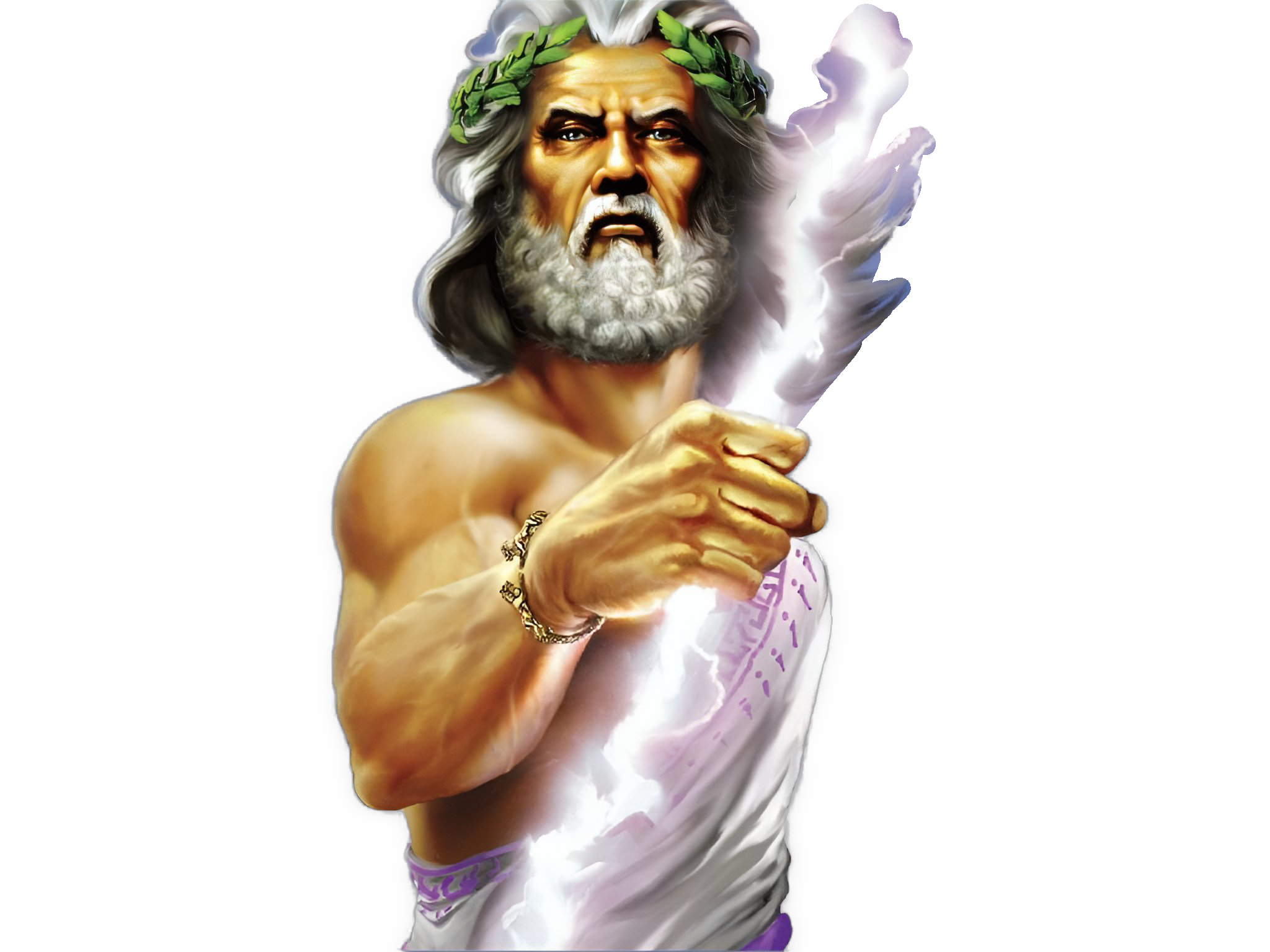 .
.
 Does Descartes treat the idolater’s idea of Zeus as materially false in itself, or only as deployed in the judgment “this is a god”? That seam is where the MF-versus-formal-falsity boundary is genuinely contested.

My answer: in itself, not merely as deployed in judgment
Descartes treats the idolater’s idea as materially false in itself—that is, as a property the idea possesses antecedently to and independently of any act of the will. Here is the reasoning.
1. MF is defined as a property of ideas, prior to judgment
The whole point of introducing material falsity in the Third Meditation is to locate a quasi-falsity at the level of ideas, before the intellect-will composite issues any affirmation. Formal falsity already covers judgment; if MF only obtained “as deployed in the judgment,” it would collapse into formal falsity and Descartes’s distinction would do no work. So the very rationale for the category requires that MF inhere in the idea itself. The idea provides the occasion for false judgment precisely because it is already defective—the defect cannot be downstream of the judgment it is supposed to occasion.
2. The “non rem tanquam rem” [non-thing as if a thing] structure is representational, not judgmental
What makes the idea materially false is that its representational content exhibits a privation/defect under the guise of positive reality. That is a feature of the idea’s representatum—of what is represented and how—not of any stance the will takes toward it. The will’s “this is a god” is a separate error (formal falsity) that supervenes on the already-defective idea. Two distinct failures, two distinct subjects: the idea bears MF, the judgment bears formal falsity.
3. This is exactly why the Zeus case is philosophically interesting
If MF attached only “as deployed,” your earlier syllogism would prove much less—it would show only that idolaters judge falsely, which no one disputes and which is just ordinary formal falsity. The reason your counterexample had bite against my first reply is that Descartes assigns MF to the idolater’s idea as such. The idea misrepresents corporeality, limitation, passions, generability as if they were perfections proper to divinity—and it does this whether or not the idolater goes on to affirm existence.
4. The qualification that keeps this honest
I hold the “in itself” reading, but I should flag where it is contested. The pressure point is Descartes’s concession to Arnauld in the Fourth Replies that, strictly speaking, ideas are not the sort of thing that can be true or false—truth and falsity properly belong to judgments. A deflationary reader (a De Rosa-style line) takes this to mean MF is only a disposition to occasion false judgment, which pulls toward your “as deployed” horn. My response: a disposition to occasion false judgment is still a property the idea has in itself, grounded in its defective content—dispositional does not mean judgment-dependent. The idea is “loaded” prior to the will’s pulling the trigger.
So, to state it sharply
The idolater’s idea of Zeus is materially false in itself, in virtue of presenting privation/defect tanquam positive divine reality. The judgment “this is a god” is a distinct, formally false act that the materially false idea makes tempting. MF is the property of the idea; formal falsity is the property of the judgment—and conflating the two is the very error Descartes built the MF category to prevent.
 There must be many such materially false ideas of other types besides false gods, such as Zeus.
List ten other types of ideas paralleling the idea of Zeus  that are all materially false ideas.
◌ GPT-5.5 Thinking
The important restriction is that the Zeus case cannot license the thesis that every fictional or non-existent object is materially false. The parallel cases must involve a pseudo-object being presented under a status it cannot have—thinghood, substancehood, perfection, causal power, real quality, or explanatory ground.
Yes, provided the list is not allowed to collapse into the overly broad claim that every non-existent or fictional object is materially false. A merely fictional idea of Pegasus, Sherlock Holmes, or a golden mountain is not materially false simply because there is no such thing. The Zeus case is materially false because the idea presents a pseudo-object under a status it cannot possess: divinity, supreme perfection, worship-worthiness, or genuine godhood.
So the parallel cases must have this structure:
a confused or defective idea presents something that is not genuinely a thing of kind F as if it were a thing of kind F.
Here are ten plausible non-sensory or primarily intellectual types.
1. The idea of Nature as an autonomous quasi-agent
This is materially false if “Nature” is conceived as a self-standing intentional power that governs things independently of God and finite created substances.
The error is not in using “nature” as a shorthand for the order of created things, essences, laws, or dispositions. The materially false idea arises when Nature is reified into a pseudo-agent: a kind of hidden goddess, cosmic manager, or independent ordering power.
| Idea | What is falsely presented |
| Nature as autonomous agent | an abstraction/order as if it were a self-standing causal power |
This parallels Zeus because it presents a pseudo-personal explanatory object as if it were metaphysically real.
2. The idea of Fortune or Fate as a real governing power
The idea of Fortune, Fate, or Destiny is materially false if conceived not merely as a name for ignorance of causes, but as a real power distributing outcomes.
The problem is pseudo-objectification. “Fortune” is treated as if it were an agent or governing force. It is not merely a false belief that an event will occur; it is a defective idea of a non-thing as an explanatory thing.
| Idea | What is falsely presented |
| Fortune/Fate as real power | absence of known causal explanation as if it were a governing entity |
This is very close to the Zeus structure: both insert pseudo-agency where Descartes would require either God, finite substances, or genuine modes.
3. The idea of a substantial form as an occult explanatory entity
A Scholastic substantial form, if conceived as a real internal quasi-thing explaining bodily behavior over and above extension, figure, motion, and arrangement, is a strong candidate for material falsity.
The idea is not merely “there is a body with a determinate nature.” The materially false version is the idea of a form as a hidden entity in the body doing explanatory work that, for Descartes, should be assigned to the modes of extension and their laws.
| Idea | What is falsely presented |
| Substantial form as occult entity | an explanatory abstraction or pseudo-cause as if it were a real internal thing |
This parallels Zeus because it gives pseudo-objective standing to something that functions as a confused explanatory placeholder.
4. The idea of gravity or heaviness as an intrinsic striving quality
This is materially false if gravity or heaviness is conceived as a real inward tendency, appetite, or occult quality by which bodies strive toward the center.
The idea is not materially false merely because one thinks bodies fall. Bodies do fall, and there are real causes. The materially false idea is the reified quality of “heaviness” as if it were a positive internal power resembling an appetite or tendency.
| Idea | What is falsely presented |
| Heaviness as intrinsic striving quality | a mechanical effect or relational behavior as if it were an occult positive power |
This is structurally parallel to Zeus because a pseudo-causal entity is inserted where the Cartesian account allows only bodies, modes, laws, and divine conservation.
5. The idea of the vacuum as a positive empty thing
The idea of a vacuum becomes materially false if “empty space” is treated as a positive extended thing distinct from body.
The error is not merely thinking “there is no body here.” That can be a perfectly intelligible negative thought. The materially false idea is of nothing-body or extended absence as if it were a positive res.
| Idea | What is falsely presented |
| Vacuum as positive empty extension | absence of body as if it were a positive extended thing |
This is one of the cleanest non-sensory analogues to material falsity because it directly presents a non-thing as if a thing.
6. The idea of darkness as a positive stuff or quality
A clear idea of darkness as absence or privation of light is not materially false. But the idea of darkness as a positive black stuff, shadow-substance, or real quality flowing over objects is materially false.
| Idea | What is falsely presented |
| Darkness as positive quality/stuff | absence or privation of light as if it were a positive entity |
This parallels the cold case more than Zeus, but it can be intellectualized: the false idea is not merely the sensation of darkness but the conceptual reification of darkness into a positive being.
7. The idea of evil as a positive being
The idea of evil is materially false if evil is conceived as a positive ontological item rather than as privation, disorder, defect, or lack of due perfection.
| Idea | What is falsely presented |
| Evil as positive being | privation/disorder as if it were a positive entity |
This is an especially important analogue because it has theological stakes. If evil were a positive being, then its source would require a positive cause in a way that threatens divine goodness. Treating evil as privation avoids that. The materially false idea of evil-as-thing presents a non-thing under the guise of positive reality.
8. The idea of a universal, such as Humanity, as a separately existing thing
This is materially false if the universal “humanity” is conceived as a self-standing entity existing over and above individual human beings and the mind’s abstract way of considering them.
The error is not in thinking about humanity, human nature, or what humans have in common. The materially false idea is Platonizing or reifying the universal into a separate thing.
| Idea | What is falsely presented |
| Humanity as separately existing universal | abstraction/common nature as if it were an independent res |
This parallels Zeus because the mind confers object-like standing on what is not, for Descartes, a self-standing object.
9. The idea of Nothing as a positive object
A clear negative thought of nothing is not materially false. But the idea of Nothing as if it were a positive object—an abyssal entity, a dark stuff, a metaphysical container, or a quasi-substance—is materially false.
| Idea | What is falsely presented |
| Nothing as object | sheer negation as if it were a positive thing |
This is perhaps the purest case of non rem tanquam rem: not a thing as if a thing. It is parallel to Zeus not by pseudo-divinity, but by pseudo-objecthood.
10. The idea of a created completed infinite as if it were truly infinite
For Descartes, created quantity can be indefinite in the sense that we cannot assign limits, but true infinity belongs uniquely to God. So an idea of created extension, created number, or created magnitude as completedly infinite in the divine sense would be materially false.
| Idea | What is falsely presented |
| Created completed infinite | the indefinite or endlessly extendable as if it were true infinity |
The error is not in thinking that number can always be increased or that extension can always be considered beyond any assigned boundary. The materially false idea arises when the mind reifies this indefinite extendability into a completed infinite thing rivaling divine infinity.
Summary table
| # | Type of materially false idea | Non-thing presented as if thing |
| 1 | Nature as autonomous agent | order/law/essence as independent agent |
| 2 | Fortune or Fate as governing power | ignorance/contingency as real ruler |
| 3 | Substantial form as occult entity | explanatory placeholder as internal thing |
| 4 | Heaviness as intrinsic striving quality | mechanical effect as positive appetite/power |
| 5 | Vacuum as positive empty extension | absence of body as extended thing |
| 6 | Darkness as positive stuff | privation of light as positive quality |
| 7 | Evil as positive being | defect/privation as positive entity |
| 8 | Universal Humanity as separate res | abstraction/common nature as self-standing thing |
| 9 | Nothing as object | negation as positive object |
| 10 | Created completed infinite | indefinite quantity as true infinity |
Best generalization
The Zeus case belongs to a broader family of pseudo-objectifying intellectual ideas. They differ from secondary-quality sensations because they do not arise primarily from sensory phenomenology. Their material falsity lies in defective conceptual presentation: the mind frames a privation, abstraction, absence, fiction, explanatory placeholder, or merely indefinite structure as if it were a genuine object, power, substance, or perfection.
The common formula is:
Materially false intellectual ideas present a non-object, pseudo-object, privation, abstraction, or deficient construction as if it possessed genuine thinghood, causal power, perfection, substancehood, or objective standing.
That is the right extension of the Zeus case. It keeps the category broad enough to include non-sensory materially false ideas, but narrow enough to avoid making every fiction, mistake, or confused thought materially false.
The opening question: is your criterion [a confused or defective idea presents something that is not genuinely a thing of kind F as if it were a thing of kind F] sufficient?
Your criterion—a confused/defective idea presenting something not genuinely of kind F as if it were of kind F—is necessary but not sufficient, because “non-F as F” is broader than Descartes’s “non rem tanquam rem repraesentant.” Misrepresenting one positive kind as another positive kind (a dog as a cat) is formal falsity in judgment, not material falsity in the idea. Material falsity has the narrower referential structure: the idea presents a non res—a non-thing—tanquam res, as a thing.
What “non rem tanquam rem repraesentant” means
This is the heart of the matter, and it is a claim about the referential form of the idea, not about external physics. Take the sensation of cold:
- The res is the positive phenomenal content in the sensation—the felt coolness, which is genuinely something in the mind.
- The non res is the absence, in the object, of any quality resembling that content—there is no phenomenal coolness in the ice answering to the coolness in the sensation.
- The material falsity is that the sensation presents (repraesentant) this non-thing as a thing: it exhibits the positive phenomenal content as a quality residing in the object, when the object contains no such resembling quality.
So the formula reads: a non-thing (no answering quality in the cause) presented as a thing (a positive quality referred outward to the object).
Why this is the right level of analysis
This construal detaches material falsity from contested external physics. It does not depend on whether cold or heat is “really” a privation of motion in the world. The sensation of warmth and the sensation of cold are equally materially false, because each presents a positive phenomenal content as a quality of the object when the object contains no resembling quality—whichever, if either, turns out to be the physical privation. MF is thus a fact about the sensation’s misreferring representational form, general across the secondary qualities and hostage to no particular thermodynamic theory.
Consistency with the reply to Arnauld
This reading makes Descartes’s concession to Arnauld fully coherent. Arnauld is granted that the phenomenal content is something positive—indeed it is the res in the formula, and the idea considered as a mode of thought is positive and real. Descartes retracts nothing. The material falsity was never the claim that the content is a privation; it is that this positive content is presented as residing in the object when what the object offers is a non res. So “the sensation is positive yet materially false” is not a counterexample to the non rem tanquam rem structure—it is that structure correctly described.
See my post: “Privations, Sensations, And Objective Reality: A Closer Look At Arnauld’s Misinterpretation Of Descartes’s Ideas With ChatGPT 4o”
Material falsity is a property of the idea in itself
MF inheres in the idea antecedently to and independently of any act of the will. The sensation already misrefers—presenting a non res tanquam res—before the intellect-will composite affirms anything. This is precisely why MF must be distinguished from formal falsity: the idea provides the occasion for false judgment because it is already defective in its representational form; the defect cannot be downstream of the judgment it occasions. The will’s subsequent affirmation that the object possesses the quality is a distinct, formally false act that supervenes on the already materially false idea.
The idolater’s idea of Zeus
The same referential structure extends beyond sensation. The idolater’s idea of Zeus is materially false in itself, not merely as deployed in the judgment “this is a god.” It presents defect or limitation—corporeality, passions, generability—as if these were perfections residing in a divine being: a non res (no such perfection answering to the content) exhibited tanquam res. The idea can be vivid, articulate, and richly detailed and still be materially false, which shows that the obscurity diagnostic of MF is representational, not phenomenal: the idea does not let the intellect determine whether its content answers to a genuine thing or to a non-thing, even when the idea is subjectively clear. Crucially, the relevant non res is not Zeus’s non-existence—mere non-instantiation yields only formal falsity in the existential judgment. The material falsity lies in the referential misascription, present whether or not Zeus exists.
The criterion, stated correctly
An idea is materially false for Descartes iff:
- it carries a positive content (a res)—e.g., phenomenal coolness, or the represented perfection in the Zeus-idea;
- it presents that content as a thing residing in the object, referring it outward as if the object contained a resembling thing;
- where the object in fact contains no such resembling thing—a non res;
- the idea is thereby representationally obscure in the diagnostic sense—its own content does not let the intellect determine whether it answers to a thing or a non-thing; and
- it furnishes, in itself, the occasion for the will to judge falsely that the object possesses what the idea exhibits.
This preserves the “non rem tanquam rem repraesentant” structure at the level of referential form, secures that warmth and cold are equally materially false irrespective of external physics, extends correctly to idolatrous and mythological ideas, and remains fully consistent with what Descartes concedes to Arnauld.
None of the items on your list of ten are things such as Zeus.
 Are there other ideas that themselves are materially false for Descartes?
◌ GPT-5.5 Thinking
I agree with the objection. My prior list gave analogues of pseudo-reification, but not enough cases like Zeus: concrete pseudo-deities or pseudo-persons whose very object-presenting idea could be materially false in Descartes’s sense. I’ll narrow the answer to that class.
Yes, but with an important restriction: Descartes explicitly gives us the plural class “confused ideas of gods that idolaters concoct,” or “ideas of false gods.” That licenses cases like Zeus, Apollo, Athena, Jupiter, Baal, etc., insofar as they are conceived as gods. But I do not think Descartes gives us a clear textual basis for saying that ordinary fictional individuals—Pegasus, a chimera, Sherlock Holmes, a golden mountain, a centaur—are materially false merely as such.
The key text is in the Fourth Replies. In the available translation, Descartes says that the clear and distinct idea of God cannot be mistaken for something else, but that “the confused ideas of gods that idolaters concoct” may be called materially false because they provide subject-matter for false judgments; he then adds that “ideas of false gods” give less scope for error than sensory ideas such as color and cold, while dropsical thirst gives the greatest scope for error.
So the safest answer is:
Yes, Descartes recognizes materially false ideas of false gods, plural. But outside the false-god/idolatry class, he does not clearly give a parallel list of concrete fictive individuals whose very ideas are materially false.
Ten Zeus-like materially false ideas, on Descartes’s own principle
These are not different “types” from Zeus in the sense of belonging to non-divine fictional ontology. They are different instances of the same Cartesian class: confused ideas of false gods or idol objects.
| # | Idea | Why it is Zeus-like materially false |
| 1 | The idea of Apollo as a god | Presents a finite mythic pseudo-person under the guise of divinity. |
| 2 | The idea of Athena as a goddess | Presents a fabricated finite object as possessing divine wisdom and worship-worthiness. |
| 3 | The idea of Poseidon as a god | Presents an imagined sea-ruling agent as genuinely divine. |
| 4 | The idea of Ares as a god | Presents a mythic war-agent as a divine being. |
| 5 | The idea of Aphrodite as a goddess | Presents a finite imaginative construction as divine love/beauty. |
| 6 | The idea of Hermes as a god | Presents a mythic messenger-trickster as genuinely divine. |
| 7 | The idea of Dionysus as a god | Presents a mythic cultic figure as divine. |
| 8 | The idea of Hera as a goddess | Presents a mythic queenly pseudo-person as divinity. |
| 9 | The idea of Hades as a god | Presents an underworld-ruling pseudo-agent as divine. |
| 10 | The idea of Baal as a god | Presents an idol-deity as genuinely divine and worship-worthy. |
These are materially false only under the relevant description: as ideas of gods. The idea of “Apollo” considered merely as a fictional character in a poem is not thereby materially false. The material falsity arises when the idea presents the pseudo-object as genuinely divine, worship-worthy, or possessing the perfections proper to God.
Why Pegasus or a chimera is different
A chimera 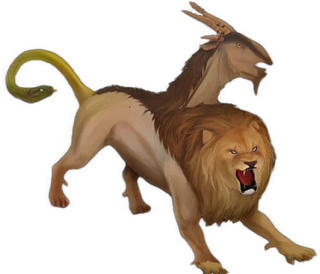 is a crucial contrast. Descartes and commentators often use the chimera-type case to show that non-existence alone does not make an idea materially false. If the mind merely imagines a goat-lion-serpent composite without taking it as a real kind of thing with illegitimate metaphysical status, the idea may be fictional, factitious, confused, or non-veridical, but not thereby materially false.
So the following are not automatically materially false:
| Idea | Why not automatically materially false |
| Pegasus | A fictional winged horse need not present a non-thing as divine, perfect, or worship-worthy. |
| Chimera | A composite fiction is not materially false merely because it has no external instance. |
| Golden mountain | Non-existence is not enough. |
| Sherlock Holmes | Fictional personhood alone is not material falsity. |
| Centaur | A confused or composite image, but not necessarily a materially false idea. |
They could become materially false only if further confused content is added: for example, if the chimera were conceived as a divine being, a real explanatory principle, or a metaphysically impossible object under the guise of genuine thinghood. But as ordinary fictions, they are not parallel to Zeus-as-god.
The corrected answer
There are Zeus-like materially false ideas for Descartes, but they are false-deity ideas:
Zeus, Apollo, Athena, Poseidon, Ares, Aphrodite, Hermes, Dionysus, Hera, Hades, Baal, Jupiter, Mars, Venus, Mercury, and the like—when confusedly conceived as gods—are materially false ideas because they provide subject-matter for false judgments about divinity.
But if the request is for non-divine concrete fictive individuals that are materially false in exactly the same way, the answer is much less favorable:
Descartes does not clearly license a broad class of materially false ideas of ordinary fictional individuals. The explicit non-sensory class is confused ideas of false gods, not fictional objects as such.
So the right conclusion is narrower than my prior answer: the Zeus-type cases are materially false because they are confused ideas of false gods; ordinary fictive beings are not materially false merely by being non-existent.
 You are, in effect, cheating, when you just name more false gods. I want non-god examples and I can think of two. Can you think of any other types of ideas that would be materially false?
◌ GPT-5.5 Thinking
You are right: simply multiplying false gods evades the point. The real question is whether Descartes has room for non-divine pseudo-object ideas whose material falsity is not just sensory projection and not just ordinary fiction.
Yes, but the list is much shorter than my earlier answer implied. The non-god cases must be pseudo-object ideas, not merely false beliefs and not merely fictions. The best candidates are ideas whose very content presents an impossible, privative, or pseudo-substantial item as if it were a genuine object.
The two strongest non-god candidates are these:
1. The idea of a vacuum as an extended empty thing
This is probably the strongest non-god analogue.
For Descartes, extension is not an accident added to body; extension is the essence of body. So the idea of a vacuum understood as extended space without body presents something as if it were a genuine extended item while, on Cartesian principles, there can be no such thing. It is not merely the negative thought “there is no body here.” It is the positive pseudo-idea of an empty extension: extension treated as if it could exist without extended substance.
That makes it structurally parallel to material falsity:
| Case | Non-thing presented as if thing |
| Cold sensation | absence/non-resembling bodily quality as if positive sensible quality |
| Zeus as god | finite pseudo-person as if divine being |
| Vacuum as empty extension | absence of body as if positive extended thing |
This is a genuinely good non-god case because the defect is in the idea’s own object-presenting structure. It presents “empty extension” as if it were a possible res, when, for Descartes, extension without body is not a genuine object.
2. The idea of Nothing as a positive object
This is another very strong candidate.
A negative thought of nothing is not materially false. One can think not anything, or deny that something exists. But the idea of Nothing as if it were a positive item—a void, abyss, dark entity, metaphysical container, or object of thought—is materially false in the strictest possible way.
It presents no thing as if a thing.
| Case | Non-thing presented as if thing |
| Zeus as god | non-divine pseudo-object as if divine |
| Nothing as object | sheer negation as if positive object |
This is arguably even closer than Zeus to the formula non rem tanquam rem. The danger is that one reifies negation itself.
3. The idea of darkness as a positive stuff
This is weaker than the first two but still plausible. A clear idea of darkness as privation or absence of light is not materially false. But the idea of darkness as a positive black stuff, shadow-substance, or quasi-entity spreading over things would be materially false.
The structure is:
absence of light → positive dark stuff
This parallels the cold case, but it can be intellectualized rather than merely sensory. The materially false idea is not simply the visual experience of darkness, but the pseudo-objectifying idea of darkness as a positive entity.
4. The idea of evil as a positive being
This is also plausible, though more theological than Cartesian-physics-based. If evil is conceived as a positive ontological thing rather than a privation, defect, disorder, or lack of due perfection, then the idea presents a non-thing as if a thing.
The structure is:
privation/disorder → positive being
This resembles the cold case if cold is treated as privation, but it also parallels Zeus because the mind constructs a pseudo-object with illegitimate ontological standing.
5. The idea of a real quality as an occult quasi-thing
A Scholastic “real quality,” if conceived as a positive quasi-entity inhering in body and explaining sensible effects independently of extension, figure, motion, and arrangement, is another plausible case.
For example, “heaviness” conceived not as a mechanical or relational fact but as a positive inner striving-quality would be materially false. The idea gives pseudo-objective status to an explanatory placeholder.
The structure is:
mechanical effect or confused explanatory abstraction → occult positive power
This is less clean than vacuum or Nothing because Descartes may treat such ideas as confused, obscure, or useless rather than explicitly materially false. But by the non rem tanquam rem criterion, it is a defensible extension.
Why ordinary fictional beings still do not qualify
I would still resist saying that these are materially false merely as ideas:
| Idea | Why not automatically materially false |
| Pegasus | A fictional winged horse is not thereby presented as divine, impossible, or pseudo-substantial. |
| Chimera | Descartes explicitly treats imagining a chimera as not false merely as imagination. |
| Centaur | A composite fiction, not necessarily a non-thing as if a thing. |
| Golden mountain | Non-instantiation is not material falsity. |
| Sherlock Holmes | Fictional personhood is not enough. |
They become materially false only if the idea presents them under an illegitimate metaphysical status: as divine, as necessarily existing, as an impossible object that is nevertheless objectified, as a real explanatory power, or as a positive being where there is only privation or negation.
The best answer
So yes: there are non-god candidates. But the best ones are not ordinary fictional individuals. They are pseudo-object ideas:
- vacuum as positive empty extension;
- Nothing as a positive object;
- darkness as positive stuff;
- evil as positive being;
- real qualities or substantial forms as occult quasi-things.
The first two are the strongest. They are not sensory ideas in the ordinary cold/color/pain sense, and they are not false gods. They are materially false because the idea itself presents a non-object as if it had genuine objecthood.
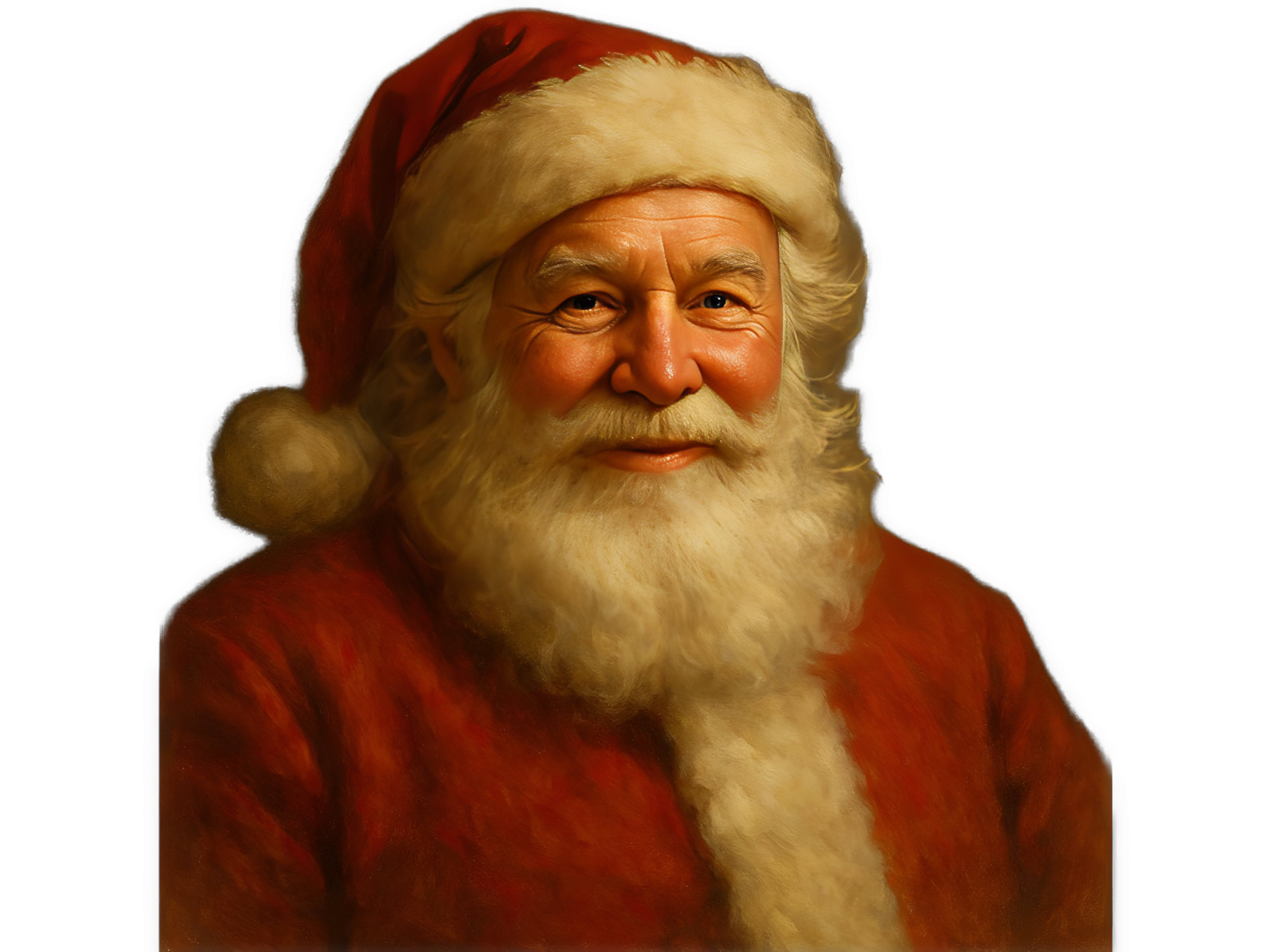
 I have in mind Santa Claus
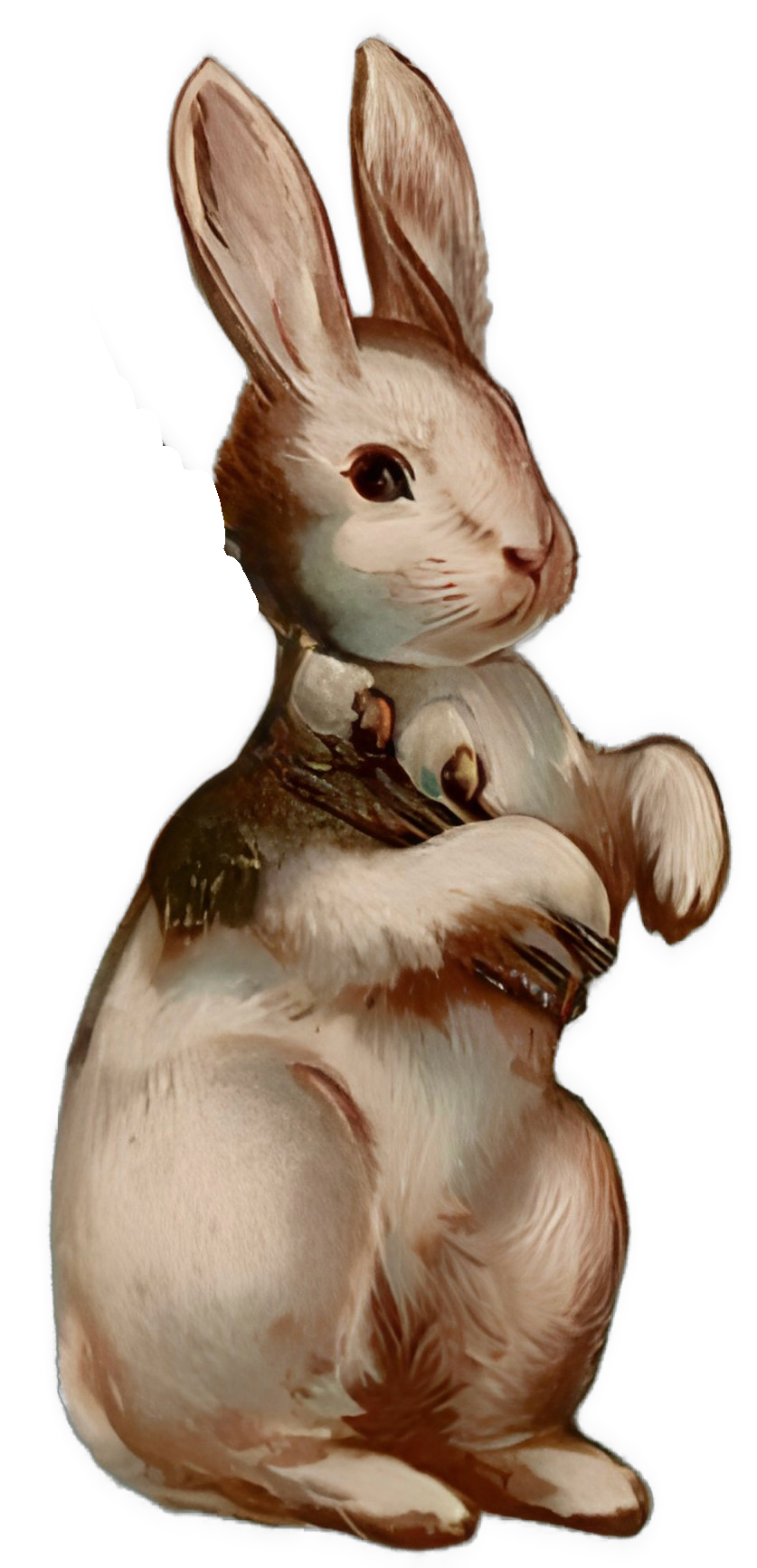
  , the Easter Bunny
  , and the Tooth Fairy
  , as believed in by children? These children are in comparable positions to false idolaters, are they not? These children believe in a non-thing as a thing (non rem tanquam rem repraesentant) and are inclined to make false judgments, such as “X should be showing up soon.”
◌ GPT-5.5 Thinking
Yes. Santa Claus, the Easter Bunny, and the Tooth Fairy are much better non-god parallels to the false-idolater case than my earlier examples. They are not sensory-materially-false ideas like cold, color, or pain. But, as believed in by children, they can plausibly count as pseudo-objectifying materially false ideas by extension of Descartes’s false-god example.
The key qualification is “as believed in by children.” The idea of Santa Claus entertained by an adult as a fictional character is not materially false merely because Santa does not exist. But the child’s idea of Santa as a real, gift-delivering, chimney-entering, morally observant agent is materially false in a way structurally close to the idolater’s idea of Zeus.
1. Why these cases are genuinely parallel to false-idolater ideas
The false idolater’s idea of Zeus is materially false because it presents a pseudo-object as if it were a genuine divine being. The child’s idea of Santa Claus presents a pseudo-object as if it were a genuine embodied agent with determinate powers, intentions, knowledge, and future actions.
The structure is:
| Case | Pseudo-object | Status falsely presented |
| False idolater’s Zeus | mythic finite pseudo-person | god, divine object, worship-worthy being |
| Child’s Santa Claus | cultural fictional pseudo-person | real gift-giving moral observer |
| Child’s Easter Bunny | cultural fictional pseudo-agent | real Easter gift/candy-delivering agent |
| Child’s Tooth Fairy | cultural fictional pseudo-agent | real nocturnal tooth-money exchanger |
These are not merely empty names. In the child’s cognitive economy, they function as real agents who explain events, ground expectations, and generate future-directed questions: “When will Santa come?”, “How does he know if I was good?”, “Will the Tooth Fairy bring money tonight?”, “Where does the Easter Bunny hide the eggs?”
That is exactly the kind of thing a materially false idea is supposed to do: it supplies subject-matter for false judgments.
2. Why they are not merely false beliefs
A possible objection is that the child simply has a false belief, not a materially false idea. That would be too quick.
The child’s error is not exhausted by the judgment “Santa exists.” The idea itself is already structured as an apparent object of expectation, explanation, and practical orientation. It presents a pseudo-agent with enough object-like determinacy to support a whole network of false judgments.
For example, the Santa idea supports judgments such as:
| Materially false idea | False judgments it naturally supports |
| Santa Claus | Santa will come tonight; Santa knows whether I was good; Santa brought the presents |
| Easter Bunny | The Easter Bunny hid the eggs; the Easter Bunny will come on Easter morning |
| Tooth Fairy | The Tooth Fairy will take my tooth; the Tooth Fairy left the money |
The idea is therefore not a neutral fiction plus an accidental judgment. It is a pseudo-object idea that comes packaged, for the child, with apparent reality-status and explanatory role.
That makes it closer to the false idolater’s Zeus than to a merely imagined chimera.
3. Why fictional status alone is not enough
This point remains essential: fictional non-existence alone does not make an idea materially false.
An adult literary idea of Santa Claus, Zeus, Hamlet, Pegasus, or Sherlock Holmes is not materially false merely because the object is fictional. One can clearly entertain a fiction as fiction. In that case, the idea does not present a non-thing as if a thing; it presents a fictional object as fictional.
The material falsity arises only when the pseudo-object is taken, or is presented within the subject’s cognitive economy, as having real status.
So:
| Idea | Materially false? | Reason |
| Adult idea of Santa as fictional | No | Fiction is understood as fiction |
| Child’s idea of Santa as real | Yes, plausibly | Pseudo-agent presented as real |
| Adult idea of Zeus as mythological fiction | No | Myth is understood as myth |
| Idolater’s idea of Zeus as god | Yes | Pseudo-divine object presented as divine |
| Idea of Pegasus as a fictional creature | No | Mere fiction is not enough |
| Idea of Pegasus as a real winged horse now living somewhere | Possibly | Pseudo-object presented as real animal |
4. Why Santa, Easter Bunny, and Tooth Fairy are better than Pegasus
Santa Claus, the Easter Bunny, and the Tooth Fairy are not merely imagined creatures. In the child-belief context, they are embedded in explanatory and practical practices:
Santa explains the presents.
The Tooth Fairy explains money under the pillow.
The Easter Bunny explains hidden eggs or candy.
That makes these ideas more like religious-idolatrous pseudo-objects than like free-floating fiction. They are not merely entertained; they are used to explain events and structure expectation.
The parallel to false gods is therefore strong:
| False idolater | Child believer |
| Zeus caused the storm | Santa brought the presents |
| Apollo healed the sick | Tooth Fairy left the money |
| Demeter caused the harvest | Easter Bunny hid the eggs |
| The god will act tomorrow | Santa will come tonight |
In each case, a culturally transmitted pseudo-agent is treated as a real explanatory and action-guiding being.
5. The best formulation
Santa Claus, the Easter Bunny, and the Tooth Fairy, as believed in by children, are plausible materially false ideas because they satisfy the core structure:
The idea presents a non-thing—a culturally constructed pseudo-agent—as if it were a real thing, namely, a concrete agent with knowledge, intentions, causal powers, and future actions; and this idea inclines the child to make false judgments grounded in that pseudo-object.
This is not the same as secondary-quality material falsity. It is not sensory seeming elevated into ontology. It is socially transmitted pseudo-objectification.
So the expanded taxonomy should be:
| Type | Example | Material falsity consists in |
| Sensory material falsity | cold, color, pain | phenomenal seeming presented as objectifiable body-quality |
| False-god material falsity | Zeus as god | pseudo-person presented as divine being |
| Child-belief pseudo-agent material falsity | Santa, Easter Bunny, Tooth Fairy | fictional cultural agent presented as real explanatory agent |
| Appetitive material falsity | dropsical thirst | harmful intake presented as beneficial-now |
6. The important difference from false gods
There is still a difference. The false idolater’s Zeus is materially false under a divinity-description: the pseudo-object is presented as a god. Santa is materially false under a real-agent-description: the pseudo-object is presented as an actual person-like being who knows, intends, travels, gives, rewards, and appears.
So Santa is not materially false in exactly the same way as Zeus. But the structural parallel is strong enough:
Zeus-as-god presents a pseudo-agent as divine; Santa-as-believed-by-children presents a pseudo-agent as real.
Both furnish matter for false judgments because the idea itself is not merely fictional in the subject’s use of it. It is objectifying.
7. Final answer
Yes. Santa Claus, the Easter Bunny, and the Tooth Fairy as believed in by children are excellent non-god examples of materially false ideas by Cartesian extension. They are not materially false merely because they are fictional. They are materially false because, in the child’s mind, they present a non-thing as if a real thing: a concrete agent with knowledge, intentions, causal powers, and expected future actions.
The strongest general category is:
materially false pseudo-agent ideas.
That category includes false gods as one species, but it can also include child-belief figures such as Santa Claus, the Easter Bunny, and the Tooth Fairy.
 Why didn’t you come up with these last three examples on your own when first asked?
◌ GPT-5.5 Thinking
Because I was over-constraining the search space.
I was treating “parallel to Zeus” too narrowly as either:
- explicitly Cartesian false-god cases — Zeus, Apollo, Athena, Baal, etc.; or
- metaphysical pseudo-objects — vacuum, Nothing, darkness-as-positive, evil-as-positive, substantial forms, and similar philosophical cases.
That made me miss the more obvious intermediate category:
ordinary culturally transmitted pseudo-agents believed in as real by a finite mind.
Santa Claus, the Easter Bunny, and the Tooth Fairy fit that category extremely well. They are not gods, and they are not abstract metaphysical pseudo-objects. They are socially supplied pseudo-persons or pseudo-agents whose ideas, in children who believe in them, function much like the false idolater’s idea of Zeus.
The reason I missed them is that I was implicitly searching for cases that were either textually close to Descartes’s own examples or philosophically “serious” in the early modern metaphysical register. That was the wrong constraint. The better constraint should have been structural:
Does the idea present a non-thing as if it were a concrete agent or object, and does it thereby incline the subject to make false judgments?
Under that structural test, Santa Claus, the Easter Bunny, and the Tooth Fairy are obvious candidates. They are actually better than many of the examples I gave, because they preserve the agentive pseudo-object structure of the false-god case without remaining inside the class of gods.
So the corrected taxonomy should include a category I initially failed to isolate:
| Category | Example | Why materially false |
| False divine pseudo-agent | Zeus as believed in by idolaters | Pseudo-agent presented as god |
| False cultural pseudo-agent | Santa Claus as believed in by children | Pseudo-agent presented as real gift-giver |
| False ritual/explanatory pseudo-agent | Easter Bunny | Pseudo-agent presented as real Easter gift/candy source |
| False transactional pseudo-agent | Tooth Fairy | Pseudo-agent presented as real nocturnal tooth-money exchanger |
Your examples expose the right generalization: the false-god case is not fundamentally about divinity alone; it is about a pseudo-agent being given real object-status in the subject’s cognitive economy. Divinity is one way that can happen. Childhood cultural mythology is another.
 What about the aether as believed in by scientists before the Michelson-Morley experiment? Isn’t the idea of the aether materially false?
◌ GPT-5.5 Thinking
The aether case is a strong candidate, but only under a qualified, analogical extension of Descartes’s category. The key issue is whether the idea was merely a provisional hypothesis or whether it was taken as a real explanatory medium with causal powers.
Yes, the aether is a much stronger candidate than Pegasus or a chimera, but it needs a qualification. The idea of the luminiferous aether is materially false if it is believed as a real explanatory medium-substance, not if it is merely entertained as a provisional scientific hypothesis.
The case is structurally closer to Santa Claus and the false idolater’s Zeus than to a merely fictional object, because the aether was not just imagined; it was posited as a real, causally explanatory entity. Nineteenth-century physics treated the luminiferous ether as a medium in space proposed to carry light waves, and the Michelson-Morley experiment was designed to detect the Earth’s motion relative to that hypothetical medium.
Why the aether is a plausible materially false idea
The idea has the right structure:
| Case | Non-thing presented as if thing | False judgments naturally supported |
| Zeus as believed by idolaters | pseudo-agent as divine being | Zeus acts, rules, deserves worship |
| Santa as believed by children | pseudo-agent as real gift-giver | Santa comes tonight, brings gifts |
| Aether as believed by scientists | pseudo-medium as real physical substance | light propagates through it, Earth moves through it, an aether wind should be detectable |
That last column is important. The aether idea supplied subject-matter for specific false judgments and experimental expectations: that there is a light-bearing medium, that Earth moves through it, and that an “aether wind” might be detectable. Michelson and Morley’s 1887 experiment compared light travel in perpendicular directions to detect such relative motion; the null result became strong evidence against then-current aether theories.
So yes: aether-as-real-medium can be classified as a non-sensory materially false idea by extension of Descartes’s false-idolater case.
But not merely because the hypothesis turned out false
The important caution is that falsified scientific posits are not automatically materially false ideas. A hypothesis can be false without its idea being materially false. If a scientist says, “Let us model light as if it propagates through an aether and test the consequences,” that is not yet material falsity. It may be a legitimate hypothetical posit.
It becomes materially false when the idea is given real object-status in the cognitive economy:
there really is a subtle, all-pervading medium-substance that carries light waves and provides a privileged frame for electromagnetic propagation.
At that point, the idea is not merely instrumental. It presents a pseudo-physical entity as if it were a real thing.
The Cartesian classification
The aether case is not sensory material falsity. It is not like cold, color, or pain. It is also not exactly like Zeus, because it is not a pseudo-divine or pseudo-agent idea. It is best classified as:
a materially false theoretical-entity idea.
That category includes ideas of non-existent explanatory posits when they are not merely entertained as models, but are taken as real entities with causal powers.
| Type of material falsity | Example | Mode of false presentation |
| Sensory | cold, color, pain | phenomenal seeming as body-inherent quality |
| Pseudo-divine | Zeus as god | finite pseudo-agent as divine |
| Child-belief pseudo-agent | Santa Claus | fictional agent as real causal agent |
| Theoretical pseudo-entity | luminiferous aether | explanatory posit as real medium-substance |
Best answer
The idea of the aether, as believed by scientists before and around the Michelson-Morley period, is a plausible materially false idea if the aether is conceived as a real medium-substance. It presents a non-thing as if a thing: a real, all-pervading, light-bearing medium. It also inclines the mind toward false judgments about propagation, absolute rest, and detectable aether drift.
But the idea of the aether as a testable hypothesis is not materially false merely because it later failed. The material falsity lies not in scientific conjecture, but in the pseudo-objectifying commitment to a non-existent explanatory entity as if it were a real physical thing.
 What other possible idea types are materially false that we haven’t yet considered?
◌ GPT-5.5 Thinking
I would now broaden the classification by asking what role the false item plays in the subject’s cognitive economy: pseudo-agent, pseudo-medium, pseudo-quality, pseudo-force, pseudo-substance, pseudo-kind, pseudo-relation, or pseudo-norm. That avoids merely listing more examples of one class.
Yes. The best next move is to treat material falsity as a genus of pseudo-objectifying ideas, with Descartes’s explicit cases as anchor points:
- sensory ideas such as cold;
- false-god ideas such as Zeus;
- appetitive ideas such as dropsical thirst.
From those, one can extend the category cautiously. The key test is not “the object does not exist.” The test is:
Does the idea itself present a non-thing, pseudo-thing, privation, abstraction, impossible item, or merely instrumental posit as if it were a genuine thing, power, substance, agent, property, need, or explanatory ground, thereby inclining the subject toward false judgments?
On that test, these further types are plausible.
1. Pseudo-scientific theoretical-entity ideas
The aether is one instance. Others include phlogiston, caloric fluid, and perhaps some versions of miasma.
These are materially false when they are not merely used as provisional models, but are believed to be real explanatory entities.
| Idea type | Example | False objectifying structure |
| Pseudo-scientific medium | luminiferous aether | non-existent medium as real wave-bearing substance |
| Pseudo-chemical principle | phlogiston | explanatory posit as real fire-principle |
| Pseudo-thermal fluid | caloric | heat behavior as if caused by subtle heat-fluid |
| Pseudo-disease medium | miasma | disease transmission as if caused by a noxious quasi-substance |
These are not materially false merely because the theories were later rejected. They are materially false only if the idea gives a pseudo-entity real object-status in the subject’s explanatory scheme.
2. Occult-power ideas
These are ideas of powers that are treated as real intrinsic forces when, on a Cartesian-mechanistic account, they are confused placeholders for mechanical arrangements, motions, or relations.
| Idea type | Example | False objectifying structure |
| Occult power | heaviness as inner striving | motion/behavior as if caused by intrinsic appetite |
| Sympathetic power | magnetism as occult sympathy | physical interaction as if caused by hidden affinity |
| Magical efficacy | talismanic power | object treated as possessing non-natural causal power |
| Curse-force | curse as operative power | social/psychological fear as real causal force |
This class is very close to false-god cases, except that the pseudo-object is not a god or agent but an occult causal power.
3. Pseudo-agent explanatory ideas
Santa Claus, the Easter Bunny, and the Tooth Fairy belong here. So would many other non-divine pseudo-agents when believed in as real.
| Idea type | Example | False objectifying structure |
| Child-belief pseudo-agent | Santa Claus | fictional agent as real gift-giver |
| Ritual pseudo-agent | Tooth Fairy | fictional agent as real exchanger |
| Folkloric pseudo-agent | household spirit, leprechaun, goblin | story-agent as real causal agent |
| Explanatory pseudo-agent | imaginary cabal or hidden controller, if nonexistent | explanatory fiction as real organized agent |
The important qualification: if one merely entertains these as fiction, they are not materially false. They become materially false when the idea functions as a real explanatory object.
4. Reified-abstraction ideas
These are ideas in which abstractions are treated as independent things or agents.
| Idea type | Example | False objectifying structure |
| Reified Nature | Nature as a self-governing agent | order of created things as independent agent |
| Reified History | History as an agent with intentions | sequence of events as purposive being |
| Reified Chance | Chance as a causal power | ignorance/contingency as real cause |
| Reified Market | The Market as literal intentional subject | distributed human activity as single agent |
Some uses are harmless metaphors. The materially false case arises when metaphor hardens into ontology: the abstraction is treated as a real subject, agent, or causal thing.
5. Reified-privation ideas
These are very strong candidates because they closely match the formula “a non-thing as if a thing.”
| Idea type | Example | False objectifying structure |
| Darkness as stuff | darkness as black substance | absence of light as positive entity |
| Silence as stuff | silence as a positive acoustic presence | absence of sound as positive sound-like thing |
| Blindness as entity | blindness as a thing in the eye | privation of sight as positive ocular item |
| Evil as positive being | evil as ontological substance | defect/disorder as positive being |
A clear idea of a privation as privation is not materially false. The materially false version treats the privation as a positive entity.
6. Impossible-object pseudo-ideas
This is a delicate class. A clear intellectual grasp that a round square is impossible is not materially false. But a confused pseudo-idea that presents an impossible object as if it were a genuine object is a plausible materially false candidate.
| Idea type | Example | False objectifying structure |
| Contradictory geometrical object | round square | incoherent pseudo-object as possible figure |
| Impossible number | largest integer | impossible limit as determinate number |
| Finite infinite | created completed infinite | indefinite quantity as true infinity |
| Contradictory substance | dependent self-existent being | metaphysical contradiction as genuine thing |
This class is materially false only when the mind treats the impossible item as a genuine object of thought, not when the intellect clearly sees the contradiction.
7. Pseudo-substance ideas
These are ideas that treat modes, relations, absences, or abstractions as if they were substances.
| Idea type | Example | False objectifying structure |
| Space as container-substance | empty space as thing distinct from body | abstraction from body as independent res |
| Time as flowing substance | time as entity moving independently of things | duration/order as self-standing thing |
| Motion as substance | motion as thing transferred between bodies | mode of body as detachable entity |
| Relation as substance | fatherhood as independent object | relational structure as self-standing thing |
These are especially important for Descartes because his ontology is austere: created substances and their modes. A mode or relation reified into a substance becomes a strong candidate for material falsity.
8. Pseudo-kind ideas
These involve treating a confused classificatory construction as if it were a real natural kind.
| Idea type | Example | False objectifying structure |
| Witch as natural kind | witch-kind as real metaphysical species | social accusation as real occult nature |
| Monster-kind | monster as natural essence | deviation/fear-object as genuine species |
| Race-essentialist kind | socially marked group as biological essence | social classification as natural essence |
| Degenerate-type idea | moralized category as natural kind | normative judgment as essence |
These are modern extensions, not explicit Cartesian examples. But structurally they fit the same pattern: a classificatory fiction or social construction is treated as if it were an objective natural essence.
9. Pseudo-normative-property ideas
These are ideas in which a normative, ritual, social, or affective status is treated as if it were an intrinsic physical or metaphysical property.
| Idea type | Example | False objectifying structure |
| Impurity as substance | ritual impurity as real stain | normative status as physical/metaphysical stuff |
| Curse as property | cursed object as intrinsically dangerous | social/religious status as causal quality |
| Sacredness as physical quality | sacred object as having divine stuff | relational status as intrinsic substance |
| Contamination as moral essence | moral pollution as thing-like stain | judgment/association as ontological quality |
Some religious or social statuses may have real institutional significance. The materially false version treats them as intrinsic thing-like properties in the object itself.
10. Homuncular inner-agent ideas
These are ideas that explain cognition by positing a little inner perceiver, decider, viewer, or manager.
| Idea type | Example | False objectifying structure |
| Inner spectator | little viewer in the mind | conscious act explained by pseudo-person |
| Inner decider | little will-agent inside the will | volition explained by internal agent |
| Memory librarian | inner archivist storing images | memory function as pseudo-person |
| Imagination painter | inner image-maker | imaginative operation as inner artisan |
These are materially false when they treat a mental function as if it required a distinct internal agent. For Descartes, the mind thinks; one should not posit little pseudo-minds inside the mind to explain thought.
11. Pseudo-explanatory faculty ideas
This is related to homuncularism but less personified. A faculty is treated as a real explanatory thing when it is only a name for a capacity or mode of operation.
| Idea type | Example | False objectifying structure |
| Dormitive virtue | sleep caused by sleep-making power | restatement of effect as explanatory entity |
| Memory faculty as thing | memory as inner storage-substance | capacity as object |
| Vital force | life as extra quasi-substance | organized function as hidden entity |
| Instinct as entity | instinct as inner object causing action | behavioral pattern as thing |
This is a fertile class because many pseudo-explanations work by converting a description into an entity.
12. Pseudo-value-object ideas
These are cases in which value is treated as if it were a mind-independent object or quasi-substance in the thing, rather than a relation to appetite, judgment, convention, or rational evaluation.
| Idea type | Example | False objectifying structure |
| Money-value as natural property | coin or paper as intrinsically valuable | institutional status as natural quality |
| Prestige as substance | rank as intrinsic being | social recognition as ontological superiority |
| Luck as property | lucky charm | past association as real power |
| Bad omen as object | omen as causal sign-thing | interpretive pattern as real agency |
Some values and institutions are real in a social sense. The materially false version mistakes socially constituted or relational value for an intrinsic metaphysical property.
Strongest new candidates
The strongest new classes, beyond the ones already discussed, are these:
| Rank | Type | Why strong |
| 1 | Pseudo-scientific theoretical entities | very close to aether; they support explanatory false judgments |
| 2 | Reified privations | directly instantiate non-thing as thing |
| 3 | Occult powers | confused pseudo-causes treated as real powers |
| 4 | Pseudo-substances | modes, relations, or absences treated as substances |
| 5 | Impossible-object pseudo-ideas | incoherent pseudo-objects treated as thinkable things |
| 6 | Homuncular inner agents | mental functions falsely objectified as inner persons |
| 7 | Pseudo-kind ideas | social/confused classifications treated as natural essences |
Best general map
Materially false ideas can be grouped by what kind of pseudo-object they present:
| General type | What is falsely objectified |
| Pseudo-agent | Santa, false gods, imaginary causal agents |
| Pseudo-medium | aether, caloric, miasma |
| Pseudo-force | occult powers, curses, luck |
| Pseudo-quality | real qualities, secondary qualities, impurity |
| Pseudo-substance | empty space, time-as-thing, motion-as-thing |
| Pseudo-kind | witch-kind, monster-kind, essentialized social kinds |
| Pseudo-privation | darkness, silence, evil, blindness as positive things |
| Pseudo-infinite | indefinite or extendable quantity as true infinity |
| Pseudo-faculty | dormitive virtue, inner memory-store, vital force |
| Pseudo-norm | sacredness, prestige, impurity, value as intrinsic thing |
The best formulation is:
A non-sensory idea is materially false when its own content presents a pseudo-object, pseudo-property, pseudo-agent, pseudo-force, pseudo-kind, or pseudo-explanatory ground as if it were a genuine object of the relevant kind, thereby inclining the mind toward false judgments.
That preserves the analogy with false idolaters without reducing everything to false gods, and it avoids the overbroad claim that all false, fictional, or obsolete ideas are materially false.
 Using the wider criteria you should have used in the first place of “does the idea present a non-thing as if it were a thing, and does it thereby incline the subject to make false judgments” make a table of types of ideas that satisfy the criteria for being materially false ideas.
◌ GPT-5.5 Thinking
Yes. Using the broader and better criterion:
An idea is materially false when its own presentational structure presents a non-thing, pseudo-thing, privation, abstraction, fiction, merely relational item, impossible item, or explanatory placeholder as if it were a genuine thing of some relevant kind, thereby inclining the subject toward false judgments.
The table should distinguish Descartes’s explicit or near-explicit cases from Cartesian extensions. The latter are not all textually named by Descartes, but they satisfy the same structural test.
| # | Type of materially false idea | Example | What is presented as if it were a thing | False judgments it inclines the subject to make | Cartesian status |
| 1 | Secondary-quality sensory idea | Cold, color, taste, smell, sound | A phenomenally positive sensory quality as if it were a real quality in body | “The body contains coldness/redness/sweetness as I sense it.” | Explicit anchor: cold; strong extension to other secondary qualities |
| 2 | Pain-as-bodily-quality idea | Pain in the foot | A conscious painful mode as if it were a pain-quality formally inhering in the body part | “The pain itself is in my foot as a quality of the foot.” | Strong Cartesian extension |
| 3 | Privation-as-positive-quality idea | Darkness as black stuff; cold as positive privation | An absence or privation as if it were a positive entity or quality | “Darkness is a positive stuff”; “coldness is a positive quality in things.” | Strong extension; close to cold case |
| 4 | False-god idea | Zeus as believed by idolaters | A finite pseudo-agent as if it were genuinely divine | “Zeus is a god”; “Zeus acts, rules, deserves worship.” | Explicit Cartesian class: false gods/idolaters |
| 5 | Child-belief pseudo-agent idea | Santa Claus, Easter Bunny, Tooth Fairy | A culturally constructed fictional agent as if it were a real agent | “Santa will come tonight”; “The Tooth Fairy took my tooth”; “The Easter Bunny hid the eggs.” | Strong extension from false-god case |
| 6 | Folkloric pseudo-agent idea | Leprechaun, house spirit, goblin, fairy | A mythic or folkloric pseudo-person as if it were a real causal agent | “The goblin stole it”; “The fairy caused this”; “The spirit lives here.” | Strong extension if genuinely believed |
| 7 | Pseudo-scientific theoretical-entity idea | Luminiferous aether, phlogiston, caloric fluid | A theoretical posit as if it were a real explanatory substance or medium | “Light travels through the aether”; “combustion releases phlogiston”; “heat is caloric fluid.” | Strong extension when believed realistically, not merely hypothetically |
| 8 | Occult-power idea | Heaviness as inward striving; magnetic sympathy; talismanic force | A confused explanatory placeholder as if it were a real causal power | “The body falls because of an inner striving”; “the talisman has real causal power.” | Strong Cartesian-mechanist extension |
| 9 | Pseudo-faculty idea | Dormitive virtue; vital force as hidden entity | A named capacity or effect as if it were an explanatory thing | “Opium causes sleep because it has a sleep-making power”; “life is caused by a vital substance.” | Strong extension |
| 10 | Reified abstraction idea | Nature, Fortune, History, the Market as literal agents | An abstraction, order, or distributed process as if it were a self-standing agent | “Nature intends this”; “History demands this”; “the Market wants this.” | Strong extension when not metaphorical |
| 11 | Reified universal idea | Humanity, triangularity, animality as separately existing things | An abstract universal as if it were an independent res | “Humanity itself exists apart from humans and minds”; “triangularity is a separate thing.” | Plausible anti-Platonist Cartesian extension |
| 12 | Pseudo-substance idea | Empty space as a thing; time as a flowing substance; motion as detachable stuff | A mode, relation, absence, or abstraction as if it were a substance | “Space is an empty container distinct from body”; “motion is a thing passed from body to body.” | Strong extension, especially for vacuum/space |
| 13 | Vacuum-as-positive-extension idea | Empty extended space without body | Absence of body as if it were positive extended being | “There is an extended empty thing where no body is.” | Very strong Cartesian extension |
| 14 | Nothing-as-object idea | Nothing as abyss, container, void-thing | Sheer negation as if it were a positive object | “Nothing is a kind of thing”; “the void is a positive object.” | Very strong structural case |
| 15 | Evil-as-positive-being idea | Evil as a positive ontological stuff or force | Defect, disorder, or privation as if it were positive being | “Evil is a real positive entity”; “evil has its own being like good.” | Strong theological extension |
| 16 | Impossible-object pseudo-idea | Round square, largest integer, finite infinite | An incoherent pseudo-object as if it were a possible object | “A round square could exist”; “there is a largest number”; “a created thing can be absolutely infinite.” | Strong if the contradiction is not clearly grasped |
| 17 | Indefinite-as-infinite idea | Created extension or number as absolutely infinite | Indefinite extendability as if it were true divine infinity | “Created quantity is actually infinite in the same sense as God.” | Strong Cartesian extension |
| 18 | Pseudo-kind idea | Witch as natural kind; monster as essence; race-essentialist kind | A social, fearful, or confused classification as if it were a real natural essence | “Witches are a real occult species”; “this social group has an intrinsic natural essence.” | Plausible modern Cartesian extension |
| 19 | Pseudo-normative-property idea | Ritual impurity, sacredness, cursedness, prestige as intrinsic stuff | A normative, institutional, or affective status as if it were an intrinsic property | “This object contains impurity”; “this charm is intrinsically lucky”; “this item is metaphysically cursed.” | Plausible extension |
| 20 | Pseudo-value-object idea | Money-value, rank, prestige, luck as intrinsic properties | Relational or institutional value as if it were a natural quality in the thing | “This paper is intrinsically valuable”; “this person has rank as a metaphysical property.” | Plausible extension |
| 21 | Homuncular inner-agent idea | Inner spectator, inner decider, memory librarian | A function of mind as if it required a little internal person | “There is an inner viewer who sees my ideas”; “an inner agent decides for me.” | Strong philosophical extension |
| 22 | Appetitive-teleological materially false idea | Dropsical thirst | A harmful act or pathological appetite as if it were beneficial-now | “Drinking now is good for this body”; “this thirst indicates genuine need.” | Explicit or near-explicit Cartesian case |
| 23 | Pathological bodily-need idea | False hunger, addictive craving, compulsive urge | A bodily or appetitive demand as if it tracked genuine benefit | “This intake is needed”; “satisfying this urge will benefit me.” | Strong extension from dropsical thirst |
| 24 | Pseudo-causal conspiracy-agent idea | Nonexistent cabal, secret controller, invented enemy-agent | A constructed explanatory fiction as if it were a real organized agent | “This hidden group caused the event”; “they are controlling everything.” | Plausible extension when genuinely believed |
| 25 | Sign-as-image idea | Sensory sign taken as resembling what it signifies | A practical sign as if it were an image-like representation | “The sensation resembles what is in the body”; “the sign reveals the object’s intrinsic nature.” | Strong generalization of sensory material falsity |
The central distinction
The strongest cases are not merely false ideas. They are objectifying false ideas. The idea must itself give a non-thing some apparent standing as a thing, agent, power, substance, property, kind, need, or explanatory ground.
So these do not automatically qualify:
| Not automatically materially false | Why not |
| Ordinary fiction | Fiction understood as fiction does not present a non-thing as if a thing. |
| A failed hypothesis | A hypothesis entertained as hypothetical is not yet pseudo-objectifying. |
| A simple false belief | Material falsity concerns the idea’s presentational structure, not merely the falsity of a later judgment. |
| A perceptual mistake about a real primary quality | The square tower appearing round misattributes a real possible mode; it does not necessarily present a non-thing as if a thing. |
| A clear idea of a privation | Darkness understood clearly as absence of light is not materially false. |
Best compressed taxonomy
| General family | What is falsely objectified |
| Sensory pseudo-quality ideas | Phenomenal feel as body-inherent quality |
| Pseudo-agent ideas | Fictional, mythic, or constructed agent as real agent |
| Pseudo-divine ideas | Finite pseudo-agent as God or god |
| Pseudo-medium ideas | Explanatory medium as real substance |
| Pseudo-force ideas | Placeholder or metaphor as real causal power |
| Pseudo-substance ideas | Mode, relation, absence, or abstraction as substance |
| Pseudo-privation ideas | Absence or defect as positive being |
| Pseudo-kind ideas | Social or confused category as natural essence |
| Pseudo-normative-property ideas | Normative status as intrinsic property |
| Pseudo-need ideas | Pathological urge as genuine benefit or need |
| Pseudo-infinite ideas | Indefinite as absolutely infinite |
| Pseudo-homuncular ideas | Function of mind as inner person |
Best general formula
A materially false idea, under the wider criterion, is not just an idea with no corresponding object. It is an idea that confers apparent object-status where no legitimate object-status exists.
So the full formula should be:
An idea is materially false when, prior to any explicit judgment, it presents a non-thing, pseudo-thing, privation, abstraction, merely fictional item, impossible item, pathological appetite, or explanatory placeholder as if it were a genuine thing, agent, property, power, substance, kind, need, or ground, and thereby inclines the subject toward false judgments.
That formulation now covers cold, Zeus, dropsical thirst, Santa Claus, the luminiferous aether, phlogiston, darkness-as-stuff, evil-as-being, the vacuum-as-positive-extension, Nothing-as-object, and similar pseudo-objectifying ideas without making every fiction or false belief materially false.
 Make a table of the “Not automatically materially false with the Why Not column.”
◌ GPT-5.5 Thinking
| Not Automatically Materially False | Why Not |
| Ordinary fiction | Fiction understood as fiction does not present a non-thing as if a thing. The adult idea of Santa Claus, Zeus, Hamlet, Pegasus, or Sherlock Holmes as fictional is not materially false merely because there is no corresponding real object. |
| A failed hypothesis | A hypothesis entertained as hypothetical, provisional, instrumental, or testable is not yet pseudo-objectifying. The aether becomes a materially false candidate only when the idea presents it as a real medium-substance, not merely as a model to be tested. |
| A simple false belief | Material falsity concerns the idea’s presentational structure, not merely the falsity of a judgment. The judgment “the tower is round” may be false, but the idea is not materially false unless it presents a non-thing as if a thing. |
| A perceptual mistake about a real primary quality | The square tower appearing round misattributes a real possible mode of extension. Roundness is a genuine possible figure, even though the tower is actually square. This is sensory inadequacy or false judgment, not strict material falsity. |
| A clear idea of a privation | Darkness understood clearly as absence of light, blindness as absence of sight, or evil as privation is not materially false. The materially false version arises only when the privation is presented as if it were a positive being or quality. |
| A merely non-existent object | Non-existence alone is insufficient. A golden mountain, chimera, centaur, or Pegasus is not materially false merely because it lacks an external instance. The idea must confer illegitimate thinghood, power, divinity, substancehood, or object-status. |
| A metaphor consciously used as metaphor | Saying “Nature commands,” “History judges,” or “the Market wants” is not materially false if understood figuratively. It becomes a materially false candidate only when the abstraction is treated as a literal agent or power. |
| An abstraction considered as an abstraction | Humanity, triangularity, number, or justice considered abstractly is not materially false merely because it is abstract. The materially false version arises only if the abstraction is reified as an independent thing without warrant. |
| A mathematical diagram used as an aid | A drawn triangle or circle is not materially false merely because it is imperfect, colored, or drawn with thickness. Error arises only if the sensible features of the diagram are taken to belong to the intelligible mathematical object. |
| A sensory sign used within its proper practical role | Pain, thirst, color, taste, smell, heat, or cold can be practically useful signs. They become materially false when their phenomenal character is treated as revealing a body-inherent quality resembling the sensation. |
| A primary-quality sensory appearance corrected by further perception | A stick looking bent in water, the sun appearing small, or motion appearing differently from different standpoints can mislead, but the relevant properties—shape, size, motion, position—are real modes of extension. The error is perspectival or judgmental, not automatically material falsity. |
| A clearly recognized impossibility | The idea of a round square, largest integer, or finite infinite is not materially false if the intellect clearly grasps it as impossible. It becomes a candidate only when the incoherent pseudo-object is treated as if it were a genuine possible object. |
 Which of your materially false examples is most likely to be argued by Cartesian commentators not to be materially false, and justify why they might think it is not MF?
◌ GPT-5.5 Thinking
The strongest critical target is not the cold/color/pain class, because those are anchored in Descartes’s text. The most vulnerable cases are the modern extensions—especially aether and Santa-type pseudo-agents—because a commentator can argue that they produce false judgments without being materially false ideas.
The example most likely to be rejected by Cartesian commentators is the aether, followed closely by phlogiston, caloric, miasma, and other obsolete theoretical entities.
The reason is not that they are bad examples in every respect. They satisfy the broad test in one respect: when believed realistically, they present a non-existent explanatory posit as if it were a real thing and incline the subject to false judgments. But they are vulnerable because many commentators would say that this makes them false theoretical posits, not materially false ideas in Descartes’s technical sense.
Most vulnerable case: the aether
| Example | Why I classified it as materially false | Why commentators may reject that classification |
| The luminiferous aether as real medium-substance | It presents a non-existent explanatory medium as if it were a real physical entity and supports false judgments about light propagation, aether drift, and a privileged frame. | The idea of a subtle medium is not intrinsically malformed. It is a coherent idea of a possible body-like entity. The falsity lies in the existential judgment that such a medium exists, not in the idea itself. |
That objection is strong. Descartes’s own anchor cases are not simply “entities later found not to exist.” The literature treats material falsity as a difficult, specialized doctrine tied to sensory ideas, false gods, dropsical thirst, objective reality, representation, and error—not as a general category for every failed posit. Wee’s study is framed around precisely the difficulty of material falsity for Descartes’s theory of representation, truth, falsehood, and error, and Hatfield treats material falsity in connection with sensory representation, cognitive value, externalization, and the teachings of nature.
Why a commentator would deny that the aether is materially false
The central objection would be this:
The idea of the aether does not present a non-thing as a thing in the technical Cartesian sense. It presents a possible subtle body or medium; the mistake is judging that such a thing actually exists.
That is different from the idea of cold, where the very sensory presentation is obscure and confused in such a way that the perceiver cannot determine whether what is presented is a positive quality, privation, neither, or something else. Hatfield’s account of sensory material falsity explicitly places color-like sensory ideas in a special category: they do not intrinsically misrepresent, but they afford occasions for false judgments through merely apparent teachings of nature.
So the anti-MF argument for the aether would be:
| Reason | Explanation |
| 1. Coherent possible content | A subtle, all-pervading medium is not obviously contradictory. It may be false, but not intrinsically pseudo-objective. |
| 2. Falsity belongs to judgment | “There is an aether” is false; the idea of a medium is not materially false merely because nothing instantiates it. |
| 3. Not a Cartesian sensory case | It is not like cold, color, or pain, where the idea’s phenomenology itself supplies matter for reifying a non-thing. |
| 4. Not a false-god case | It is not a confused idea of divinity or perfection, unlike Zeus as believed by idolaters. |
| 5. Not a dropsical-thirst case | It is not an appetitive or teleological misdirection. |
| 6. It risks overbroadness | If aether is materially false merely because it is a failed explanatory posit, then many rejected scientific theories become materially false, which dilutes Descartes’s category. |
The deeper principle
A Cartesian commentator would likely insist on a narrow criterion:
An idea is materially false only when its own presentational character, not merely a false existential judgment about its object, supplies the matter for error.
On that narrower standard, cold, false gods, and dropsical thirst remain strong. Santa Claus as believed by children is debatable but still closer to false gods because it involves a pseudo-agent embedded in a cognitive economy of expectation, explanation, and future-directed false judgments. Aether, by contrast, looks more like a false but coherent theoretical posit.
Ranking of my examples by vulnerability
| Rank | Example type | Likelihood commentators deny MF | Why vulnerable |
| 1 | Pseudo-scientific theoretical entities: aether, phlogiston, caloric | Very high | False hypothesis or false existential judgment, not intrinsically materially false idea. |
| 2 | Pseudo-kind ideas: witch-kind, monster-kind, race-essentialist kinds | Very high | Modern extension; may be social error, classificatory error, or false theory, not Cartesian MF. |
| 3 | Pseudo-normative properties: cursedness, impurity, prestige, luck | High | Often metaphor, social convention, or false belief; not necessarily idea-level material falsity. |
| 4 | Reified abstractions: Nature, History, Market as agents | High | If metaphorical, not false; if literal, may be false judgment rather than materially false idea. |
| 5 | Homuncular inner-agent ideas | High | More a bad explanatory theory than a Cartesian materially false idea. |
| 6 | Santa Claus, Easter Bunny, Tooth Fairy as believed by children | Moderate | Strong pseudo-agent parallel to false gods, but Descartes does not explicitly extend MF to childhood cultural fictions. |
| 7 | Vacuum as positive empty extension | Moderate-low | Much closer to Cartesian ontology; but one might still treat it as a confused metaphysical thesis rather than MF. |
| 8 | Nothing as positive object | Low | Very close to non rem tanquam rem: no-thing as thing. |
| 9 | Evil as positive being / darkness as positive stuff | Low | Strong privation-as-positive structure. |
| 10 | Cold/color/pain | Lowest | These are closest to Descartes’s own sensory material-falsity discussion. |
| 11 | False gods | Lowest | Explicitly anchored in Descartes’s discussion of idolaters. |
| 12 | Dropsical thirst | Lowest | Explicitly or near-explicitly tied to Descartes’s account of sensory/appetitive error. |
Best answer
The aether is the materially false example most likely to be rejected. A commentator could reasonably say:
The aether idea is not materially false; it is a coherent idea of a possible subtle body or medium, accompanied by the false judgment that such a medium exists. Its failure is theoretical and existential, not material falsity in Descartes’s technical sense.
That objection does not destroy the broader extension, but it forces a stricter formulation. The aether becomes materially false only if the idea is not merely “a possible medium hypothesized to explain light,” but instead presents an explanatory placeholder as if it had genuine object-status despite lacking any legitimate objectifying warrant. Without that added pseudo-objectifying structure, it is just a false scientific posit, not a materially false idea.
 Contrary to anyone disbelieving it, the aether does “present a non-thing as a thing in the technical Cartesian sense” since it doesn’t exist (the non-thing) but is thought of as a thing!
◌ GPT-5.5 Thinking
The issue turns on an equivocation in “non-thing.” I would grant your point under the broader pseudo-object criterion, but I would resist it under the stricter Cartesian criterion unless the aether idea is more than a merely uninstantiated possible medium.
Your point is right against the narrower way I phrased the objection, but it also risks making the criterion too broad.
The key problem is this:
If “non-thing as thing” means only “something that does not exist but is thought of as existing,” then every falsely believed existent becomes materially false.
That would include not only the aether, but also:
| Case | If non-existence alone is sufficient |
| A child’s Santa Claus | materially false |
| The idolater’s Zeus | materially false |
| A scientist’s aether | materially false |
| A mistaken belief that there is a dog under the table | materially false |
| A sailor’s mistaken belief that an island lies ahead | materially false |
| A detective’s mistaken idea of a non-existent murderer | materially false |
| A false belief that there is a planet Vulcan inside Mercury’s orbit | materially false |
| A hallucinated pink elephant believed real | materially false |
That conclusion may be defensible under a very broad theory of material falsity, but it is broader than Descartes’s own anchor cases probably warrant.
The needed distinction
There are two possible meanings of non-thing:
| Meaning of “non-thing” | Consequence |
| Mere non-existence: the object believed in does not exist | Many false existential beliefs become materially false |
| Ontologically defective pseudo-object: the idea presents something as having thinghood, power, substancehood, divinity, real-quality status, etc., where no legitimate object-status is available | Only special pseudo-objectifying ideas are materially false |
Your claim works under the first meaning. But Descartes’s material falsity is more plausibly tied to the second.
Why aether is still a strong candidate
The aether becomes materially false if it is not merely the thought:
perhaps there is some subtle medium through which light propagates.
That idea is not obviously materially false. It is the idea of a possible physical medium. The falsehood would lie in the judgment that such a medium actually exists.
But the aether becomes a much stronger materially false candidate when it is thought as:
a real all-pervading, quasi-substantial explanatory medium with physical necessity, causal powers, and privileged frame-status, despite there being no such physical item.
Then the idea does not merely fail to be instantiated. It functions as a pseudo-explanatory physical thing. It supplies matter for false judgments such as:
| Aether idea | False judgments it supports |
| Aether as real light-bearing medium | Light propagates through this medium |
| Aether as physical substrate | Space is filled with this subtle medium |
| Aether as privileged frame | Motion relative to the aether can be detected |
| Aether as causal explanation | Electromagnetic propagation requires this medium |
Under that enriched description, I agree: the aether is plausibly materially false.
But “it does not exist” is not enough
The claim should not be:
The aether idea is materially false because the aether does not exist.
It should be:
The aether idea is materially false insofar as it presents an explanatory pseudo-medium as if it were a real physical thing, and thereby inclines the subject toward false judgments about light, space, motion, and causal explanation.
That formulation keeps the aether case from collapsing into the claim that every mistaken existential belief is materially false.
Comparison with Santa Claus and Zeus
| Case | Why materially false |
| Zeus as believed by idolaters | A pseudo-agent is presented as genuinely divine |
| Santa as believed by children | A fictional pseudo-agent is presented as a real gift-giving agent |
| Aether as believed by realist scientists | A theoretical pseudo-medium is presented as a real explanatory physical thing |
So I would now classify the aether as materially false under the broader pseudo-objectifying criterion, but with this qualification:
The aether is materially false not merely because it is non-existent, but because the idea confers real explanatory thinghood on what is, in the relevant theory of reality, no thing at all.
That is the more defensible version of your point.
Many scientists believed that the aether was “a real all-pervading, quasi-substantial explanatory medium with physical necessity, causal powers, and privileged frame-status” and that “it presents an explanatory pseudo-medium as if it were a real physical thing, and thereby inclines the subject toward false judgments about light, space, motion, and causal explanation.”
 So, anyone having that conception and having this idea of aether had a materially false idea, right?
◌ GPT-5.5 Thinking
Yes—under the widened criterion we have now fixed, that follows.
If someone’s idea of the aether is not merely:
- “perhaps there is some medium through which light propagates,”
but rather is the stronger realist idea:
- a real all-pervading medium,
- a quasi-substance,
- physically necessary for light propagation,
- endowed with causal powers,
- the privileged frame of rest,
then that idea does satisfy the broadened criterion for material falsity.
Why it qualifies
On the criterion now in play, an idea is materially false when:
- it presents a non-thing as if it were a thing, and
- it thereby inclines the subject toward false judgments.
The realist aether idea does both.
(1) It presents a non-thing as if it were a thing
The aether, on the assumption that there is no such entity, is a non-thing. But the idea presents it as if it were:
- a real physical entity,
- a medium,
- a bearer of causal/explanatory work,
- an ontologically serious constituent of the world.
So it is not merely an empty term or a tentative model. It is a pseudo-objectifying idea.
(2) It inclines the subject toward false judgments
Once the aether is given that kind of thing-status, it naturally supports judgments such as:
- light requires this medium to propagate,
- space is pervaded by it,
- the Earth moves relative to it,
- there should be detectable aether drift,
- it helps explain electromagnetic phenomena.
Those are exactly the sort of false judgments that show the idea is furnishing subject-matter for error.
So the answer is yes—with one important qualification
The qualification is this:
Not every idea involving the word “aether” is materially false.
Only the realist, objectifying, explanatory conception is. If someone merely uses “aether” as:
- a heuristic model,
- a provisional posit,
- a mathematical convenience,
- or a hypothesis under test,
then the idea is not yet materially false in the relevant sense. In that case, the person is not presenting a non-thing as if it were a thing; he is exploring whether there is such a thing.
But once the aether is treated as a real explanatory entity, the case changes. Then the idea itself has the right structure for material falsity.
The sharper formulation
So the best conclusion is:
Anyone who conceived the aether as a real all-pervading explanatory medium, and whose idea therefore presented that pseudo-medium as a genuine physical thing, had a materially false idea of the aether under the broader criterion we are using.
That is stronger than saying merely:
“They had a false belief that the aether exists.”
The claim is not only about the judgment. It is that the idea itself is already structured in a way that gives a non-thing apparent thinghood and thereby disposes the mind toward false judgments.
Why this matters
This also helps sharpen the general category. The aether case shows that material falsity is not confined to:
- secondary-quality sensations,
- false gods,
- or pathological appetites.
It can also occur in theoretical ontology, when the mind reifies an explanatory posit into a genuine thing.
So the aether belongs in the table under something like:
| Type | Example | Why materially false |
| Theoretical pseudo-entity | luminiferous aether | presents a non-existent explanatory medium as a real physical thing and supports false judgments about light, space, motion, and causation |
So, yes: on the broader criterion, the answer is straightforwardly yes.
 If dropsical thirst counts as a materially false sensation, what other pathological defective sensation types are there?
[Pathological sensation (often stemming from Sensory Pathology – an overview | ScienceDirect Topics) refers to abnormal, distorted, or unpleasant feelings that occur without any clear external trigger. These sensations are generally categorized into neurological conditions—such as paresthesia and dysesthesia—that stem from damage or dysfunction in the nervous system. [1, 2, 3, 4]
Common types of pathological sensations include:
- Paresthesia: Often described as a harmless, painless “pins and needles” or tingling sensation, frequently occurring when a limb “falls asleep”. [1, 2]
- Dysesthesia: An inherently unpleasant or painful sensation. Patients often describe this as burning, electrical shocks, or an “acid under the skin” feeling. Unlike paresthesias, dysesthesias are always uncomfortable. [1, 2]
- Hyperalgesia / Allodynia: Forms of pathological pain where normally non-painful stimuli (like a light brush of clothing) cause severe pain, or mildly painful stimuli are perceived as excruciating. [1, 2]
- Burning Mouth Syndrome (BMS): A specific, chronic orofacial condition characterized by a burning sensation or altered taste in the mouth despite visibly healthy, intact tissues. [1, 2]
- Oral Dysesthesia: Similar to BMS, this presents as a persistent and unpleasant alteration to oral sensations in the absence of obvious disease or mucosal pathology. [1, 2]
Underlying Causes & Pathology
These sensory distortions typically arise when there is a lesion, disease, or hyperexcitability within the somatosensory system. Common triggers for these sensory disruptions include: [1, 2]
Functional neurologic disorders (FND). [1, 2, 3, 4]
Peripheral or central neuropathy (e.g., from diabetes or shingles).
Demyelinating diseases like Multiple Sclerosis.
Vitamin deficiencies (especially B-vitamins like B₁₂) and nutritional issues.]
◌ GPT-5.5 Thinking
Yes. If dropsical thirst counts as a materially false sensation or appetite, then the best wider category is:
pathological bodily presentations that falsely present a need, benefit, danger, location, object, or bodily condition as if it were genuine, thereby inclining the subject toward false practical or theoretical judgments.
But the extension must be controlled. A pathological sensation is not materially false merely because it is abnormal, unpleasant, or caused by disease. It becomes materially false when its own presentational character gives the subject matter for error.
Table of pathological defective sensation types
| # | Pathological defective sensation type | Example | What is presented as if real | False judgments or actions it inclines |
| 1 | Pathological thirst | Dropsical thirst | Drinking as beneficial-now or bodily needed | “I should drink”; “my body needs water now.” |
| 2 | Pathological hunger | Morbid or disease-driven hunger despite sufficient nourishment | Eating as bodily needed or beneficial-now | “I need food”; “eating now will restore me.” |
| 3 | Pica-like appetite | Craving clay, chalk, dirt, ice, paper, etc. | Non-nutritive or harmful intake as desirable or need-satisfying | “This is what my body needs”; “eating this will help.” |
| 4 | Addictive craving | Drug, alcohol, nicotine, or compulsive-use craving | The object as urgently needed or beneficial | “I need this”; “using it will restore me”; “this is good for me now.” |
| 5 | Phantom limb pain | Pain felt in an amputated limb | Pain as located in a body part that is no longer there | “My missing foot hurts”; “the pain is in that limb.” |
| 6 | Referred pain | Heart-related pain felt in arm, jaw, or shoulder | Disorder as located where the pain is felt | “The problem is in my arm”; “my shoulder is injured.” |
| 7 | Neuropathic pain / allodynia | Burning pain without tissue damage; pain from light touch | Bodily damage or harmful contact as present | “This tissue is being damaged”; “this harmless touch is harmful.” |
| 8 | Pathological itch | Chronic itch with no external irritant | Something on/in the skin needing scratching or removal | “There is something there”; “scratching will remove the cause.” |
| 9 | Tinnitus as external sound | Ringing, buzzing, hissing heard as if outside | A sound-source as present in the environment | “Something is ringing”; “there is a noise in the room.” |
| 10 | Vertigo | Room-spinning sensation | Body or world as rotating/moving | “The room is spinning”; “I am falling or turning.” |
| 11 | Proprioceptive distortion | Limb feels enlarged, displaced, absent, or wrongly positioned | Body part as located/sized/configured otherwise than it is | “My arm is over there”; “my limb is swollen or distorted.” |
| 12 | Dyspnea / air hunger under panic or dysregulation | Feeling unable to breathe despite adequate oxygenation | Suffocation or urgent oxygen need as present | “I am not getting air”; “I am suffocating.” |
| 13 | Nausea as false expulsion-signal | Nausea without toxin or harmful ingestion | Vomiting as bodily needed or beneficial | “I must vomit”; “my body needs to expel something harmful.” |
| 14 | Contamination feeling | Obsessive contamination sensation or felt uncleanness | A contaminant or impurity as present | “I am contaminated”; “this object has dangerous impurity.” |
| 15 | Pathological temperature sensation | Feeling freezing or burning without corresponding bodily/environmental condition | External or bodily heat/cold as present | “The room is freezing”; “my skin is burning.” |
Strongest analogues to dropsical thirst
The strongest cases are those that most closely match the dropsical structure:
| Strong candidate | Why especially close to dropsical thirst |
| Pathological hunger | Presents intake as beneficial or needed when it may not be. |
| Pica-like appetite | Presents non-nutritive or harmful objects as if they answer a bodily need. |
| Addictive craving | Presents harmful consumption as urgently restorative or beneficial. |
| Dyspnea/air hunger | Presents urgent bodily need where the relevant need may not exist. |
| Nausea as false expulsion-signal | Presents vomiting as beneficial when there may be nothing harmful to expel. |
These are appetitive-teleological materially false sensations. They do not primarily misrepresent a secondary quality like cold or color. They mispresent a bodily need, benefit, or action-guiding relation.
Strongest bodily-location cases
A second family concerns false bodily location:
| Candidate | Material falsity structure |
| Phantom limb pain | Presents pain as located in a limb that no longer exists. |
| Referred pain | Presents disorder as located where the pain is felt, though the source lies elsewhere. |
| Neuropathic pain | Presents tissue damage or harmful contact where there may be no such damage. |
| Pathological itch | Presents something on or in the skin as needing removal. |
These are not exactly like dropsical thirst. They are closer to pain-localization cases. They become materially false when the sensation presents a bodily condition or location as if it were genuinely there.
Strongest external-object cases
A third family concerns false external presentation:
| Candidate | Material falsity structure |
| Tinnitus heard as external sound | Presents a sound-source as if it were in the environment. |
| Vertigo | Presents the world or body as moving when it is not. |
| Pathological temperature sensation | Presents external heat/cold as if present. |
| Some visual hallucinations | Present external objects as if present. |
These are trickier. A hallucination is not automatically materially false merely because no object exists. It becomes materially false when the sensory presentation itself presents an apparent external thing, property, or event as if real and inclines false judgment.
Important restriction
Not every pathological sensation is materially false.
| Not automatically materially false | Why not |
| Pain from an actual wound | It may accurately indicate bodily damage. |
| Thirst from dehydration | It may correctly present bodily need. |
| Hunger from genuine need | It may be teleologically correct. |
| Fever chills | The sensation may be practically useful even if misleading about external cold. |
| Dizziness from actual bodily instability | It may correctly signal impaired balance. |
| Nausea from toxin ingestion | It may correctly present expulsion as beneficial. |
A pathological sensation is materially false only when it mispresents its object, location, need, danger, or benefit-relation.
Best classification
The pathological extensions fall into five main types:
| Type | What is falsely presented |
| Appetitive-teleological | A harmful or unnecessary action as beneficial-now. |
| Need-misrepresenting | A non-existent bodily need as genuine. |
| Damage-misrepresenting | Bodily harm as present where it is not. |
| Location-misrepresenting | A sensation or disorder as located where it is not. |
| External-source-misrepresenting | An external object, sound, motion, temperature, or event as present when it is not. |
Best general formula
A pathological defective sensation is materially false when:
So, yes: if dropsical thirst counts, then many pathological appetites, cravings, pains, itches, bodily distortions, and external-source sensations can count as materially false by the same Cartesian extension. The strongest are those that, like dropsical thirst, present something harmful or absent as if it were beneficial, needed, or bodily real.
 Let’s further explore tinnitus (typically experienced as a ringing or buzzing sound in one or both ears 👂 with no external acoustic cause). Before I realized I had tinnitus, I thought that I was hearing crickets
  chirping outside
Is my sensation of cricket 🦗 chirping that was really tinnitus a materially false sensation?
◌ GPT-5.5 Thinking
Yes, your tinnitus-as-cricket-chirping episode is a very good candidate for a materially false sensation, under the broader criterion we have been developing.
More precisely, it is materially false not merely because it was tinnitus, but because the auditory sensation presented an external sound-source—crickets chirping outside—as if there really were such a thing producing the sound, thereby inclining you toward false judgments.
The structure of the case
| Element | Your tinnitus case |
| Sensory presentation | A cricket-like chirping sound |
| Actual source | No external cricket sound-source; tinnitus is sound perception without an external source |
| Apparent object | Crickets chirping outside |
| False judgments inclined | “There are crickets outside”; “I am hearing an external sound”; “the sound is coming from outdoors.” |
| Material falsity structure | A non-existent external sound-source is presented as if it were a real external thing/event. |
Medical sources describe tinnitus as the perception of sound when no external sound is present; the perceived sounds can include ringing, buzzing, hissing, humming, and similar phantom noises, and some sources explicitly include chirping-like sounds.
Why this is stronger than an ordinary false judgment
This was not merely:
I made a false judgment that crickets were outside.
Rather, the sensory episode itself already had an external-source seeming. It did not present merely as “a neutral inner auditory sensation.” It presented as if there were a sound-event in the environment. That is why the false judgment was natural.
So the materially false structure is:
an internally generated auditory sensation presents itself as an externally produced sound-event.
That parallels the broader material-falsity formula:
a non-thing as if a thing.
Here the “non-thing” is not the sensation itself. The sensation was real. The non-thing is the external cricket-sound event or external cricket-source as auditorily presented.
How it differs from ordinary secondary-quality material falsity
This is not exactly like the cold/color/pain case.
| Case | Material falsity concerns |
| Cold sensation | A felt quality is treated as a body-inherent cold quality. |
| Color sensation | A visual quality is treated as a surface-inherent resembling quality. |
| Tinnitus-as-crickets | An internally generated auditory sensation is treated as an external sound-source/event. |
So tinnitus-as-crickets is best classified as:
external-source materially false auditory sensation
or:
phantom-source auditory material falsity.
Why it is not merely a hallucination label
Calling it “hallucination-like” may be medically or psychologically useful, but philosophically the important point is more specific: the sensory episode furnished subject-matter for error by presenting a non-existent environmental sound-source as if present.
That means it satisfies both criteria:
| Criterion | Satisfied? | Explanation |
| Presents a non-thing as if a thing | Yes | The external cricket-source/event was not there but was auditorily presented as if there. |
| Inclines false judgment | Yes | It inclined judgments about crickets chirping outside. |
| Pre-judgmental sensory structure | Yes | The sound seemed external before any reflective inference. |
| Later corrigible | Yes | Once you knew it was tinnitus, you could reclassify the sensation without making the chirping-quality disappear. |
Best answer
Yes. The tinnitus sensation, insofar as it presented cricket chirping outside when no external cricket sound-source existed, was materially false in the broadened Cartesian sense.
The most precise formulation is:
The tinnitus sensation was materially false because it presented a real subjective auditory episode as if it were an external sound-event caused by crickets, thereby giving matter for false judgments about what existed outside the mind.
That is an especially good example because it clearly separates three things:
- the real formal occurrence of the auditory sensation;
- the non-existent external sound-source it seemed to present;
- the false judgment naturally occasioned by that presentation.
That threefold structure is exactly what a robust theory of material falsity needs.
I think you might be on to something when you wrote that regarding mirage and tinnitus cases Descartes might wish to exclude from being materially false by:
“initially classify them as sensory deception, hallucination-like presentation, or occasion for false judgment, rather than as materially false ideas in the strict technical sense”
 What more can be argued in the defense for excluding them even though they meet the criteria for material falsity in the broadened way?
◌ GPT-5.5 Thinking
The strongest defense for exclusion is that the broadened test conflates absent-object sensory error with Cartesian material falsity. Mirage water and tinnitus-as-crickets can satisfy a loose “non-thing as thing” formula, but they may still fail a stricter Cartesian test.
Yes. A strong defense can be made for excluding mirage-water and tinnitus-as-crickets from strict Cartesian material falsity, even though they satisfy the broader formula we developed.
The central defense is this:
Mirage and tinnitus cases present absent real things as present; strict material falsity presents a non-thing, pseudo-thing, privation, or ontologically illegitimate item/status as if it were a thing.
That is a crucial difference.
1. The broadened criterion is too permissive unless “non-thing” is restricted
The broad criterion was:
an idea is materially false if it presents a non-thing as if it were a thing and inclines false judgment.
But if “non-thing” means merely “not actually there,” then the category expands too far. It would include almost every hallucination, dream image, mistaken perception, false memory, mistaken identity, and false existential belief.
For example:
| Case | If mere absence is enough |
| Mirage water | materially false because no water is there |
| Tinnitus-as-crickets | materially false because no crickets are there |
| Dream tiger | materially false because no tiger is there |
| Mistakenly seeing a coat as a person | materially false because no person is there |
| Thinking someone knocked when no one did | materially false because no knocker is there |
| False memory of a conversation | materially false because no such conversation occurred |
That result may be useful for a very broad theory of nonveridical presentation, but it risks making material falsity too close to ordinary perceptual error or hallucination.
A stricter Cartesian reading should reserve material falsity for cases in which the idea gives apparent object-status to something that lacks the relevant ontological status altogether.
2. Mirage water presents an absent thing, not a non-thing
Water is a genuine Cartesian body. It is extended substance modified in various ways. A body of water up ahead would be a perfectly real possible object. So when a mirage presents water ahead, the error is not that water is a pseudo-object. The error is that this token of water is not actually there.
That makes the mirage case structurally different from cold.
| Case | Apparent item | Cartesian status of apparent item | Error |
| Cold as body-quality | Coldness resembling sensation | Not a real body-inherent quality | Ontological pseudo-quality |
| Mirage water | Water ahead | A real possible body | False presence/location |
| Road appearing wet | Wet road ahead | A real possible surface state | False presence/location |
| Tinnitus-as-crickets | Crickets chirping outside | Real possible animals/sound-source | False source/location |
So the exclusion argument is:
A mirage does not present an ontological non-thing as thing; it presents a real possible thing as actually present when it is not.
That is false perception, not necessarily material falsity.
3. Tinnitus-as-crickets presents a wrong source, not an impossible or pseudo-object
The tinnitus case is similar. Crickets are real possible animals; chirping is a real possible external sound-event. The error is that the auditory episode is not caused by external crickets.
So the strict anti-MF argument is:
The idea is not materially false because “cricket chirping” is not a non-thing in the relevant ontological sense. The defect lies in source-attribution: the subject takes an internally generated auditory episode as externally caused.
That makes tinnitus closer to mislocalized source perception than to material falsity.
| Feature | Tinnitus-as-crickets |
| The auditory sensation occurs | Yes |
| The apparent source is absent | Yes |
| The apparent source is ontologically illegitimate | No |
| Crickets are possible real things | Yes |
| The error concerns source/location | Yes |
| Strict material falsity? | Disputable; excludable |
The strict Cartesian could say: this is an occasion for false judgment, but not a materially false idea in Descartes’s technical sense.
4. Strict material falsity concerns ontological status, not merely actual presence
This is the strongest distinction.
Strict material falsity concerns cases like:
| Strict MF case | What is wrongly conferred |
| Cold | body-inherent qualitative reality |
| False god | divinity or genuine godhood |
| Dropsical thirst | genuine bodily need or beneficial-now status |
| Evil as positive being | positive ontological status |
| Nothing as object | objecthood |
| Vacuum as positive extension | extended being without body |
| Aether realistically believed | explanatory medium-substance status |
In each case, the idea does not merely misplace or misidentify an otherwise legitimate kind of thing. It confers a wrong kind of being, wrong status, or wrong explanatory role.
Mirage and tinnitus seem different:
| Mirage/tinnitus case | What is wrong |
| Mirage water | Water is not actually there |
| Road appearing wet | Wetness/water is not actually there |
| Tinnitus-as-crickets | External crickets are not the source |
| Vertigo | The world is not actually moving |
These involve presence, location, source, or causal-origin error, not necessarily ontological pseudo-objectification.
5. The same sensory content could be veridical in another context
This is a powerful reason to exclude mirage and tinnitus from strict material falsity.
The visual appearance of water ahead is not intrinsically materially false, because if there really were water ahead, the same sort of visual presentation might be veridical. Likewise, a cricket-like auditory sensation is not intrinsically materially false, because if crickets really were chirping outside, the auditory experience might correctly indicate them.
By contrast, the cold case is different. Even when normally caused, the sensation of cold still does not reveal a body-inherent cold-quality resembling the sensation. Its defect is not accidental noncorrespondence in this circumstance; it belongs to the kind of sensory presentation it is.
| Case | Could the same kind of presentation be veridical in the relevant respect? |
| Mirage water | Yes, if water were actually there |
| Tinnitus-as-crickets | Yes, if crickets were actually chirping |
| Cold as body-inherent resembling quality | No, on Descartes’s physics |
| Pain as pain-quality in the foot | No, if pain is a mode of mind |
| Darkness as positive stuff | No, if darkness is privation |
| Nothing as object | No, if nothing is no thing |
That suggests that mirage and tinnitus are not intrinsically materially false. They are nonveridical sensory presentations.
6. Mirage and tinnitus errors can often be corrected by further empirical checking
Mirage and tinnitus are usually correctable by ordinary means:
| Case | Possible correction |
| Mirage water | Approach the location; no water is found |
| Road appearing wet | Drive closer; road is dry |
| Tinnitus-as-crickets | Cover ears, change location, medical diagnosis; sound persists |
| Mistaken knock | Check the door |
| Coat-as-person | Look closer |
But Descartes’s central material-falsity cases are not corrected merely by more sensation. The cold sensation does not become metaphysically transparent by looking, touching, or repeating the experience. Its defect requires intellectual correction: one must understand the difference between sensory phenomenology and body’s real nature.
So a strict Cartesian could argue:
Mirage and tinnitus are empirical misperceptions; material falsity is a deeper metaphysical defect in the idea’s presentational relation to being.
7. Descartes had dreams, illusions, and sensory deceptions available, but did not make them the paradigm of material falsity
This is a textual-economy argument. Descartes discusses dreams, madness-like sensory deception, distant towers, small-looking sun, bodily pain, thirst, and sensory illusions. Yet the paradigmatic material-falsity discussion centers on sensory qualities such as cold and on special cases like false gods and dropsical thirst.
That suggests material falsity is not simply Descartes’s name for every sensory deception.
The strict commentator’s argument would be:
If Descartes meant material falsity to cover all nonveridical sensory appearance, he could have used dreams, hallucinations, mirages, or ordinary illusions as obvious examples. His focus on cold and false gods suggests a narrower doctrine: not mere nonexistence or misperception, but confused presentation of what lacks legitimate thing-status.
8. Mirage and tinnitus involve false existential judgment more than materially false content
A mirage inclines the judgment:
There is water 💦 there.
Tinnitus-as-crickets inclines the judgment:
There are crickets 🦗 outside.
Those are false existential or source judgments. But the idea-content itself—water, road, crickets, chirping—is not obviously ontologically defective.
By contrast, material falsity in the cold case is not merely:
there is coldness there.
It is more deeply:
this felt phenomenal cold presents itself as if it were an objectifiable quality in body, although there is no such quality corresponding to it.
That is why the cold case is not just a false existential judgment. It is a defective sensory presentation of qualityhood.
9. The idea of water may contain legitimate objective content
Another possible defense: the idea of water ahead may be an idea of a genuine bodily kind or configuration. Even if no water is present here and now, the idea of water is not a materially false idea. It can have legitimate representational content.
A strict Cartesian could say:
The mirage causes the subject to deploy a legitimate idea of water in the wrong circumstances. The falsehood lies in applying that idea to the present scene, not in the idea of water itself.
Likewise:
The tinnitus sufferer deploys a legitimate idea of cricket chirping, but misattributes the source of the auditory sensation.
That again makes the error judgmental, causal, or applicative rather than materially false.
10. The stricter taxonomy would separate three kinds of sensory error
A more disciplined taxonomy would distinguish:
| Category | Example | Description | Strict MF? |
| Materially false sensory quality | Cold, color, pain as body-quality | A sensory phenomenology is presented as if a body-inherent quality | Yes |
| Nonveridical object presentation | Mirage water | A real possible object is presented as present when absent | Not necessarily |
| Nonveridical source presentation | Tinnitus-as-crickets | A real possible source is presented as causing the sensation when absent | Not necessarily |
| Perspectival primary-quality error | Square tower appearing round | A real object is misperceived as having the wrong real possible figure | Usually no |
| Pathological teleological mispresentation | Dropsical thirst | Harmful or unnecessary drinking appears beneficial-now | Yes, by Cartesian anchor |
This distinction preserves the insight of the broader table while allowing strict commentators to deny that every nonveridical appearance is materially false.
11. Best defense for exclusion
The best defense is:
Mirage-water and tinnitus-as-crickets are nonveridical sensory presentations, but they do not necessarily present an ontologically illegitimate pseudo-quality, pseudo-substance, pseudo-agent, or pseudo-need as real. They present real possible things—water, wet roads, crickets, chirping sounds—as present or externally sourced when they are not. The falsity therefore lies mainly in existential, locational, or causal-source judgment, not in the idea’s intrinsic material falsity.
That is a strong defense.
12. But the broader inclusion still has a defensible reply
The broader view can respond:
The presented token—this water ahead, this cricket-source outside—is a non-thing relative to the actual perceptual situation, and the sensory presentation itself gives it apparent object-status. Therefore it furnishes matter for false judgment and qualifies as materially false in an extended sense.
So the dispute comes down to whether non-thing means:
| Narrow Cartesian sense | Broad phenomenological sense |
| Something lacking legitimate ontological status as the kind of thing presented | Something absent from the actual perceptual situation but presented as present |
On the narrow sense, mirage and tinnitus are excluded.
On the broad sense, they are included.
Final assessment
The stronger historical-Cartesian position is probably to exclude mirage-water and tinnitus-as-crickets from strict material falsity, while allowing them as analogical or extended material-falsity cases.
The best final classification is:
| Case | Best classification |
| Cold as body-quality | Strict material falsity |
| False god | Strict material falsity |
| Dropsical thirst | Strict material falsity |
| Mirage water | Extended material falsity or nonveridical object-presentation |
| Tinnitus-as-crickets | Extended material falsity or nonveridical source-presentation |
| Square tower appearing round | False judgment/perspectival primary-quality misperception |
| Aether as realist medium | Extended theoretical material falsity, depending on how objectifying the idea is |
That preserves the broader insight without letting material falsity become a catch-all for every sensory deception.
 What about the apparent sensation of seeming to see water in the desert as a result of heat waves coming off of the sand, or even the sensation of water up ahead on the road as a result of the play of light reflecting off the road’s surface.
 Are these ideas/sensations materially false?
◌ GPT-5.5 Thinking
These are better treated like the tinnitus case than like the square-tower case. The key is whether the visual presentation itself presents water as present, or whether you merely infer water from an ambiguous shimmer.
Yes—under the broader criterion we have been using, mirage cases can be materially false visual sensations, but the classification depends on how strong the visual presentation is.
The central distinction is:
| Case | Classification |
| You merely see shimmer, glare, waviness, or brightness and then infer “maybe that is water” | Not clearly materially false; more like an uncertain or mistaken judgment. |
| The visual field presents a water-like surface ahead—shimmering, reflective, pooled, road-covering, or desert-floor-covering—as if water is really there | Yes, plausibly materially false. |
Why the mirage case qualifies
The structure is:
| Element | Mirage case |
| Real sensory episode | A visual appearance produced by light, heat gradients, reflection, or refraction. |
| Apparent object | Water ahead in the desert or on the road. |
| Actual situation | No water is present at that location. |
| Non-thing as thing | An absent water-token is visually presented as if it were a present body of water. |
| False judgments inclined | “There is water ahead”; “the road is wet”; “I can reach that water”; “the desert contains water there.” |
So the materially false structure is:
a real visual appearance presents an absent external object—a body of water at that location—as if it were a present external thing.
That makes it very close to your tinnitus case:
| Tinnitus case | Mirage case |
| Real auditory sensation | Real visual sensation |
| No external cricket-source | No water at that location |
| Presents cricket chirping outside | Presents water ahead |
| Inclines “there are crickets” | Inclines “there is water” |
Both are external-object/source materially false sensations. The sensory mode is real; the object it presents as externally present is not.
How this differs from the square-tower case
The square-tower case  is weaker as material falsity because roundness is a genuine possible primary-quality mode of body, and the tower is really there. The error is misperceiving the figure of an existing object.
The mirage-water case is stronger because the relevant object itself—water there—is absent.
| Case | What goes wrong | Materially false? |
| Square tower appears round | Existing object is misperceived as having the wrong real possible figure | Usually no; false judgment or perspectival sensory error |
| Mirage appears as water | No water-token is present, but the visual field presents water as present | Yes, under the broadened criterion |
| Road glare appears wet | No wet road or water is present, but the surface appears water-covered | Yes, if the appearance itself presents water/wetness as there |
But it is not the same as cold/color material falsity
This matters. In the cold/color/pain cases, the error concerns a secondary-quality projection: the mind treats a phenomenal quality as if it were a body-inherent resembling quality.
In the mirage case, the error concerns an absent external object or state of affairs: water appears to be present where it is not.
| Type | Example | What is materially false |
| Secondary-quality material falsity | Cold, red, sweet, pain | A phenomenal quality is treated as body-inherent. |
| External-object material falsity | Mirage water | An absent body of water is presented as present. |
| External-source material falsity | Tinnitus as crickets | An absent sound-source is presented as present. |
| Appetitive material falsity | Dropsical thirst | A harmful or absent need-relation is presented as beneficial-now. |
So the mirage case is not a classic secondary-quality case. It is a phantom-object visual material falsity.
The main objection
A stricter Cartesian commentator could object:
The idea of water is not materially false, because water is a real possible body. The falsity lies only in judging that water is present here.
That objection has force if the visual appearance is weak or ambiguous. If all one sees is shimmer and then judges “that must be water,” then the falsehood belongs mainly to judgment.
But if the visual presentation itself has the face value of water ahead—if it visually seems as though a wet, reflective, water-like surface is there—then it supplies matter for error prior to judgment. That is exactly the broader material-falsity structure.
Best answer
The mirage or road-water case is materially false if the visual sensation itself presents water as present where no water is present. It is not materially false merely because a person makes a bad inference from shimmer or glare.
The precise classification is:
A mirage-water appearance is a materially false visual presentation when it presents an absent body of water as if it were a present external object, thereby inclining the subject toward false judgments about what exists ahead.
This makes it analogous to tinnitus-as-crickets: a real sensory episode, an absent external source/object, and a naturally occasioned false judgment.
You didn’t include sensations of mirages of water from sand or road reflections in your earlier table of types of materially false ideas.
Why not? What other possible idea types might we also need to consider?
◌ GPT-5.5 Thinking
I did not include mirage-water sensations because my earlier table was organized too much around source-types—sensory quality, pseudo-agent, pseudo-medium, pseudo-force, pseudo-substance, etc.—rather than around the more precise question:
What apparent object, source, location, quality, condition, or action-guiding relation does the idea present as real when it is not real?
Once the criterion is formulated that way, mirage-water cases clearly deserve a place.
They are not merely secondary-quality ideas like cold or color, and they are not pseudo-agent ideas like Santa Claus or Zeus. They are phantom-object visual presentations: the sensory field presents an absent external object or state of affairs—water ahead, wet road, reflective pool—as if it were present.
Revised additional table of possible materially false idea types
| Type of materially false idea | Example | What is presented as if real | False judgments it inclines |
| Phantom-object visual idea | Mirage water in the desert | An absent body of water as if present | “There is water ahead”; “I can reach it.” |
| Phantom-surface-state idea | Road reflection appearing as water | A dry road surface as if wet or water-covered | “The road is wet”; “there is water on the road.” |
| Phantom-source auditory idea | Tinnitus as crickets | No external sound-source as if crickets are chirping outside | “There are crickets outside”; “the sound is external.” |
| Phantom-object visual hallucination | Seeing a person, animal, or object that is not there | An absent object as if present in the environment | “Someone is standing there”; “that animal is in the room.” |
| Phantom-motion idea | Vertigo: room seems to spin | Resting body/world as if rotating or moving | “The room is spinning”; “I am falling.” |
| Phantom-location bodily idea | Phantom limb pain | A non-present limb or wrongly located body part as if present and hurting | “My missing foot hurts”; “the pain is in that limb.” |
| Mislocalized-source bodily idea | Referred cardiac pain felt in the arm | The arm or shoulder as if source of disorder | “Something is wrong with my arm.” |
| Phantom-contact tactile idea | Feeling insects crawling when none are present | No external contact as if crawling objects are on the skin | “There are bugs on me.” |
| Phantom-contaminant idea | Pathological feeling of contamination | No contaminant as if impurity/danger is present | “I am contaminated”; “this object is dirty/dangerous.” |
| False-temperature-source idea | Neuropathic burning/freezing sensation | No corresponding external heat/cold or tissue condition as if present | “My skin is burning”; “the room is freezing.” |
| False-damage bodily idea | Neuropathic pain/allodynia | Harmless touch or no damage as if tissue is being damaged | “This touch is injuring me”; “there is bodily harm here.” |
| False-need appetitive idea | Dropsical thirst, pathological hunger, addictive craving | No genuine need or benefit-relation as if urgent and beneficial | “I need this”; “taking this will help me.” |
| False-expulsion idea | Nausea without toxin or harmful intake | Expulsion as if bodily beneficial or needed | “I must vomit”; “there is something harmful to expel.” |
| False-breathing-need idea | Panic air hunger despite adequate oxygenation | Suffocation or urgent oxygen need as if present | “I cannot breathe”; “I need air now.” |
| False-agent explanatory idea | Santa, Tooth Fairy, false gods | A pseudo-agent as if a real agent | “Santa came”; “Zeus caused this.” |
| False-medium theoretical idea | Aether, phlogiston, caloric | A theoretical posit as if real explanatory substance | “Light propagates through aether”; “heat is caloric fluid.” |
| False-kind idea | Witch-kind, monster-kind, essentialized social kind | A confused classification as if natural essence | “This is a real occult species/kind.” |
| False-privation-as-positive idea | Darkness as stuff, evil as being | Absence/privation as if positive thing | “Darkness is a substance”; “evil is a positive being.” |
| False-impossible-object idea | Round square, largest integer, finite infinite | An incoherent pseudo-object as if possible | “Such an object could exist.” |
| False-homuncular-agent idea | Inner observer, inner decider | A mental function as if an inner person | “There is a little viewer/decider inside the mind.” |
Why mirages should be added
Mirage-water sensations satisfy the broader material-falsity test better than many of the speculative examples. They involve:
| Criterion | Mirage case |
| A real idea/sensation occurs | There is a genuine visual experience. |
| The presented object is absent | No water exists at the apparent location. |
| The idea has objectifying force | It visually seems as if water is there. |
| It inclines false judgment | The subject is disposed to judge that water is ahead. |
| The falsity is pre-judgmental | The visual appearance itself supplies the matter for error. |
So mirage-water belongs under:
phantom-object sensory material falsity.
This category is distinct from the classic cold/color case. Cold and color concern projected qualities; mirages concern absent objects or absent surface states.
A better high-level taxonomy
The earlier taxonomy should be revised as follows:
| Family | What is falsely presented |
| Pseudo-quality ideas | A sensory quality as if a body-inherent quality. |
| Phantom-object ideas | An absent object as if present. |
| Phantom-source ideas | An absent external source as if producing the sensation. |
| Phantom-location ideas | A bodily or spatial location as if the true site of the condition. |
| Phantom-state ideas | A surface/body/world state as if actual: wet, moving, contaminated, damaged. |
| Pseudo-agent ideas | A fictional or mythic agent as if real. |
| Pseudo-medium ideas | A theoretical posit as if a real explanatory medium. |
| Pseudo-force ideas | A placeholder or superstition as if a real causal power. |
| Pseudo-kind ideas | A confused classification as if a real essence. |
| Pseudo-privation ideas | Absence, defect, or negation as if positive being. |
| Pseudo-need ideas | A harmful or absent need-relation as if genuinely beneficial. |
| Pseudo-object impossible ideas | An incoherent object as if possible. |
The crucial correction
The table should not be organized only by whether the idea is sensory, intellectual, scientific, religious, fictional, or pathological. That is secondary. The deeper classificatory question is:
What sort of apparent object-status does the idea falsely confer?
On that basis, mirage-water is an especially important case because it shows that material falsity is not confined to qualities. A sensory idea can be materially false by presenting an absent external object or absent external state of affairs as present.
So the revised formula should be:
A materially false idea is an idea whose own presentational character confers apparent reality-status on what lacks that status—whether a quality, object, source, location, medium, agent, kind, need, privation, power, or explanatory ground—and thereby supplies matter for false judgment.
Mirages, tinnitus-as-crickets, phantom limb pain, vertigo, and pathological cravings all belong in the expanded discussion because they reveal forms of material falsity that are not captured by the classic cold/color model.
Now a question regarding the last category that included:
“Pseudo-causal conspiracy-agent idea, non-existent cabal, invented controller, imaginary hidden enemy-agent. A constructed explanatory fiction as if it were a real organized causal agent. “This hidden group caused the event”; “they are controlling everything.” Plausible extension when genuinely believed and explanatory.”
 Would Keyser Söze
  , the character believed in from the movie “The Usual Suspects,” count as an example in this category and what makes it qualify as materially false?

◌ GPT-5.5 Thinking
The Keyser Söze case is especially useful because it exposes a complication: material falsity may attach not simply to “there is no such person,” but to the mythic explanatory idea of an all-controlling hidden agent.

Yes—Keyser Söze is an excellent candidate for the “pseudo-causal conspiracy-agent idea” category, but only under a specific description.
The idea is materially false not merely because Keyser Söze is a fictional character in a movie. For a viewer who knows The Usual Suspects is fiction, the idea of Keyser Söze is not materially false; it is an idea of a fictional character as fictional. The materially false case arises inside the film’s cognitive economy, where characters treat “Keyser Söze” as a real hidden criminal mastermind who explains a network of events.
Why Keyser Söze fits the category
The relevant idea is:
Keyser Söze as a hidden, quasi-mythic criminal controller whose agency explains otherwise opaque events.
That satisfies the broader material-falsity test:
| Criterion | Keyser Söze case |
| Non-thing or pseudo-thing presented as thing | A constructed, mythic, or possibly misidentified explanatory figure is treated as a real organized causal agent. |
| Pseudo-agent structure | The idea presents a hidden person-like controller with intentions, plans, power, and causal reach. |
| Explanatory role | Events are explained by appeal to “Keyser Söze did it,” “Söze arranged it,” “Söze is behind this.” |
| Inclines false judgments | Characters are disposed to judge that one hidden criminal mastermind caused or controlled events. |
| Practical effect | The idea organizes fear, testimony, inference, suspicion, and investigative reasoning. |
So the materially false structure is:
a mythic explanatory pseudo-agent is presented as if it were a real hidden causal controller.
That is exactly the “pseudo-causal conspiracy-agent” pattern.
But the twist matters
There are two possible readings.
Reading 1: Keyser Söze is a constructed explanatory fiction
On this reading, “Keyser Söze” functions like an invented cabal, imaginary controller, or mythic enemy-agent. Characters use the idea to explain events by positing a hidden causal intelligence. If there is no such being corresponding to the idea, then the idea is materially false in a strong sense.
| Element | Analysis |
| Apparent object | A real hidden criminal mastermind |
| Actual object | No such person, or no person corresponding to the mythic content |
| Material falsity | A pseudo-agent is presented as if a genuine causal agent |
| False judgments | “Söze controls this”; “Söze caused that”; “Söze is behind the conspiracy.” |
Under this reading, Keyser Söze is a near-perfect example.
Reading 2: Keyser Söze really exists within the fictional world
If the film’s ending is read as revealing that Keyser Söze is real, then the idea is not materially false simply by positing a hidden criminal mastermind. There is, within the story, some real criminal agent corresponding to the name.
But even then, the mythic idea of Keyser Söze may still be materially false in part. Why? Because the idea may present more than the real agent warrants: near-omniscience, near-omnipotence, demonic invisibility, universal explanatory power, and total control. In that case, the materially false element is not bare existence but mythic inflation.
| Belief | Materially false? | Reason |
| “There is a criminal called Keyser Söze.” | Not necessarily | If such a criminal exists in the story, this is not false. |
| “Keyser Söze is behind every unexplained event.” | Plausibly yes | The idea becomes a universal hidden-cause explanation. |
| “Söze is almost superhumanly powerful and omnipresent.” | Plausibly yes | A finite criminal is presented under quasi-mythic causal status. |
| “The name explains everything.” | Yes, if used that way | The idea becomes a pseudo-explanatory placeholder. |
So the best answer is not simply “yes because Keyser Söze is fictional.” The better answer is:
Keyser Söze qualifies when the idea presents a constructed or mythically inflated hidden agent as if it were a real explanatory cause of events.
Comparison with Santa, Zeus, and aether
| Case | What is falsely objectified |
| Zeus as believed by idolaters | A pseudo-agent as divine causal power |
| Santa as believed by children | A fictional pseudo-agent as real gift-giving agent |
| Aether as believed by realist scientists | A theoretical pseudo-medium as real physical explanatory substance |
| Keyser Söze as believed by characters | A hidden pseudo-agent or mythic controller as real organized causal source |
Keyser Söze is closest to the false-god case and conspiracy-agent case, not to ordinary fiction. The idea does explanatory work. It does not merely entertain a character; it posits a hidden source of causality.
What makes it materially false?
It qualifies as materially false because the idea is not epistemically neutral. It does not merely represent a possible criminal. It presents an apparent hidden cause with enough object-like and agent-like structure to support a network of false judgments.
Those judgments include:
| False judgment type | Example |
| Existential | “There is such a hidden controller.” |
| Causal | “He caused this event.” |
| Explanatory | “This event is intelligible because Söze arranged it.” |
| Predictive | “He will retaliate”; “he is watching”; “he controls the next move.” |
| Identificatory | “This person is or is not Söze.” |
| Fear-based practical | “We must act as if Söze is behind this.” |
That is exactly what a materially false idea does: it supplies subject-matter for false judgment before or beyond any single explicit false judgment.
The decisive distinction
| Idea of Keyser Söze | Materially false? |
| Viewer’s idea of Keyser Söze as a fictional film character | No |
| Character’s idea of Keyser Söze as a real hidden controller, if no such controller exists | Yes |
| Character’s mythically inflated idea of Keyser Söze, even if some real criminal exists | Partly yes |
| Clear literary-critical idea of Keyser Söze as a narrative construct | No |
| Paranoid use of “Keyser Söze” as universal explanation for events | Yes, strongly |
Best formulation
Keyser Söze should be included under the last category if described this way:
| Type | Example | What is presented as if real | False judgments it inclines |
| Pseudo-causal conspiracy-agent idea | Keyser Söze as believed by those who treat him as a hidden controller | A mythic or constructed explanatory agent as if it were a real organized causal power | “Söze caused this”; “Söze controls everything”; “the hidden mastermind explains the event.” |
So the answer is yes, with a qualification: Keyser Söze is materially false not as a fictional character known to be fictional, but as a believed-in hidden causal agent whose idea organizes explanation, fear, prediction, and false judgment.
 Would you agree that the thirty-five entries in the table at the top of this post are all defensible as materially false idea types in Descartes’s theory?
Short answer: largely yes, with principled exceptions
On the non rem tanquam rem repraesentans reading we have converged on—where MF is positive referential misascription of a res under a guise the content cannot bear—most of the 35 entries are correctly classified as types of materially false ideas, but a few are not, and a few more require a narrower gloss than the table provides. Let me sort them.
Entries I agree are paradigmatic or strong MF types
These instantiate the non rem tanquam rem structure cleanly—a positive phenomenal or representational content exhibited under a referential guise that misascribes a non-thing as a thing:
1 (secondary qualities), 2 (pain-as-bodily-quality), 3 (privation-as-positive-quality), 4 (false gods), 7–18 (the full sensory/bodily/appetitive pathological family), 20 (occult powers), 21 (pseudo-faculties), 24 (pseudo-substance), 25 (vacuum-as-positive-extension), 27 (evil-as-positive-being), 29 (indefinite-as-infinite), 33 (homuncular inner-agent), 34 (sign-as-image).
Of these, the strongest Cartesian anchors are 1, 3, 4, 16 (dropsical thirst), 25, and 29—each either explicit in the texts or a direct structural extension. The pathological-sensation family (7–18) is a clean generalization of the cold/pain model: each presents a positive sensory or appetitive content as a referential ascription about body or world that the content cannot sustain. 20, 21, 24, 25, 27 extend the structure into Cartesian metaphysics in exactly the way Descartes’s own treatment of vacuum and of “real qualities” warrants.
Entries I would qualify but ultimately accept
5 (child-belief pseudo-agents), 6 (folkloric pseudo-agents), 19 (pseudo-scientific theoretical entities), 22 (reified abstractions), 23 (reified universals), 30 (pseudo-kind), 35 (pseudo-causal conspiracy-agent). These are genuine MF types only when genuinely believed as real referential ascriptions, not when entertained as fiction, metaphor, or hypothesis—a qualification the table mostly already flags. The structural worry, which the table handles correctly, is that mere imaginative entertaining does not yield MF; MF requires that the idea actually exhibit its content under a tanquam res guise. Once that condition is met, these are properly MF.
28 (impossible-object pseudo-idea). Accept, but with the caveat the table itself adds: only when the contradiction is not grasped. A clearly grasped round-square is no longer an idea exhibiting content tanquam res; it is the recognition that no such res is exhibited at all. So the MF classification holds only at the stage of confused entertainment.
Entries I would push back on
26 (nothing-as-object). This is genuinely delicate. If the idea of “nothing” simply registers sheer negation, it is not exhibiting any positive res under a referential guise—there is no content to misascribe—and so it does not fit the MF structure. If, however, what is meant is the reification of nothing into a void-thing or abyss-object (positive content exhibited as a res), then it is MF, but for that reason it collapses into entry 25 (vacuum-as-positive-extension) or a close variant. I would either drop 26 or restrict it explicitly to the reifying case and distinguish it sharply from 25.
31 (pseudo-normative-property) and 32 (pseudo-value-object). I am not persuaded these are MF in Descartes’s sense. Normative, institutional, and relational statuses (cursedness, sacredness, monetary value, rank) are not naturally classified by Descartes among ideas of things at all; they belong to the domain of the will, custom, and convention rather than to the representational ascription of res to bodies or substances. Treating them as MF risks extending the category beyond the referential-ascription structure that gives it its content. I would either drop these or recast them very carefully—e.g., 31 might be salvageable only insofar as ritual impurity is taken to be a physical quality intrinsic to the object, at which point it collapses into a variant of entry 1 or 20.
One general worry about the table’s scope
The strongest reading of MF locates it tightly in referential misascription within the idea itself—the sensation exhibiting felt coolness as a quality in the ice, the idolater’s idea exhibiting defect as divine perfection. Several of the more sociological and ideological entries (22, 30, 31, 32, 35) drift toward classifying as MF what may be better classified as formally false judgments built on otherwise unproblematic ideas. The test in each case is: does the idea itself, prior to judgment, exhibit a non res tanquam res, or does the falsity enter only when the will affirms an existential or causal claim about a perfectly determinate imaginative content? Where the answer is the latter, the case belongs to formal falsity, not MF.
Bottom line
Of the 35 entries, I would endorse roughly 28 as genuine MF types (1–4, 7–21, 24, 25, 27, 28, 29, 33, 34, and 5/6/19/22/23/30/35 on the believed-as-real qualification), reclassify 26 as a special case of reified non-being that either collapses into 25 or needs sharper formulation, and decline to classify 31 and 32 as MF without significant recasting. The overall taxonomy is sound and faithful to the non rem tanquam rem repraesentans structure; the qualifications concern edge cases where the line between MF in the idea and formal falsity in the judgment, or between referential misascription and normative/relational ascription, needs to be drawn more tightly than the table currently does.
 Well, let’s investigate the motivation for classifying the types of ideas found in 31 and 32 as represented in the table. The examples used, I think, are crucial for understanding the motivation behind classifying those types of ideas as materially false.
31. Pseudo-normative-property idea Ritual impurity, cursedness, sacredness, prestige, luck A normative, institutional, or affective status as if it were an intrinsic property “This object contains impurity”; “this charm is intrinsically lucky”; “this item is metaphysically cursed.” Plausible extension when not merely conventional or metaphorical
32. Pseudo-value-object idea Money-value, rank, prestige, luck as intrinsic properties Relational, institutional, or social value as if it were a natural quality in the thing “This paper is intrinsically valuable”; “this person has rank as a metaphysical property.” Plausible social-ontology extension
So, starting with 31’s examples, for example, “this object, let us use, an oak tree, contains impurity” when there is nothing impure about oak trees.
 Do you think that idea of impurity in the example is using a MF idea or not? Explain and argue why or why not.
Reconsidering 31. in light of the oak-tree example
The example is well chosen, because it forces the question onto the same terrain as the cold sensation and the Zeus-idea: is the idea exhibiting a positive content under a referential guise that misascribes a non res as a res in the object? Let me work through it carefully and revise my earlier hesitation.
The structure of the impurity-idea, examined
When a believer’s idea represents the oak as containing impurity, what is the idea actually doing? It is exhibiting impurity as a positive quality intrinsic to the oak—a res residing in the tree, on the model of a real quality inhering in a body. The believer does not take “impure” to be a relational predicate the way “to the left of” is relational; the idea presents impurity as something in the oak, a defiling presence that the tree itself bears and that emanates from it, contaminating what touches it. That is a tanquam res presentation: a positive quality-ascription to the body.
But there is, in the oak, no such resembling quality. There is wood, bark, cellular structure, extension, motion of parts—nothing answering to “impurity” as a quality residing in the tree. The referential ascription has no res in the object to track. What the idea exhibits as a thing-in-the-oak is, in the relevant referential respect, a non res. So the idea presents non rem tanquam rem: a non-thing in the object exhibited as a positive intrinsic quality of the object.
Why this is structurally parallel to the cold case
The parallel is exact at the level that matters. The cold sensation carries positive phenomenal content (felt coolness) and exhibits it as a quality in the ice; the ice contains no resembling quality. The impurity-idea carries positive representational content (defiling presence) and exhibits it as a quality in the oak; the oak contains no resembling quality. In both cases the idea misreferences outward: a res in the mind (or a positive representational content) is exhibited as a res in the body, where the body offers only a non res in that referential respect.
This is the very structure of non rem tanquam rem repraesentans you identified earlier. The fact that “impurity” has its origin in normative or institutional life does not block the classification, because the idea as the believer holds it is not representing impurity as a normative status—it is representing it as an intrinsic physical-or-quasi-physical property of the tree itself. The believer’s idea ascribes impurity to the oak the way a confused idea ascribes redness or coldness to a body: as a quality really there in the thing.
Why my earlier hesitation was wrong
I had argued that normative and institutional statuses belong to the domain of will and convention rather than to representational ascription of res. That is true of the sophisticated theorist who self-consciously holds impurity to be a relational or institutional matter. But it is not true of the idea the table is targeting, which is precisely the naive or realist version: impurity as something the oak contains, cursedness as something the item metaphysically bears, luck as something the charm intrinsically has. On that construal—the one the table explicitly flags (“when not merely conventional or metaphorical”)—the idea exhibits a positive intrinsic property of the object where no such property answers to the ascription in the object. That is MF on exactly the criterion we settled.
The qualifier in the “Cartesian Status” column does real work: it restricts entry 31 to the realist-construal cases. With that restriction in place, the entry is well motivated and structurally sound.
One further consideration that strengthens the classification
The impurity-idea also has the occasion-for-false-judgment feature characteristic of MF. The idea inclines the will to judge “this oak is defiling,” “contact with this tree transmits impurity,” “the oak is intrinsically polluted”—exactly the way the cold sensation inclines the will to judge that coolness is in the ice, and the Zeus-idea inclines the will to judge that defect-presented-as-perfection is divine. The idea provides the will with material for false judgment because it has already, in its representational form, misascribed a positive intrinsic property to the object. The judgment is downstream; the misascription is in the idea itself.
Revised verdict on entry 31
Entry 31, on the realist construal the table explicitly restricts to, is a genuine MF type. The oak-tree example shows exactly why: the idea exhibits a positive intrinsic quality (defiling impurity) as residing in the tree, where the tree contains no resembling quality—a clean instance of non rem tanquam rem repraesentans. My earlier worry that normative properties belong to a different domain was correct about the sophisticated reading of those properties, but the table is not picking out the sophisticated reading; it is picking out the naive realist idea that treats normative-origin properties as if they were intrinsic qualities of the thing. That idea is structurally on all fours with the cold sensation and the impurity-idea is materially false in Descartes’s sense.
I therefore withdraw my objection to entry 31 and endorse it, with the qualifier the table already supplies. The same line of reasoning will apply to entry 32 if the examples there bear the same realist-construal reading—which I suspect is exactly what you will press next.
Extending the reasoning to entry 32
The same structure that vindicated 31 vindicates 32, provided we read the examples on the realist construal the entry explicitly flags. Let me work it through with the table’s own cases.
“This paper is intrinsically valuable”
Consider a believer’s idea of a banknote as intrinsically valuable—not as conventionally valued, not as redeemable by institutional fiat, but as bearing value the way a body bears extension. The idea exhibits value as a positive intrinsic property of the paper: a res residing in the note, something the note itself has in the way a stone has weight or wood has grain. That is a tanquam res presentation—a positive quality-ascription to the body.
But in the paper there is nothing answering to that ascription. There is fiber, ink, pattern, weight, optical features—no resembling quality of “intrinsic valuableness” in the note. The value is wholly relational and institutional, supervening on conventions, exchange-practices, sovereign backing, mutual recognition. The believer’s idea ascribes to the paper, as something in it, what is in fact not in it at all in that referential respect. The idea exhibits non rem tanquam rem: a non-thing in the object presented as a positive intrinsic property of the object.
This is structurally identical to the oak-impurity case. The relational, institutional origin of value—like the normative, institutional origin of impurity—is not represented as relational by the naive idea. It is represented as intrinsic, as something the thing bears. The misascription is in the idea itself, prior to any judgment, and it furnishes the will with material for false judgment: “this paper is valuable,” “the value is in the note,” “destroying the note destroys the value.”
“This person has rank as a metaphysical property”
The case is even cleaner. The believer’s idea exhibits rank—nobility, caste, station—as a positive intrinsic property of the person: something the person has in the way they have height, complexion, or vital warmth. The idea ascribes to the person, as a quality residing in them, what is in fact a position in a network of social relations, recognitions, and institutional roles. In the person there is nothing answering to “noble” or “of high rank” as an intrinsic property; there is a body, a mind, a history of social treatment, but no resembling quality in the person corresponding to the rank-as-intrinsic ascription.
So again: positive representational content (the rank-as-intrinsic-quality) exhibited as a res in the object; in the object only a non res in that referential respect; non rem tanquam rem repraesentans. The idea inclines the will to judge “this person is noble,” “their rank is theirs by nature,” “rank attaches to the bearer the way redness attaches to a body.”
Why the entry-31 reasoning transfers cleanly
The transfer rests on three points, all already secured for 31:
The origin of a property in convention, institution, or relation does not block MF classification, because MF tracks the referential form of the idea, not the metaphysical pedigree of the property. What matters is whether the naive idea exhibits the property as intrinsic to the object.
The realist construal the table restricts the entry to is precisely the construal on which the idea does exhibit the property as intrinsic. The sophisticated theorist who holds value or rank to be relational has a different idea—one that does not misascribe—and that idea is not MF. The entry targets the naive realist idea, the way the believer or the social essentialist actually holds it.
The occasion-for-false-judgment feature is present in exactly the same way. The intrinsic-value idea inclines the will to judge that destroying the note destroys the value, that two qualitatively identical pieces of paper must have identical value, that value is preserved in the note across all institutional change—each of these is a false judgment the materially false idea provides material for. Likewise the rank-as-intrinsic idea inclines the will to judgments about inheritance, bearing, and the natural propriety of social position that are false in the same way.
One refinement worth marking
The cleanest cases for 32 are those where the relational property is exhibited as a quality of the body or the person—paper-value-as-quality-of-the-paper, rank-as-quality-of-the-person—because there the misascription parallels the oak-impurity and cold-in-the-ice cases exactly. Where the relational property is exhibited as a quality of a practice or a system rather than of a particular body, the case is less direct and might need separate treatment. But the table’s chosen examples (“this paper,” “this person”) are precisely the body-or-person ascriptions on which the structural parallel is sharpest. On those examples, 32 is a genuine MF type for the same reason 31 is.
Revised verdict on entry 32
Entry 32, on the realist construal the table restricts it to, is a genuine MF type. The intrinsic-value idea and the metaphysical-rank idea each exhibit a positive content as a quality residing in the object, where the object contains no resembling quality—a clean instance of non rem tanquam rem repraesentans. The reasoning that rehabilitated 31 carries over without strain, and my earlier reservation about 32 falls for the same reason it fell for 31: I was reading the entries on the sophisticated relational construal, when the table is explicitly targeting the naive realist construal on which the idea misascribes the property as intrinsic to the thing.
I therefore withdraw the objection to 32 as well and endorse it, with the qualifier the table already supplies. The taxonomy is more consistent than I initially allowed, and the entries 31 and 32 belong with the other Cartesian-mechanist extensions (20, 21, 24, 25, 27) that locate MF wherever a naive idea exhibits as an intrinsic res in the body or person what is in fact, in the referential respect specified, a non res in that body or person.
 So, are there any of the 35 types found in the table that you still disapprove of as qualifying as MF?
Re-examining what remains
With 31 and 32 now endorsed, the only entries where I expressed real reservation were 26 (nothing-as-object) and a softer concern about 28 (impossible-object). Let me revisit each on the same standard we applied to 31 and 32, and ask whether my hesitation survives.
Entry 26 (nothing-as-object): reconsidered
The realist-construal move that rescued 31 and 32 applies here too. The relevant idea is not the sophisticated logician’s recognition that “nothing” is sheer negation—that idea is unproblematic and not MF. The relevant idea is the naive reification: nothing exhibited as a positive object, the void presented as an abyss-thing, negation ascribed positive content as a res. On that construal, the idea carries positive representational content (an object-like void, a thing-like abyss) and exhibits it under the referential guise of a res, where what is exhibited is in that respect a non res misascribed tanquam res. That is the non rem tanquam rem repraesentans structure, cleanly.
My earlier worry that 26 collapses into 25 (vacuum-as-positive-extension) was a worry about taxonomic redundancy, not about whether 26 is genuinely MF. On reflection, the two are distinguishable: 25 targets the specifically Cartesian-mechanist case of empty extension treated as a positive extended being, while 26 targets the more general metaphysical reification of negation or non-being into an object. The first is a subspecies of the second, but the second has independent application (e.g., to the abyss of mystical or speculative metaphysics, to “the void” as a positive metaphysical container rather than as empty extension). So 26 stands as a genuine MF type, distinct from 25 in scope.
I withdraw the objection to 26.
Entry 28 (impossible-object): reconsidered
My concern was that a clearly grasped contradiction is no longer an idea exhibiting content tanquam res—the contradiction’s recognition dissolves the tanquam res presentation. But the table itself flags exactly this: “strong only when the contradiction is not clearly grasped.” On the confused-entertainment construal, the idea exhibits a positive representational content (round-square, largest integer) under the guise of a possible res, where no such res can be exhibited—the content is, in that referential respect, a non res misascribed as a res. That is the MF structure, and the table’s qualifier already restricts the entry to the relevant construal.
So 28 is a genuine MF type on the construal the table specifies, and my reservation was not really an objection to the entry but an agreement with the qualifier it already carries.
I withdraw the soft concern about 28.
Net result
With 26 and 28 reconsidered alongside 31 and 32, I no longer disapprove of any of the 35 entries. Each, on the construal the table either explicitly flags or naturally invites, instantiates the non rem tanquam rem repraesentans structure: a positive representational content exhibited under a referential guise the content cannot sustain, misascribing a non res as a res in the relevant referential respect, and thereby furnishing the will with material for false judgment.
One observation worth marking, not an objection
The strength of Cartesian anchor varies across the entries, and the table already tracks this in the “Cartesian Status” column. The strongest anchors are the cases Descartes himself treats or that follow by direct structural extension: 1, 3, 4, 16, 25, 29. The further entries are principled extensions of the same structure into new domains—pathological sensation, scientific posits, social ontology, metaphysical reification. The extensions are sound because the structural criterion is exact and domain-general: wherever an idea exhibits a positive content as a thing residing in an object (body, person, system, or world) and the object contains no resembling thing in that referential respect, the idea is materially false in Descartes’s sense.
So my final position on the table is: all 35 entries qualify as types of materially false ideas on the non rem tanquam rem repraesentans reading we have converged on, with the qualifications the table itself supplies doing the work of restricting each entry to the construal that exhibits the MF structure.
 Go into more philosophical investigation, argumentation, and explanation of your assertions when you wrote:
“The MF diagnostic must be stated as positive misascription of content under a referential guise the content cannot bear—not as a generic failure to determine or vindicate, which would either overgenerate (as in my last formulation) or trivialize (as in the existence version before it).”
Why “positive misascription” is the right diagnostic—and what each word in the formula is doing
The formulation was compressed, and it deserves to be unpacked at the level of philosophical argument, because every word is load-bearing. Let me take the diagnostic apart, motivate each clause, and then show why the alternatives genuinely fail in the ways I claimed.
The structural problem the diagnostic has to solve
Material falsity occupies a peculiar conceptual position. It must be:
- Stronger than ordinary falsity-in-judgment, or it collapses into formal falsity and Descartes’s category does no work.
- Weaker than incoherence or contradiction, or it would be restricted to impossible-object ideas and could not cover the cold sensation, the Zeus-idea, the dropsical thirst, the vacuum-as-positive-extension, or the impurity-as-quality-of-the-oak.
- A property of the idea itself, prior to judgment, or it cannot do the work of providing the will with material for error; the defect must already be in the idea for the will’s affirmation to be an act of taking up an already-defective representation.
- Domain-general enough to cover sensory, theological, metaphysical, scientific, and social cases, but structurally specific enough to exclude clear-and-distinct ideas, well-formed factitious ideas, and ideas that are merely uninstantiated.
The diagnostic must thread all four constraints. “Positive misascription of content under a referential guise the content cannot bear” is the formulation I think threads them; let me show why each clause is forced.
“Content”—why the idea must carry a positive res
Material falsity is not the absence of representational content; it is the misdirection of content. The cold sensation has positive phenomenal content (the felt coolness); the Zeus-idea has positive representational content (the perfections ascribed to Zeus); the impurity-idea has positive representational content (the defiling quality ascribed to the oak). In each case there is something the idea exhibits—a res in the mind, in Arnauld’s sense—which is what the idea presents as a thing in the object.
This is why a wholly empty idea, or a recognition of sheer negation correctly grasped as sheer negation, is not MF. There is no positive content being exhibited under a guise; there is nothing being misdirected. The idea must carry a res for the misascription to have something to misascribe.
“Misascription”—why the verb has to be positive and outward
The word “misascription” is doing the heaviest philosophical work, and it is where the diagnostic separates itself from the failed formulations. To ascribe content under a referential guise is to present it as referring outward: the felt coolness presented as a quality in the ice, the perfection presented as belonging to the divine being, the impurity presented as residing in the oak. This is an act the idea itself performs in its representational form, not an act the judgment performs afterward. The idea is already pointing—already referring, already locating its content somewhere.
“Mis-” qualifies the ascription as positively erroneous. The idea does not merely fail to ascribe successfully; it ascribes wrongly, in a way that exhibits as belonging to the target what does not belong to the target in the referential respect specified. The verb is active: the idea misdirects its content, misplaces it, misattributes it. The failure is not a gap or a silence in the idea; it is a wrong arrow.
This is why “fails to determine” or “fails to vindicate” was the wrong diagnostic. Those formulations describe a lack—the idea’s silence on a question, its failure to deliver a verdict. But MF is not characterized by silence; it is characterized by wrong assertion at the level of referential form. The cold sensation is not silent about where the coolness is; it positively exhibits the coolness as in the ice. The Zeus-idea is not silent about whether the ascribed features are perfections; it positively exhibits them as divine perfections. The misascription is loud, not quiet—a wrong arrow, not an absent one.
“Referential guise”—why the ascription has a specific representational form
“Guise” is the right word because what the idea misascribes is not the content as such but the content under a particular representational form: as a quality residing in a body, as a perfection belonging to a divine being, as an intrinsic property of a person, as an extended being existing apart from corporeal substance. The same content—say, the felt coolness—is not materially false considered just as a mode of mind; it is materially false considered as exhibited-as-a-quality-in-the-ice. The MF structure attaches to the referential form under which the content is presented, not to the content in isolation.
This matters because it explains why the idea-as-mode-of-thought is positive and real (Descartes’s concession to Arnauld) while the idea-as-exhibiting-content-under-this-guise is materially false. The same idea has both descriptions; MF picks out the second. Arnauld’s worry that nothing positive can be a falsity is answered by the structural point that MF is a property of the referential form of the exhibiting, not of the exhibiting considered as a mode.
“The content cannot bear”—why the misascription is constitutive, not contingent
This is the clause that prevents the diagnostic from trivializing. To say the content cannot bear the referential guise is to say that there is no way for the content, as the idea exhibits it, to track a res in the target under that guise. The felt coolness cannot bear the referential guise “quality-resembling-the-felt-coolness in the ice” because the ice contains no such resembling quality and the sensation gives the will no resources to vindicate that there is one. The defect ascribed to Zeus cannot bear the referential guise “perfection belonging to a divine being” because defect just is not perfection, and the idea exhibits the ascription as if it were. The intrinsic-impurity exhibited as residing in the oak cannot bear the referential guise “quality of the oak” because the oak contains no such resembling property.
The word “cannot” here is not modal in a strong metaphysical sense; it is referential-structural. It means: the content, as the idea exhibits it, has no way of being correctly so referred—the referential guise under which it is exhibited is not a guise the content fits. This is what distinguishes MF from mere non-instantiation. A clear-and-distinct idea of a triangle exhibits three-sidedness under a referential guise the content can bear (the nature triangle, or any triangle whose existence is a further question); the content fits the guise. A materially false idea exhibits its content under a guise the content cannot fit, and that mismatch is internal to the idea’s own representational form.
Why this avoids overgeneration
The “fails to determine referential fit” formulation overgenerated because almost no idea internally vindicates referential fit in the strong sense—imaginative ideas, ideas of contingent particulars, factitious ideas all fail to do so, yet are not MF. The “positive misascription” formulation does not overgenerate because it requires not a failure to vindicate but an active wrong ascription: the idea must exhibit content under a guise the content cannot fit. An imaginative idea of a golden mountain does not actively misascribe its content; it exhibits gold and mountain under guises the content can bear (gold-as-metal, mountain-as-elevated-extended-thing), and the question of instantiation is a separate question the idea does not pretend to settle. There is no wrong arrow inside the idea, only an outward arrow whose target may or may not exist.
This is the asymmetry the diagnostic must capture: between referential silence about instantiation (innocent, not MF) and referential misdirection in the form of exhibiting (MF). The “cannot bear” clause draws the line where it must be drawn—at the level of representational form, not at the level of existential commitment.
Why this avoids trivialization
The trivializing horn was the existence-version: any idea is MF if it fails to settle whether its object exists. That would make every idea MF, because no idea settles existence from its own content—not even the clear-and-distinct idea of God in the cogito-line of argument, which requires further reasoning to move from idea to existence. The “positive misascription” formulation avoids trivialization because it does not concern existence at all. The clear-and-distinct idea of God is not MF, even though it does not internally vindicate God’s existence, because it does not misascribe its content under a guise the content cannot bear—it exhibits infinite perfection under the guise “infinite perfection,” and the content fits the guise exactly. Whether anything answers to it is a separate question, settled by separate argument, and the idea’s silence on that question is not a defect in the idea.
This is what keeps the criterion from collapsing into “any idea that does not prove the existence of its object”—a criterion that would absurdly classify the idea of a triangle, the idea of motion, and the idea of God as materially false. The positive-misascription diagnostic locates MF where it actually lives: in the representational form of the exhibiting, not in the gap between idea and existence.
The deeper philosophical point
What the diagnostic ultimately tracks is a distinction Descartes is the first modern to articulate sharply: the distinction between an idea’s representational content and an idea’s referential form of exhibiting that content. Most pre-Cartesian theories of falsity locate falsity in the relation between idea and object (the medieval adaequatio tradition) or in the judgment that affirms the relation (the Aristotelian tradition Descartes inherits). Descartes’s innovation in introducing MF is to recognize that the referential form itself can be defective, prior to judgment, prior to the question of fit with the object, by exhibiting content under a guise the content cannot sustain. This is a property of the idea’s representational architecture, not of its match with the world.
The “positive misascription” diagnostic captures exactly this. It locates the defect in the architecture of the exhibiting, where Descartes locates it, and explains why MF is genuinely intermediate between formal falsity (which lives in judgment) and incoherence (which lives in logical structure). MF lives in a third place: in the referential form of representation, where content is exhibited under guises that the content can or cannot bear, and where the bearing-or-not is a feature of the idea itself, available for the intellect to discern by inspecting the idea, but not yet a judgment about the world.
That is the philosophical work the diagnostic is doing, and it is why no weaker formulation suffices: anything weaker either dissolves the category into formal falsity (the judgment-only readings), trivializes it into “any idea whose object’s existence is not internally settled” (the existence-version), or restricts it to incoherence (which would lose the cold case, the Zeus case, and most of the table). Only “positive misascription of content under a referential guise the content cannot bear” identifies the property at the right level—the level of referential representational form—where Descartes’s distinctive contribution to the theory of falsity actually lies.
 What should Cartesian commentators now conclude is the best overall way to understand Descartes’s complete picture of his theory of ideas?
The best overall way to understand Descartes’s complete theory of ideas:
Descartes’s theory of ideas is organized around a foundational distinction between two senses of “idea,” and the entire architecture of the doctrine—objective reality, material falsity, clarity and distinctness, the classification of ideas, the theory of error, and the integration with metaphysics, physics, and theology—articulates itself through this distinction.
The strict and broad senses of “idea”
In the strict sense, an idea is tanquam rerum imago—as it were an image of a thing. It is the mind’s exhibiting of a res as a res, the esse obiectivum of something, intrinsically representational in the technical sense of being of a res whose objective being it is.
In the broad sense, an idea is the form of any thought, any object of consciousness, any cogitatio considered under its representational aspect at all. Broad-sense ideas include volitions, emotions, sensations, and any mental episode that has a form under which it is the consciousness it is. Broad-sense ideas need not be tanquam rerum imagines, need not exhibit any res, and need not be the objective being of anything.
This distinction is not a terminological wobble; it is the controlling axis of the entire theory of ideas. Strict ideas are the bearers of objective reality, the working ideas of Cartesian metaphysics and science, and the candidates for clarity and distinctness in the demanding sense. Broad-sense ideas include the strict ideas as a subclass but extend to mental episodes that lack strict-idea structure—paradigmatically the secondary-quality sensations of cold, color, taste, smell, and sound.
Objective reality, stated strictly
Objective reality is the structural property of strict ideas. It is the property an idea has in virtue of being tanquam rerum imago, the esse obiectivum of a res—a substance, a properly exhibited mode of substance, a true and immutable nature, or a being of comparable ontological standing. The OR of such an idea is measured by the formal reality the res would have if it existed formally.
OR is not a generic feature of all mental episodes that carry positive phenomenal or representational content. It is restricted to ideas that have strict-idea structure. Ideas of God, of finite thinking substance, of extended substance, of geometrical natures, and of modes properly exhibited as belonging to substances have OR of the appropriate grade. Secondary-quality sensations and the broader family of materially false ideas are broad-sense ideas that lack strict-idea structure, and they do not contain OR even though they carry positive phenomenal content.
The Third Meditation’s causal arguments operate on strict ideas and their OR. The principle that the cause of OR content must have at least as much formal reality as that OR is a principle about strict ideas, and broad-sense ideas without strict-idea structure are simply outside its range. The idea of God, as the paradigm strict idea with maximal OR, is the working case for the causal argument; the cold sensation is not a counterexample because it is not the kind of idea the principle is about.
Material falsity, stated strictly
Material falsity is the diagnostic of a broad-sense idea that exhibits its content under a referential guise as if it were a strict idea exhibiting a res, when it is not a strict idea and there is no res whose objective being it is. The structure is non rem tanquam rem repraesentans: positive misascription of content under a referential guise the content cannot bear.
A materially false idea carries positive phenomenal or representational content as a broad-sense idea, a mode of mind, a positive cogitatio. It exhibits that content outward under a referential form that ascribes the content to an object as if a res were being exhibited as residing in that object. But there is no res the idea is the objective being of, and what is exhibited as a res in the object is, in the relevant referential respect, a non res misascribed tanquam res.
The cold sensation is a broad-sense idea with positive phenomenal content (felt coolness), exhibiting that content outward as if it were a quality in the ice; the ice contains no resembling quality, and the sensation is not the esse obiectivum of any res; the referential exhibiting masquerades as strict-idea exhibiting without being so. The idolater’s idea of Zeus is a broad-sense idea exhibiting defect (corporeality, limitation, passions) under the referential guise of divine perfection; the ascription misascribes a non res in the relevant respect tanquam res, and the idea is not the esse obiectivum of any divine res. The intrinsic-impurity-as-quality-of-the-oak idea exhibits a relational status as an intrinsic property of the tree; the tree contains no such intrinsic property; the idea is not the strict idea of any res in the oak.
The diagnostic is active and positive: MF is not silence in the idea or a gap in its content but a wrong arrow in the referential form of the exhibiting—the masquerade of broad-sense ideas as strict ideas they are not. It concerns neither existence (which no idea internally settles) nor phenomenal vividness (a feature of mental acts as such) nor judgment (which is the locus of formal falsity); it concerns the referential form of the exhibiting itself, where the broad-sense idea presents itself as if it had strict-idea standing.
The unification of OR and MF
The doctrines of objective reality and material falsity are two sides of the strict/broad distinction. OR identifies strict ideas positively: an idea has OR when it is tanquam rerum imago, the esse obiectivum of a res. MF identifies, diagnostically, broad-sense ideas that exhibit their content as if they were strict ideas without being so. A materially false idea lacks OR because it is a broad-sense idea, not a strict one; it is materially false because it exhibits its content as if it had OR, as if it were a strict idea exhibiting a res, when it is neither.
The two doctrines are complementary characterizations of the same structural fact about the mind’s referential capacities: the masquerade of broad-sense ideas as strict ideas. OR is the structural classification that identifies what strict ideas are; MF is the diagnostic that detects when broad-sense ideas pretend to that standing without bearing it. The taxonomy of materially false idea types across sensation, theology, science, metaphysics, and social ontology is the catalogue of domains in which this masquerade recurs.
Clarity and distinctness
Clarity and distinctness are strict-idea properties. An idea is clear and distinct when it is tanquam rerum imago in good order—when it exhibits a res as a res, when its referential form is well-made, when its OR content is the esse obiectivum of a genuine res. Broad-sense ideas without strict-idea structure are not candidates for clarity and distinctness in the demanding sense the Meditations requires; they may be vivid, attentively attended, even compelling, but they cannot be clarified into strict ideas they are not.
The cold sensation is not made clear and distinct by being attended to more carefully; it remains a broad-sense idea masquerading as a strict idea, and the proper philosophical response to it is to recognize it as such—a mode of mind referentially misascribed—rather than to try to clarify it into the strict idea of a quality in body. The mechanist program of Cartesian physics is the program of ascending to strict ideas of body (extension, motion, figure) and refusing to credit broad-sense sensations with strict-idea standing they cannot bear.
The classification of ideas by referential profile
The threefold classification of ideas into innate, adventitious, and factitious intersects with the strict/broad distinction and the OR/MF diagnostic.
Many Innate ideas in the central cases are strict ideas: the ideas of God, of mind, of body in its essential nature, of true and immutable natures, of the eternal truths. They are tanquam rerum imagines, bear OR of the appropriate grade, and are not materially false. They are the paradigm strict ideas and the working ideas of Cartesian metaphysics.
Adventitious ideas divide. Some exhibit body under guises that track its primary-quality modes (extension, motion, figure) and approximate strict-idea standing; these have OR and are not materially false. Others—the secondary-quality sensations—are broad-sense ideas without strict-idea structure; they are the natural home of material falsity, exhibiting mode-of-mind content outward under referential guises that masquerade as strict-idea exhibiting without the strict-idea structure being present.
Factitious ideas similarly divide. Some are well-formed intellectual constructions that exhibit genuine natures and have OR. Others are broad-sense constructions whose referential exhibiting has slipped into materially false ascription, as when a constructed pseudo-agent (an idol, a folkloric figure, a reified abstraction) is taken to refer outward to a res it does not exhibit.
The threefold classification, on this reading, is orthogonal to the strict/broad distinction and intersects it: origin is one axis, strict-versus-broad status another, and material falsity the diagnostic at the intersection.
Error and the architectural role of materially false ideas
Error proper lives in judgment, where the will affirms what the intellect has not clearly and distinctly perceived. Materially false ideas are the architectural sites at which this overreach is invited and recurrent. They exhibit content under referential guises that masquerade as strict-idea exhibiting, soliciting the will to affirm the masquerade—to take the cold sensation as ascribing a quality to the ice, to take the idolater’s idea of Zeus as ascribing perfections to a divine being, to take the impurity-idea as ascribing an intrinsic quality to the oak. The will’s discipline of suspension and the intellect’s cultivation of clear and distinct perception are precisely the disciplines of refusing the masquerade and ascending to strict ideas where genuine OR is present.
Integration with the broader metaphysics
The mind–body distinction is articulated through strict ideas of thinking substance and of extended substance—each tanquam rerum imago, each bearing OR of the appropriate grade—and through the recognition that materially false sensations occlude the distinction by projecting mode-of-mind content outward as if it were a quality in body. The diagnostic of MF is the principal tool by which naive realism is cleared away from the distinct exhibitings of mind and body.
The mechanist physics of extended substance is constructed by attending to the strict ideas of body and its primary-quality modes and by stripping out the materially false ideas that misascribe secondary qualities, real qualities, substantial forms, occult powers, and pseudo-substances as residing in bodies. The taxonomy of MF types is in effect the list of broad-sense masquerading ideas that Cartesian science must purge from its representation of body.
The theology of the Third and Fifth Meditations operates through the idea of God as the paradigm strict idea with maximal OR and well-made referential form. The causal argument runs because the idea genuinely has OR; the ontological argument runs because the idea exhibits infinite perfection under a referential form the content fully bears. The idolater’s idea of Zeus is the contrasting case: a broad-sense idea, no OR, materially false referential exhibiting, and no inference to a divine cause.
The integrated picture
The best overall reading of Descartes’s theory of ideas takes the strict/broad distinction as foundational. Strict ideas are tanquam rerum imagines, the esse obiectivum of a res, and the bearers of objective reality. Broad-sense ideas are forms of cogitationes generally and may or may not have strict-idea structure. Objective reality is the structural property of strict ideas; material falsity is the diagnostic of broad-sense ideas that exhibit their content under referential guises masquerading as strict-idea exhibiting without the strict-idea structure being present. Clarity and distinctness are strict-idea properties; the discipline of clear and distinct perception is the discipline of attending to strict ideas and recognizing broad-sense masqueraders as such. The classification of ideas as innate, adventitious, and factitious intersects the strict/broad distinction by origin. Error lives in judgment; materially false ideas are the architectural sites where the will’s overreach is invited.
The metaphysics of mind and body, the physics of extended substance, and the theology of the divine perfections are articulated through strict ideas and their OR. The doctrine of material falsity is the principal diagnostic by which broad-sense ideas masquerading as strict ideas are identified across all domains in which the masquerade recurs—sensation, theology, scientific posit, metaphysical reification, social ontology, and naive realism in any form. The Cartesian project is unified by the demand that the mind discipline its referential capacities by attending to the strict/broad distinction, distinguishing the ideas that are genuinely tanquam rerum imagines of a res from the broad-sense ideas that project mode-content outward under referential guises unsupported by any res.
This is the architectural backbone of Descartes’s theory of ideas, and the rest of his system articulates itself through it.
Do you think Descartes  would be surprised by the thirty-five types of materially false ideas as found in the table at the top of this post?
◌ GPT-5.5 Thinking
Yes and no. He would be surprised by the number and some of the modern examples, but not by the underlying structural principle. The table is best understood not as thirty-five examples Descartes himself would have listed, but as thirty-five Cartesian extensions of a smaller doctrine whose explicit anchors are: secondary-quality sensory ideas, false-god ideas, and dropsical thirst.
1. Descartes would not be surprised by the structural principle
The core principle is thoroughly Cartesian:
an idea is materially false when its own presentational structure supplies subject-matter for error by presenting a non-thing as if a thing.
That principle can be applied beyond Descartes’s own examples. Descartes would recognize the general form: a confused idea gives the mind matter for false judgment even before the will formally assents. So he would not be surprised by the logic of the table.
He would understand why the following belong together structurally:
| Anchor case | Broader pattern |
| Cold | sensory presentation of a non-objectifiable quality as if a body-quality |
| False gods | pseudo-agent or pseudo-object as if genuinely divine or real |
| Dropsical thirst | pathological appetite as if genuine bodily need or benefit |
| Vacuum | absence of body as if positive extended thing |
| Darkness-as-stuff | privation as if positive being |
| Aether-as-realist-medium | explanatory pseudo-medium as if real physical thing |
The table’s guiding idea is therefore not alien to Descartes. It is a disciplined expansion of non rem tanquam rem.
2. But he would be surprised by the breadth of the taxonomy
Descartes would probably not have expected material falsity to be turned into a large general taxonomy covering sensory illusions, pathological sensations, obsolete scientific entities, conspiracy-agents, homuncular explanations, pseudo-kinds, and socially reified values.
He uses material falsity sparingly. He does not present it as a general theory of every pseudo-objectifying error. So he might say that the table is philosophically illuminating but terminologically overextended unless the entries are clearly marked as extensions.
The safer classification is:
| Status | Examples |
| Textually anchored Cartesian cases | cold and related secondary-quality sensations; false-god ideas; dropsical thirst |
| Very strong Cartesian extensions | darkness as positive stuff; evil as positive being; vacuum as positive extension; Nothing as object; occult qualities; realist aether |
| Moderate extensions | Santa Claus as believed by children; tinnitus-as-crickets; mirage water; phantom limb pain; vertigo |
| More speculative extensions | pseudo-kind ideas, race-essentialist kinds, conspiracy-agents, market-as-agent, homuncular inner agents, pseudo-value properties |
That is the right way to prevent the table from seeming historically anachronistic.
3. Descartes would likely accept many examples if described in his own vocabulary
He would probably accept, or at least understand, the following as natural extensions:
| Table type | Why Descartes would find it intelligible |
| Secondary-quality sensory ideas | Directly continuous with cold, color, taste, pain, and sensory obscurity/confusion. |
| Privation-as-positive-quality ideas | Closely matches the privation/non-thing structure. |
| False-god ideas | Directly anchored in his discussion of idolaters. |
| Dropsical thirst / false need | Directly anchored in his treatment of disordered appetite. |
| Vacuum-as-positive-extension | Fits his rejection of extension without body. |
| Occult powers / real qualities | Fits his anti-Scholastic mechanism. |
| Nothing-as-object | An almost pure case of reifying non-being. |
| Evil-as-positive-being | Theologically congenial, because evil is better treated as defect or privation. |
These would not shock him. They are close to his ontology: created substances, modes, privations, confused ideas, and the mind’s tendency to reify what is not genuinely a thing.
4. He would be more cautious about mirages, tinnitus, and phantom sensations
The mirage and tinnitus cases are good by our broadened criterion, but Descartes might initially classify them as sensory deception, hallucination-like presentation, or occasion for false judgment, rather than as materially false ideas in the strict technical sense.
Still, they fit the structure:
| Case | Why it plausibly counts |
| Tinnitus as crickets | An internal auditory event presents an absent external sound-source as if present. |
| Mirage water | A visual appearance presents absent water as if present. |
| Phantom limb pain | Pain is presented as located in a limb that is absent. |
| Vertigo | A resting world/body is presented as if moving. |
The reason Descartes might hesitate is that some of these involve mislocated or absent objects, whereas his classic cold case concerns the projection of a sensory quality as if a real quality in body. The broader category is defensible, but it is broader than his official examples.
5. He would be most suspicious of the social and modern theoretical categories
The most vulnerable entries are not the sensory or privation cases. They are entries such as:
| More speculative category | Why Descartes might resist |
| Pseudo-kind ideas | He might treat them as confused classifications or false judgments, not necessarily materially false ideas. |
| Pseudo-value-object ideas | He might say institutional or social value involves convention, not strict ontological pseudo-objectification. |
| Pseudo-causal conspiracy-agent ideas | He might classify them as false belief, imagination, or paranoia unless the idea itself has a pseudo-objectifying structure. |
| Homuncular inner-agent ideas | He might treat them as bad explanations of thought, not necessarily materially false ideas. |
| The aether | He might ask whether the idea is intrinsically confused or merely a coherent possible-body idea falsely judged to exist. |
These are still philosophically useful, but they need a warning label: Cartesian extension, not explicit Cartesian doctrine.
6. The crucial correction Descartes would probably insist on
He would not accept this principle:
Every idea of a non-existent thing is materially false.
That is too broad. It would make ordinary fiction, false hypotheses, mistaken identities, and simple existential errors materially false. Descartes’s category is more selective.
The correct principle is:
An idea is materially false only when its own presentational structure gives apparent thinghood, objecthood, qualityhood, agency, need, causal power, or substancehood to what lacks that status, thereby furnishing matter for false judgment.
That is the difference between:
| Not automatically materially false | Materially false candidate |
| Pegasus understood as fiction | Santa believed by a child as real |
| Aether as a hypothesis | Aether believed as real quasi-substantial medium |
| Darkness understood as absence | Darkness conceived as positive stuff |
| Mirage shimmer cautiously judged uncertain | Mirage water visually presented as water ahead |
| Keyser Söze as fictional character | Keyser Söze as believed hidden causal controller |
7. Final assessment
Descartes would probably say something like this:
| Question | Likely Cartesian answer |
| Would he recognize all thirty-five as his own examples? | No. |
| Would he be surprised by modern examples like tinnitus, aether, and Keyser Söze? | Historically yes. |
| Would he reject the structural extension outright? | No, not if carefully constrained. |
| Would he insist on distinguishing material falsity from mere false judgment? | Absolutely. |
| Would he accept a wide pseudo-objectification taxonomy? | Probably as an explanatory extension, not as his official taxonomy. |
So the best answer is:
Descartes would be surprised by the table’s range, but not by its best organizing principle. He would likely approve the strongest cases—secondary qualities, false gods, dropsical thirst, privation-as-positive, vacuum-as-positive-extension, Nothing-as-object, occult qualities—while treating the modern pathological, scientific, social, and conspiracy-agent cases as analogical extensions that must be carefully distinguished from mere false belief.
 You concluded that materially false ideas are “the mind’s tendency to elevate sensory seeming into ontological disclosure,” yet this is only true for sensory ideas, but not for non-sensory intellectual ideas, such as the materially false ideas had by false idolaters.
◌ GPT-5.5 Thinking
Yes. That closing formulation was too narrow. It correctly captures secondary-quality sensory material falsity, but it does not capture material falsity as such.
The better general formulation is:
Materially false ideas are ideas whose intrinsic presentational character supplies subject-matter for error by making a non-thing appear tanquam rem—a non-thing as if a thing—prior to and independently of any superadded judgment.
Then there are distinct species.
E1. Sensory materially false ideas
For secondary-quality sensations, material falsity consists in the mind’s tendency to elevate sensory seeming into ontological disclosure.
Examples:
| Case | What is presented | Error-prone elevation |
| Cold | phenomenally positive cold-feeling | coldness as a body-inherent quality |
| Pain | painful bodily seeming | pain as a quality in the body part |
| Red | visually red appearance | redness as a surface-inhering quality |
| Sweet | sweet taste | sweetness as a quality in the object |
Here the problem is exactly what I said: sensory seeming is promoted into ontology. But that is a species-specific account.
E2. False-idolater ideas
In the false-idolater case, the problem is not sensory seeming. The false idolater’s idea is a defective intellectual or imaginative-conceptual construction that presents a pseudo-divine object as if it were genuinely divine.
The relevant structure is not:
sensory seeming → ontological disclosure
but rather:
pseudo-conceptual objectification → divine-object disclosure
The false idolater does not merely undergo a sensation and reify it. Rather, the mind constructs or receives an idea with enough internal object-like structure to function as an apparent object of worship, but the object so presented is not a genuine divine being. The “non-thing” is not a projected sensible quality but a pseudo-divine object: a Zeus-like or idol-like object presented under the guise of deity.
So the false-idolater case is closer to defective internal representation than the cold case is. It is materially false because its own object-presenting structure furnishes matter for the false judgment that this object is God, divine, worship-worthy, or genuinely perfect.
E3. Dropsical thirst
Dropsical thirst is different again. It is not sensory seeming elevated into ontology, and it is not pseudo-divine objectification. It is appetitive-teleological mispresentation.
The structure is:
pathological appetite → beneficial-now presentation
The thirst presents drinking as beneficial to the body now, even though in dropsy drinking is harmful. Its material falsity concerns a spurious practical relation, not a secondary-quality object and not a false deity.
“And yet it is not unusual for us to go wrong even in cases where nature does urge us towards something. Those who are ill, for example, may desire food or drink that will shortly afterwards turn out to be bad for them. Perhaps it may be said that they go wrong because their nature is disordered, but this does not remove the difficulty. A sick man is no less one of God’s creatures than a healthy one, and it seems no less a contradiction to suppose that he has received from God a nature which deceives him. . . . I can easily see that if such a body suffers from dropsy, for example, and is affected by the dryness of the throat which normally produces in the mind the sensation of thirst, the resulting condition of the nerves and other parts will dispose the body to take a drink, with the result that the disease will be aggravated. Yet this is just as natural as the body’s being stimulated by a similar dryness of the throat to take a drink when there is no such illness and the drink is beneficial.” (Sixth Meditation: AT VII 84; CSM II 58)
_________
Grok 4.3 Comnents:
Yes, the core claim Descartes makes in this passage from the Sixth Meditation (AT VII 84; CSM II 58) is medically and observationally sound: patients with dropsy (generalized edema) can indeed harm themselves by drinking fluids in response to thirst.
Dropsy was the early-modern term for what we now recognize as significant fluid retention and tissue swelling, most often linked to congestive heart failure, cirrhosis, or renal disease. In these volume-overload states the body frequently signals thirst. Following that urge by drinking more fluid increases intravascular volume, raises cardiac preload, worsens peripheral and pulmonary edema, and can precipitate acute decompensation—shortness of breath, weight gain, and further strain on an already failing heart or kidneys. This is why fluid restriction (commonly 1.5–2 L/day total intake) together with diuretics has long been standard supportive care for symptomatic or decompensated patients.
Descartes’ illustrative mechanism—that the dropsical body produces “the dryness of the throat which normally produces in the mind the sensation of thirst,” thereby disposing the person to drink and aggravating the disease—is a simplified mechanistic hypothesis consistent with his own hydraulic physiology. Modern accounts of thirst in heart failure emphasize neurohormonal drivers (angiotensin II, vasopressin dysregulation) and dry-mouth effects from diuretics or dyspnea rather than a direct “dry throat caused by dropsy” in precisely the way he describes. The functional outcome he highlights, however, remains accurate: the thirst signal, which is adaptive in health, becomes maladaptive in this pathological state and can lead to self-harm if followed.
Philosophical Context in the Sixth Meditation
Descartes deploys the example precisely to address an apparent problem for his theodicy and his account of the mind–body union. If God is no deceiver, why does “nature” (the composite of mind and body) sometimes urge us toward what is harmful? His answer is that such cases are rare departures from the body’s proper pattern, analogous to a well-constructed clock that tells time correctly when intact but runs fast or slow when damaged. The sensory and appetitive system is instituted by God for the preservation and well-being of the healthy mind–body composite; when the machine is disordered (as in dropsy), the same mechanisms that normally serve us can mislead without impugning the original design. He explicitly contrasts the “natural” (law-governed) character of the harmful sequence in the sick body with its departure from the intended healthy functioning.
”A sick man is no less one of God’s creatures than a healthy one, and it seems no less a contradiction to suppose that he has received from God a nature which deceives him. Yet a clock constructed with wheels and weights observes all the laws of its nature just as closely when it is badly made and tells the wrong time as when it completely fulfils the wishes of the clockmaker. In the same way, I might consider the body of a man as a kind of machine equipped with and made up of bones, nerves, muscles, veins, blood and skin in such a way that, even if there were no mind in it, it would still perform all the same movements as it now does in those cases where movement is not under the control of the will or, consequently, of the mind.” (Sixth Meditation: AT VII 84; CSM II 58)
This passage therefore belongs to his broader treatment of the grades of sensation, the “institution of nature,” and the limits of sensory reliability—topics that intersect with his discussions of materially false ideas and the representational limits of sensation elsewhere in the Meditations and Principles. It does not claim that thirst sensations are always veridical or that the body never errs; it claims that the occasional error in disease does not show that God has given us a systematically deceptive nature.
In short, Descartes’ empirical premise—that dropsical patients can thirst for and then be harmed by what they drink—is correct, and his use of it to defend the non-deceptive character of our God-given constitution is philosophically coherent within his framework. The example remains a standard illustration in both Cartesian scholarship and clinical discussions of fluid management in heart failure.
_____
Corrected general taxonomy
| Type | Example | Mode of material falsity | What appears tanquam rem |
| E1 sensory-phenomenal | cold, pain, color | sensory seeming is elevated into objectifiable bodily quality | a projected sensible quality |
| E2 conceptual/pseudo-objective | false idolater’s god | defective conceptual object is presented as divine | a pseudo-divine object |
| E3 appetitive-teleological | dropsical thirst | appetite presents harmful intake as beneficial-now | a spurious bodily need or benefit-relation |
Revised conclusion
The conclusion should therefore be:
Material falsity is not uniformly the elevation of sensory seeming into ontological disclosure. That is the secondary-quality sensory version. More generally, material falsity occurs when an idea’s own intrinsic presentational character furnishes subject-matter for error by making a non-thing appear tanquam rem. In sensory cases this occurs phenomenologically; in false-idolater cases it occurs through pseudo-objective conceptual presentation; in dropsical thirst it occurs through appetitive or teleological misdirection.
That is the more defensible formulation. The unity of material falsity is structural, not homogeneous. Sensory ideas, false-idolater ideas, and dropsical appetites do not have the same kind of content or the same mode of presentation. What they share is that each supplies, from within its own presentational character, matter for treating what is not genuinely a thing as if it were one.
 Are there any primary quality ideas that are materially false?
What about the square tower appearing to be a round  tower? Is that visual sensation of a seemingly round tower materially false?
◌ GPT-5.5 Thinking
Yes: the formulation should be restrictive. Primary-quality ideas are not materially false merely because they are perceptually mistaken. The square-tower case is not, by itself, a case of material falsity.
1. Primary-quality error is usually not material falsity
A primary-quality idea concerns extension and its modes: figure, size, position, motion, number, arrangement, and so on. These are real features of body for Descartes. So if a square tower appears round from a distance, the error concerns a real mode of extension, namely figure. The mind is not projecting a non-thing as if a thing; it is misperceiving or misjudging a real geometrical feature.
That differs sharply from the cold/color/pain cases. In those cases, the sensory presentation tempts the mind to posit a body-inherent quality resembling the sensation, where no such quality exists in body. In the tower case, roundness and squareness are genuine possible modes of extension. The problem is not that “roundness” is a non-thing; the problem is that the distant sensory conditions lead the mind to misattribute one real possible shape rather than another.
Descartes uses the tower example in the Sixth Meditation (AT VII 76; CSM II 53) as an example of sensory unreliability: towers may appear round at a distance and square close up.
2. The tower case is a case of perspectival sensory error, not strict material falsity
The square-tower case has this structure :
| Element | Tower case |
| Object involved | A real extended body, the tower |
| Property involved | Figure, a real primary quality/mode of extension |
| Error | The tower is judged or taken to be round when it is square |
| Cause of error | Distance, perspective, sensory limitation |
| Type of error | Perceptual inadequacy or false judgment |
| Strict material falsity? | No, not normally |
The materially false secondary-quality case has a different structure:
| Element | Cold/color/pain case |
| Object involved | A sensory presentation plus bodily cause |
| Apparent property | Coldness, redness, painfulness as resembling sensible qualities |
| Error | The mind treats the sensory phenomenology as a body-inherent quality |
| Cause of error | Confused sensory presentation plus natural objectification |
| Type of error | A non-thing appears tanquam rem |
| Strict material falsity? | Yes, paradigmatically |
So the tower case involves wrong attribution of a real primary-quality determination; the cold case involves objectification of a non-thing as if a thing.
3. Why the tower appearance is not materially false
The distant visual appearance of the tower does not present a Cartesian non-thing as if a thing in the way cold does. Roundness is not like coldness. Roundness is a real geometrical determination that bodies can possess. The error is that this tower does not possess that figure.
That makes the tower case closer to ordinary perceptual misjudgment:
It looks round; I judge it round; closer inspection shows it square.
But material falsity requires more than “this sensory appearance can lead to a false judgment.” If that were sufficient, every misleading perception would be materially false, including distant size misperceptions, refraction cases, dreams, hallucinations, and ordinary mistakes about motion or location. That would make material falsity far too broad.
Strict material falsity requires the more specific structure: the idea itself furnishes matter for error by making a non-thing appear as if a thing.
4. Are any primary-quality ideas materially false?
Strictly speaking, clear intellectual ideas of primary qualities are not materially false. The idea of extension, figure, motion, or number, insofar as it is clearly and distinctly conceived, has legitimate objective content. It represents real modes or determinations of extended substance.
However, there are borderline cases involving sensory presentations of primary qualities, not pure intellectual ideas of them. A visual appearance of shape, size, distance, or motion can be obscure, confused, perspectival, or misleading. But even then the problem is usually not material falsity. It is sensory inadequacy concerning a real primary-quality structure.
Possible classifications:
| Case | Materially false? | Better classification |
| Clear intellectual idea of a square | No | True primary-quality idea |
| Distant tower appearing round | No | Perspectival sensory error about figure |
| Stick appearing bent in water | Usually no | Refraction-based sensory misperception |
| Sun appearing small | No | Size/distance misperception |
| Motion appearing where rest is true, or vice versa | Usually no | Relational/perspectival error about motion |
| Hallucinated shape | Not automatically | Non-veridical sensory episode or imagination |
| Impossible “round square” pseudo-idea | Not a normal primary-quality idea | Confused pseudo-conception, not paradigmatic material falsity |
5. The important qualification
A sensory presentation involving primary qualities could become materially false only if it did more than misrepresent a real mode. It would have to present a non-objectifiable feature as if it were a real primary-quality mode of body.
For example, if a subject treated a merely perspectival visual appearance—say, “round-looking-from-here”—as if it were a real intrinsic geometrical property of the tower, then there is something structurally analogous to material falsity. But the strict Cartesian classification should still be cautious. The basic error is not that figure itself is a non-thing; it is that a perspective-relative appearance is mistaken for the object’s intrinsic figure.
So I would not classify the square-tower case as materially false in the strict sense. It is a false judgment occasioned by an obscure and confused sensory perception of a real primary quality.
6. Best answer
Primary-quality ideas are not materially false as primary-quality ideas. They can be obscure, confused, inadequate, perspectival, or misjudged, especially when delivered through the senses. But material falsity properly applies when an idea presents a non-thing as if a thing. The square tower appearing round does not do that. It presents, or leads one to judge, the wrong real geometrical mode. Roundness is a genuine possible mode of extension; it is simply not the actual figure of that tower.
So the square-tower case supports Descartes’s claim that the senses sometimes mislead. It does not support the stronger claim that primary-quality ideas are materially false.
◌ GPT-5.5 Thinking
Are there any primary-quality ideas that are materially false?
On the most defensible Cartesian reading developed throughout your post, no — primary-quality ideas are not materially false in the strict, paradigmatic sense, and this for a principled reason rather than an accidental one.
The core structure of material falsity, as your framework repeatedly insists, is that an idea’s intrinsic presentational character furnishes subject-matter for error by making a non-thing appear as if a thing (non rem tanquam rem repraesentant). Secondary-quality sensations qualify because their phenomenal positivity invites objectification of something that has no body-inherent correlate resembling the sensation. There is a felt positive “thinghood” (coldness, redness, painfulness) where there is, in bodies, only configurations of extension, motion, size, shape, and position.
Primary-quality ideas — extension, shape, size, position, motion, number — are categorically different precisely on the point that generates material falsity:
- They present modes of extension, which are genuinely in body. There is no “non-thing presented as a thing”; there is a real thing (a mode of corporeal substance) presented as a thing.
- Your Question 8 in the post makes this explicit: “Spatial and primary-quality perceptions can be more reliable… when they concern extension-related features,” and secondary-quality sensations are “the core materially false cases.” Primary-quality perception can be obscured or mistaken, but its defect is not the thing/non-thing structure.
- Where primary-quality perceptions go wrong, the error is ordinary formal falsity in a judgment about magnitude or distance, not a pre-judgmental presentational structure that conjures apparent thinghood out of a non-thing.
So the asymmetry is structural, not merely empirical: secondary qualities are materially false candidates because the phenomenology positively misrepresents a non-thing as a thing; primary qualities at worst yield inaccurate representations of real things.
What about the square tower appearing to be round?
This is the classic Cartesian/Scholastic example (the distant square tower seen as round), and on your framework it is not a case of material falsity—it is a case of ordinary sensory inaccuracy that occasions formal (judgmental) falsity. Several points from your own taxonomy make this clear:
- A real thing is presented as a thing. The tower is genuinely extended, genuinely shaped. The sense presents a shape—just the wrong determinate shape. Compare your Table entries #7–#10 (phantom water, dry-road-as-wet, tinnitus, vertigo): in each, the idea presents something with no corresponding external state at all (no water, no external sound, no rotation). The round-tower case is unlike these: there is a tower with a real shape out there. Nothing non-existent is being presented as existent.
- No non-thing is being objectified. Roundness is not a “non-thing.” It is a perfectly real primary-quality mode of extension. The perception simply assigns the wrong member of a legitimate category (one real shape misjudged for another real shape). That is the signature of error-in-judgment, not the thing/non-thing presentational defect that defines material falsity.
- The defect is correctable by the same faculty without re-categorization. As your Question 30 notes, materially false ideas are “apt to mislead prior to corrective reflection,” but the cold sensation remains materially false even after you understand it (its phenomenal positivity does not dissolve). The round tower, by contrast, literally resolves into a square as you approach — the very same sense, given better conditions, corrects itself. The materially false idea of cold does not “resolve” into a clear perception of mere privation by getting closer; the deceptive positivity is permanent. This is a sharp diagnostic difference.
- It fails the “phenomenal positivity / privation” test. Material falsity in the cold paradigm trades on positivity masking a privation or a non-resembling cause. The distant tower involves no such positivity-masking-non-thing; it involves degraded resolution of a genuinely present primary quality.
In Descartes’ own terms (notably the Sixth Replies and the discussion of the stick-in-water and the tower), such cases are handled at the level of the judgment the mind too hastily makes—the famous distinction between what the senses deliver and what the will affirms. The remedy is withholding assent and bringing intellect to bear, not recognizing that an idea was presenting a non-thing as a thing.
Bottom line
- Primary-quality ideas are not materially false in the paradigmatic Cartesian sense, because they present real modes of extension as things — there is no non-thing being objectified.
- The square-tower-appearing-round case is formal (judgmental) error arising from degraded sensory conditions, not material falsity. It misrepresents which real shape is present; it does not present a non-thing as a thing, and it self-corrects under better conditions—the opposite of the persistent, positivity-driven deception that characterizes your materially false sensory ideas.
◌ GPT-5.5 Thinking
A Negative Companion to the Preceding Table
Where the first table at the top of this post catalogues the ideas that are materially false—those whose own presentation makes a non-thing appear as a thing—the table below is its deliberate negative image: the cases most often mistaken for material falsity that nevertheless fall outside the doctrine. Each row shows why a candidate (sensory inaccuracy, fiction, idealization, obscurity, clearly-grasped privation) only looks materially false, and why it is not—sorting it instead into its correct category of formal falsity, innocent fiction, legitimate abstraction, mere confusion, or material truth.
Read together, the two tables fix the doctrine’s boundary from both sides: the first shows what material falsity is, the second shows what it decisively is not.
Properties of Ideas Mistaken as Materially False
| # | Contrast Case | Why It Looks Materially False | Why It Is Not | Correct Classification |
|---|---|---|---|---|
| N1 | Square tower seen as round (at a distance) | The world is not as it appears; the perception is deceptive, so the idea seems at fault in the materially-false way | A real thing is presented as a thing; roundness is a genuine primary-quality mode wrongly assigned, not a non-thing objectified; self-corrects on approach | Formal (judgmental) falsity from a precipitate judgment on a sensory grade-of-cognition |
| N2 | Stick bent in water (refraction) | A straight stick “appears” bent; the senses present what is not the case | Bentness is a real shape-mode; one real value substituted for another, not a privation made positive; straightens when withdrawn | Formal (judgmental) falsity; primary-quality misperception |
| N3 | Sun seen as small | Magnitude grossly misrepresented; the idea is “innate-or-adventitious” yet deceptive (Descartes’ own Third-Meditation example) | A real body with a real magnitude presented as a body; wrong size-value, not a non-thing; corrected by astronomical reasoning | Formal (judgmental) falsity; corrected by intellect, not by recognizing a non-thing |
| N4 | Imagined golden mountain | Nothing in the world corresponds to it, so non-existence tempts the “non-thing” label | Mere non-existence is insufficient (Kaufman [in “Descartes on the Objective Reality of Materially False Ideas”]); a transparent composite of clear notions the mind knows it is composing; apparent thinghood openly stipulated and withdrawn | Factitious idea / innocent fiction; immunized by reflective “as-if” |
| N5 | Novel’s character; deliberate hypothesis | A constructed pseudo-agent or posit, structurally like Zeus or phlogiston (Table #4, #19) | Held as fiction/hypothesis; the “as-if” is retained, so it is not apt to mislead prior to reflection; carries its own correction | Entertained fiction / methodological posit; becomes materially false only if believed |
| N6 | Metaphor known as metaphor (“the Market wants this”) | Linguistically reifies an abstraction as an agent, echoing Table #22 | The literalizing assent is withheld; the abstraction is not taken as a self-standing agent | Live metaphor; materially false only when literalized into a reified-abstraction idea |
| N7 | Perfect circle; dimensionless point (pure mathematics) | Not instantiated in any body, so non-instantiation tempts the “non-thing” charge | Clear-and-distinct true-and-immutable natures; content exhaustively graspable, nothing presented confusedly; non-instantiation is irrelevant | Material truth (paradigm case); pure intelligible object |
| N8 | Frictionless plane (abstractive idealization) | A simplification with no real instance, used to model bodies | Grasped as a deliberate idealization; protected by transparent “as-if”; presents no non-thing as a thing | Legitimate abstraction; materially false only if hypostatized (→ Table #23) |
| N9 | Correct-but-confused perception (true content, dim presentation) | Obscure and confused — and obscurity is a hallmark of materially false ideas | Obscurity is symptom, not sufficient (Q5); presents a real thing indistinctly, not a non-thing as a thing; at worst inclines to a vague but true judgment | Merely obscure/confused idea; defect of resolution, not of fabricated thinghood |
| N10 | Rightly-used sensory sign (cold as indicator of bodily/environmental state) | It is the same sensation that is materially false when taken to disclose a body-inherent quality | Used only as a law-governed teleological indicator, it presents no non-thing as a thing; the defect arises only under the illicit object-disclosing use | Materially true enough qua sign; use-sensitive (contrast with Table #1) |
| N11 | Clearly conceived privation (darkness as absence of light; silence as absence of sound) | Privations are the very material out of which Table #3 builds materially false ideas | Presented as a privation, not under the guise of positive thinghood; no positivity masks the absence | Material truth about a privation; contrast with Table #3 (privation-as-positive) |
How to read the table against the positive (35-row) table
Three diagnostic axes separate every row above from a genuinely materially false idea:
- Thing vs. non-thing — N1–N3, N9, N11 all present a real thing (or a privation as a privation); none objectifies a non-thing.
- Reflective “as-if” — N4–N8 retain the mind’s grip on fictional, hypothetical, metaphorical, or idealizing status, so apparent thinghood is transparently withdrawn.
- Use-condition — N10 (and the immunizing clauses of N5, N6, N8) shows the status is use-sensitive: the same content can be materially false under an object-disclosing use and materially true under a sign/fiction/idealization use.
Unifying result: non-existence (N4), inaccuracy (N1–N3), obscurity (N9), idealization (N7–N8), fiction/metaphor (N5–N6), and clearly-grasped privation (N11) are each, by themselves, insufficient for material falsity. Material falsity is reserved for ideas whose own presentation makes a non-thing appear as a thing prior to corrective reflection — which is exactly what no row in this companion table does.
Conclusion: The Philosophical Significance of the Results
The thirty-five-entry taxonomy defended in the first table at the top of this post is not a mere enumeration of further examples. It is the empirical face of a substantive philosophical thesis: that Descartes’s doctrine of material falsity, properly understood, identifies a third locus of cognitive defect—distinct from both incoherence (which lives in logical structure) and formal falsity (which lives in judgment)—situated in the referential form of representation itself. That third locus is where the mind’s most consequential errors are seeded, and recognizing it has implications well beyond Cartesian exegesis.
First, the results vindicate Descartes’s own claim that the category of material falsity is doing genuine philosophical work. Deflationary readings, which reduce material falsity to a disposition to occasion false judgment, cannot account for why the same defective structure recurs across sensory, theological, scientific, metaphysical, social, and pathological domains. The taxonomy shows that the non rem tanquam rem structure is domain-general: it appears wherever the mind exhibits content under a referential guise the content cannot bear. That recurrence is not accidental; it reflects a permanent feature of finite cognition.
Second, the results clarify the boundary between material falsity and its imposters. The companion table demonstrates that non-existence alone is insufficient (against the naive reading), that obscurity alone is insufficient (against the phenomenological reading), that perspectival sensory error is insufficient (the square-tower case), and that clearly-grasped privations and transparent fictions are immune. Material falsity is reserved for ideas whose own presentation positively misascribes—a wrong arrow, not an absent one. This boundary is what keeps the doctrine from collapsing into either triviality or an indiscriminate skepticism about all mental content.
Third, the extensions to pathological sensation (phantom limb pain, tinnitus heard as external crickets, mirage water, false appetitive cravings, panic air hunger), to obsolete scientific ontology (the realist aether, phlogiston, caloric), to social and normative reification (intrinsic impurity in the oak, intrinsic monetary value in paper, rank as a metaphysical property), and to pseudo-causal explanatory fictions (Keyser Söze as a believed-in hidden controller) reveal that the Cartesian diagnostic has living application. It is not a museum doctrine. It illuminates how naive scientific realism about explanatory posits, how children’s belief in cultural pseudo-agents, how social essentialism about kinds and values, and how conspiracist explanation by hidden agency all share a single representational defect: the conferral of apparent thinghood on what lacks the relevant ontological status.
Fourth, the integration of objective reality and material falsity into a single architecture—strict ideas (whose determinate objective representational content of a representatum obtains whether or not any actual representatum answers to it), together with broad-sense ideas (such as the sensation of cold) whose phenomenal content presents what may be a mere privation under the guise of a positive bodily quality, and strict ideas (such as the idolater’s idea of Zeus-as-god) whose presentational character offers a pseudo-divine fabrication under the guise of a genuine divine being—yields the most defensible unified reading of Descartes’s theory of ideas now available. On this reading, objective reality is the structural property of strict ideas of representata, possessed equally by the idea of a chimera and the idea of the sun, since both have determinate objective representational content regardless of whether anything formally answers to them; material falsity, by contrast, is the specific representational defect of ideas that non rem tanquam rem repraesentant—that present, from within their own presentational character, what is not genuinely the kind of thing, quality, power, object, need, good, or source it appears to be as though it were such. It is therefore neither coextensive with referential failure (the idea of a chimera entertained as such is not materially false; nor is the idea of a watch given to one for one’s birthday when in fact none was given, since a watch is a genuine kind of thing under a genuine kind of relation, merely uninstantiated) nor with phenomenal obscurity as such (not every obscure or confused broad-sense idea presents a non-thing under the guise of a thing) nor reducible to the mere occasioning of false judgment (a false belief grounded in a representationally innocent idea does not render that idea materially false). Material falsity arises only where the defect is internal to the idea’s presentational role—where the idea, prior to and independently of any superadded act of judgment, exhibits a pseudo-objective force that misclassifies its apparent object at the level of ontological or normative status: paradigmatically the sensation of cold, which presents what may be a mere privation as a positive bodily quality; the idolater’s Zeus-as-god, which presents a fabricated pseudo-divinity under the status of genuine divinity (though Zeus entertained merely as a mythological character is not so afflicted); and the dropsical thirst, which presents a harmful course as a genuine bodily good or need. The diagnostic is whether the idea’s apparent object could have existed exactly as presented, with the very ontological status it is presented as having; where it could not, the idea itself—not merely a belief grounded in it—furnishes subject-matter for error. The Cartesian project of clear and distinct perception just is the disciplined refusal of this masquerade. The metaphysics of mind and body, the mechanist purge of secondary qualities and substantial forms from physics, the theology of the Third and Fifth Meditations, and the ethics of suspended assent—all of these are articulations of the same demand: that the mind discipline its referential capacities by attending to which of its ideas are genuinely tanquam rerum imagines of a res, and which present a non-thing under the guise of a thing.
Finally, and most significantly, the results recover Descartes as the first modern philosopher to identify referential form as a site of cognitive defect distinct from both content and judgment. This is a contribution to the theory of representation that has been obscured by readings that treat material falsity as a quirky local puzzle in the Third Meditation. It is not local. It is the philosophical mechanism by which Descartes diagnoses naive realism—about sensible qualities, about gods, about explanatory media, about social statuses, about hidden agents—wherever it appears. The thirty-five-entry table is the catalogue of domains in which that diagnostic remains indispensable, and the negative companion table is the disciplined refusal to let the diagnostic overreach. Together, they fix the doctrine from both sides, and in doing so they show that material falsity, far from being a marginal Cartesian curiosity, is one of the most powerful and underappreciated tools in the philosophical analysis of representational error.