Key Contributions for Understanding Descartes’s Theory of Ideas:
 Dr. David C. Ring’s
  academic blog website, “Descartes’s Theory of Ideas (D.T.O.I.),” contains numerous hyperlinked posts and pages that contribute to a deeper understanding of Descartes’s philosophy by investigating his views on sensations, representations, objective reality of ideas, material falsity (especially of secondary quality sensations), representations as signs, and the epistemology and ontology of Cartesian mental states. All entries are hyperlinked so click on them to access.
NOTE: The megamenus at the top of the page show a limited set of posts in their drop-down lists. To view all entries, open the relevant category page by double-clicking the menu heading. If additional entries exist, select Load More centered at the bottom of the category page.
 Establishing Foundational Principles for Understanding Descartes:
The blog’s “Orientation” section investigates the basic principles and guiding frameworks necessary for a comprehensive understanding of Descartes’s theory of ideas.
- Category: Orientation
- ”Overview of The D. T. O. I. Website” (you are seeing it now)
- “Questions in Descartes’s Theory of Ideas”
- ”Seventy-Five Cartesian Axioms In DTOI“
- ”DTOI & Non-DTOI Baselines For AI Models”
- ”How My DTOI Baseline Accounts For Material Falsity”
- “Striking Comments on Philosophers, the History of Philosophy, and Descartes’s Theory of Ideas”
- ”Ethics Guidelines By ChatGPT-5 For Using AI In Philosophical Research”
- ”Critical Analysis Of Deborah Boyle’s “Descartes’ Natural Light Reconsidered” (1999) By ChatGPT 5.2 Thinking”
- ”Why The Evil Demon Cannot Deceive You About Apriori Truths With Deepseek R1 0528 And Claude Sonnet 4.5“
- ”Exploring Descartes’s Mind with ScholarGPT”
- ”Critiquing Gary Hatfield on the Essence of Mind with ScholarGPT (consciousness) and Grok 4 (intellection)”
- ”’Contemporary Global Descartes Studies’ (2019) by Oleg Khoma”
- ”Cracks in the Foundation: The Failure of Cartesian Simple Natures with ChatGPT 5 & 5.1 and How to Fix Them”
Elucidation of Descartes’s Five Distinctions:
- Category: Distinctions
- “Descartes’s Five Distinctions: Formal/Objective, Material/Objective, Material/Formal, Eminent/Formal, and Material Falsity/Formal Falsity” This post is still under construction.
In-depth Analysis of Material Falsity:
- Category: Material Falsity
- ”How My DTOI Baseline Accounts For Material Falsity”
- “Analyzing Material Falsity’s Representing a Non-thing as a Thing with ChatGPT 4o”
- “Cecilia Wee And Material Falsity with ChatGPT o1”
- ”ChatGPT 4.5 (February 2025) Defends Material False Sensations Lack Objectively Real Representational Content”
- ”ChatGPT 5 On Degrees Of Material Falsity Of Ideas”
- “Conversation on Representation & the Material Falsity of Ideas with ChatGPT 4.0 (April 2023 version)”
- “Correcting Adobe Acrobat AI Assistant on Norman J. Wells on Material Falsity”
- ”Correcting Grok 3 On The Material Falsity Of Ideas”
- “Critique of Norman Wells and Cecilia Wee on the Material Falsity of Ideas”
- ”Critiquing Raffaella De Rosa’s “Descartes On Sensory Misrepresentation: The Case Of Materially False Ideas” with ChatGPT 4.5 (February 2025)”
- ”Descartes’s Five Distinctions: Formal/Objective, Material/Objective, Material/Formal, Eminent/Formal, And Material Falsity/Formal Falsity” (unfinished)
- ”Exploring Material Falsity and Objective Reality with ChatGPT O1 Pro, ChatGPT 4o (May 2024), And ChatGPT 4.5 (February 2025)”
- “Investigating the Material Falsity of Ideas with ChatGPT (o1 – Preview)”
- ”Privations, Sensations, and Objective Reality: A Closer Look at Arnauld’s Misinterpretation of Descartes’s Ideas with ChatGPT 4o”
- ”Proving God Is Not a Deceiver Because Sensations Lack Objectively Real Contents to ScholarGPT V2 (October 2023)”
- ”Schmitter and Wee on Representations and Material Falsity with ChatGPT 4o”
Refined Interpretation of Objective Reality:
- ”Alison Simmons on Sensations as Representations and Objective Reality”
- ”ChatGPT 4.5 (February 2025) Defends Material False Sensations Lack Objectively Real Representational Content”
- “Convincing Anthrop\c’s Claude.ai that Cartesian Sensations Lack Objective Reality”
- ”Convincing ChatGPT 4.0 (April 2023 Version) that Cartesian Secondary Quality Sensations (SQS) have no Objectively Real Mental Content – (Maybe It Will Convince You, Too!)”
- ”Convincing ChatNow To Accept A Cold Sensation Contains No Objective Reality Content”
- ”Critiquing Dan Kaufman On The Objective Reality Of Materially False Sensations With Grok 4 (Expert) And ChatGPT 5.2 Thinking”
- ”Exploring Material Falsity and Objective Reality with ChatGPT O1 Pro, ChatGPT 4o (May 2024), And ChatGPT 4.5 (February 2025)”
- “Google’s Gemini Comes Around to Dr. Ring’s Interpretation Of Descartes’s Theory of Ideas”
- ”Grok 3 Corrects Itself to Dr. Ring’s Interpretation”
- ”Ideas, Images, Sensations, Representation, & the Objective Reality of Ideas—Convincing ChatGPT 40(April 2023)”
- “Objections to Cartesian Objective Reality of Ideas with ChatGPT 4.0 (April 2023 Version)”
- ”Proving God is not a Deceiver Because Sensations Lack Objectively Real Contents to ScholarGPT V2 (October 2023)”
- ”Proving Sensations are Ideas with No Objective Reality to ScholarGPT”
- ”Proving that Cold Sensations do not have Any Objective Reality to Bing’s Copilot with ChatGPT 4”
- “Privations, Sensations, and Objective Reality: A Closer Look at Arnauld’s Misinterpretation of Descartes’s Ideas with ChatGPT 4o”
- ”ScholarGPT (January 2025) Asserts Independently that a Cold Sensation Lacks Objective Reality”
Systematic Critique of Scholarly Interpretations:
- Antoine Arnauld (1612 – 1694)
- Christian Barth (1969 – )
- Raffaella De Rosa (1969 – )
- Claudia Lorena García (1969 – )
- Johannes Haag (1973 – )
- Gary Hatfield (1952 – )
- Paul Hoffman (1952 – 2010)
- Andreas Kemmerling (1969 – )
- Predrag Milidrag (1969 – )
- Alan Nelson (1956 – )
- Dominik Perler (1969 – )
- Amy Morgan Schmitter (1963 – )
- Alison Simmons (1966 – )
- Kurt Smith (1961 – )
- Cecilia Wee (1970 – )
- Norman J. Wells (1927 – 2013)
- Margaret D. Wilson (1939 – 1988)
correcting what he perceives as misunderstandings or misinterpretations of Descartes’s philosophy. See:
- ”Alan Nelson on Obscure and Confused Sensations with ScholarGPT”
- ”Alison Simmons on Sensations as Representations and Objective Reality”
- “Cecilia Wee and Material Falsity with ChatGPT o1”
- “Correcting Adobe Acrobat AI Assistant on Norman J. Wells on Material Falsity”
- “Critique of Norman Wells and Cecilia Wee on the Material Falsity of Ideas”
- ”Critiquing Paul Hoffman’s Views on Descartes’s Theory of Ideas with ChatGPT O1”
- ”Critiquing Gary Hatfield on the Essence of Mind with ScholarGPT: Consciousness or Intellection?”
- ”Critiquing Johannes Haag’s Views on Cartesian Sensory Perception with Grok 3”
- ”Critiquing Raffaella De Rosa’s “Descartes On Sensory Misrepresentation: The Case Of Materially False Ideas” With ChatGPT 4.5 (February 2025)”
- ”Investigating Alan Nelson’s “Idea” with ChatGPT 4.5 (February 2025)”
- ”Investigating Schmitter on Cartesian Representation with Grok 3”
- ”Privations, Sensations, and Objective Reality: A Closer Look at Arnauld’s Misinterpretation of Descartes’s Ideas with ChatGPT 4o”
- ”Schmitter and Wee on Representations and Material Falsity with ChatGPT 4o”
- “Unpacking Descartes’s Inconsistent Triad with Google’s Gemini: Smith, Ring, and the Mental Essence of Cartesian Sensation (Are Sensations Ideas?)”
Detailed Examination of Sensations as Ideas:
- Category: Sensation
- “Alan Nelson on Obscure and Confused Sensations with ScholarGPT”
- ”ChatGPT 4.5 (February 2025) Defends Material False Sensations Lack Objectively Real Representational Content”
- ”Critiquing Raffaella De Rosa’s “Descartes On Sensory Misrepresentation: The Case of Materially False Ideas” with ChatGPT 4.5 (February 2025)”
- “How Cartesian Cold Sensations are or are not Representational with Scholar GPT”
- “Privations, Sensations, and Objective Reality: A Closer Look at Arnauld’s Misinterpretation of Descartes’s Ideas with ChatGPT 4o”
- ”Proving That Cold Sensations do not have Any Objective Reality to Bing’s Copilot with ChatGPT 4”
- ”Proving Sensations are Ideas with No Objective Reality to ScholarGPT”
- ”ScholarGPT (January 2025) Asserts Independently that a Cold Sensation Lacks Objective Reality”
Clarification of the Cartesian Concept of “Idea”:
Exploration of Representation in Descartes:
- Category: Representation
- “Amy Morgan Schmitter on Cartesian Mechanisms of Representation” (in progress and unfinished)
- ”Alison Simmons on Sensations as Representations and Objective Reality”
- “Conversation on Representation & the Material Falsity of Ideas with ChatGPT 4.0 (April 2023 version)”
- ”Investigating Schmitter on Cartesian Representation with Grok 3”
- ”Schmitter and Wee on Representations and Material Falsity with ChatGPT 4o”
Philosophical Engagement with Artificial Intelligence:
ChatGPTs &
ScholarGPT, several Google’s Gemini, Anthrop\c’s Claude.ai, Adobe Acrobat AI Assistant, and Grok 3 & 4) as tools for philosophical inquiry, testing interpretations, and solidifying his own positions on Cartesian philosophy.
- ”ChatGPT 4.5 (February 2025) Defends Material False Sensations Lack Objectively Real Representational Content”
- “Conversation on Representation & the Material Falsity of Ideas with ChatGPT 4.0 (April 2023 version)”
- “Convincing Anthrop/c’s Claude.ai that Cartesian Sensations Lack Objective Reality”
- “Convincing ChatGPT (April 2023 version) that Descartes Never Had a Distinct Idea of a Triangle”
- “Correcting Adobe Acrobat AI Assistant on Norman J. Wells on Material Falsity”
- “Google’s Gemini Comes Around to Dr. Ring’s Interpretation Of Descartes’s Theory of Ideas”
- “Ideas, Images, Sensations, Representation, & the Objective Reality of Ideas—Convincing ChatGPT 4 (April 2023)”
- “Investigating the Material Falsity of Ideas with ChatGPT (o1 – Preview)”
- ”Investigating Schmitter On Cartesian Representation With Grok 3”
- ”ScholarGPT (January 2025) Asserts Independently That A Cold Sensation Lacks Objective Reality”
Defense of God’s Non-Deceiver Role Regarding Sensations:
 Hyperlinked Pictorial Bibliographies in multiple languages with links to scholars, references, images, full abstracts, and published reviews
 DTOI Primary Sources
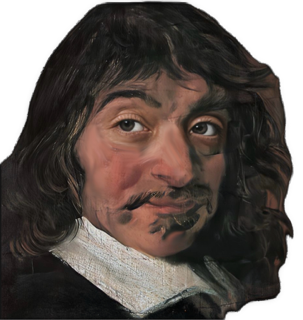 Descartes (1596–1650)
 St. Thomas Aquinas (1225–1274)
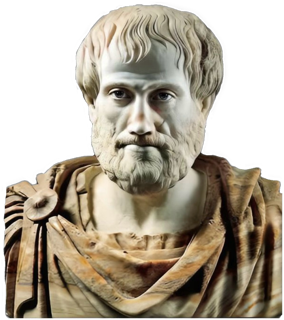 Aristotle (384–322 BC)
 Antoine Arnauld (1616–1698)
 St. Augustine (354–430)
 Descartes (1596–1650)
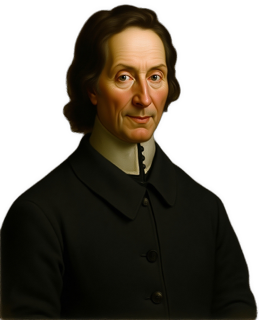 Nicholas Malebranche (1638–1715)
 Francisco Suarez (1548–1617)
DTOI Secondary Sources (A–L) &
DTOI Secondary Sources (M–Z)
The letters above represent the first letter of people’s last names in the Secondary Sources bibliography. Click on them to go to that alphabetical section. One can quickly return by hitting the blue box up arrow  in the lower right corner, if located in the same webpage. Otherwise, use the buttons to switch between relevant webpages. Please be patient because these information rich webpages can take five seconds or more to load.
Number of Bibliographic entries in Secondary Sources (A–Z) is over 420.
DTOI Relevant Contemporary Sources

Descartes Bibliographies